Sibling signaling in barn owl nestlings

Could we be using bird models to guide some of our own dinner table disputes over who will get the last slice of bread? In a study published this month by the Journal of Evolutionary Biology, researchers from the University of Lausanne in Switzerland suggested that hungry barn owl nestlings (Tyto alba) might be using vocal signals while parents are off hunting, in order to negotiate who will get the next incoming meal.

Barn Owl

Barn Owl

We know that bird songs can help monogamous couples identify their partners and recognize their young and that these songs are often influenced by a combination of genetics and environmental factors, such as learning. But there is still a lot we don’t know about the mechanisms by which individuals recognize and remember calls of their siblings. Previous research has shown that barn owl nestlings have a sibling-sibling communication system that allows them to cooperate in the distribution of food. But how is the fairness of food distribution ensured? Who is keeping track?

The way the sib-sib communication system works is that when the nestlings signal to each other, the nestling that is the most vocal or loudest or vocalizes at the highest frequency is granted priority to the incoming prey without having to compete with it’s siblings. The more food deprived a nestling is, the louder it will compete. The researchers, here, predicted that the signals of barn owl nestlings are individualized and therefore able to be recognized and remembered by their siblings. They suspect that the ability to recognize the individuality of sibling signals might have evolved as a way to strengthen the honesty of the calls. But if the nestlings are all hungry, how is it that the bigger nestlings, which are naturally louder, don’t beat out the smaller ones each time?
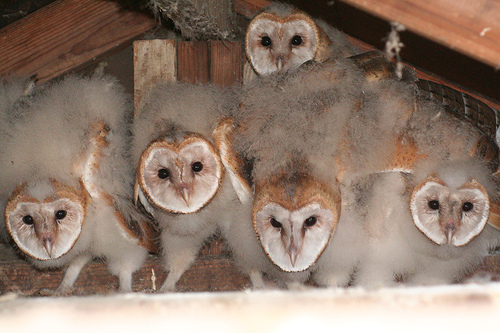
Barn Owl Nestlings

Barn Owl Nestlings

This question gets even more complicated when you take into account the fact that barn owls are asynchronous hatchers: during the breeding season, barn owl moms lay an egg every 2-3 days and the eggs hatch in the order that they are laid so that the oldest and youngest nestlings can be up to a few weeks apart in age. It seems intuitive that the older nestlings, then, would win every vocal competition—but they don’t. In fact, according to what the researchers found, the nestlings actively avoid simultaneous signaling, implying that all siblings want to hear the calls of their nest-mates so that they can recognize their identity and calibrate their own calls in order to compete fairly. The older siblings have been shown to produce fewer negotiation calls when competing with juniors in the nest, seemingly in order to level the playing field. The individual recognition system also ensures that if a nestling cheats, he or she will be punished by the siblings, who will steal the food away.

The bottom line here is that not only do these signals help the nestlings convey their hunger, but the signals have evolved to serve to identify siblings and ensure that the hungriest sibling wins the prize. To learn more, take a look at the original paper in this month’s issue of the Journal of Evolutionary Biology.

Reference: Dreiss, A. N., C.A Ruppli, and A. Roulin. 2014. Individual vocal signatures in barn owl nestlings: does individual recognition have an adaptive role in sibling vocal competition? Journal of Evolutionary Biology 27: 63-75.

Share
Posted in What's New in Sensory Ecology? | 1 Comment

Elegant Trogons: One Gesture for Everyone


Credit: Dominic Sherony

Credit: Dominic Sherony

Imagine coming across a hungry tiger. It fixes its gaze on you, and roars. You have three options: you can stay and fight, you can run, or you can strike your best pose and hope your assailant is deterred. That last option probably wasn’t your first choice; making yourself more enticing is probably the last thing you want.

Visual displays such as posing are common in the animal kingdom. Often, such displays have a target audience. In many species of birds, for example, individuals will threaten each other. Interestingly, such interactions can actually prevent situations from escalating into violence. Visual demonstrations can also be used in attracting and competing for mates. Other displays can deter predators. So, while certain behaviors can be used to signal either within a species (intraspecific) or to another species (interspecific), very few signals straddle that boundary.

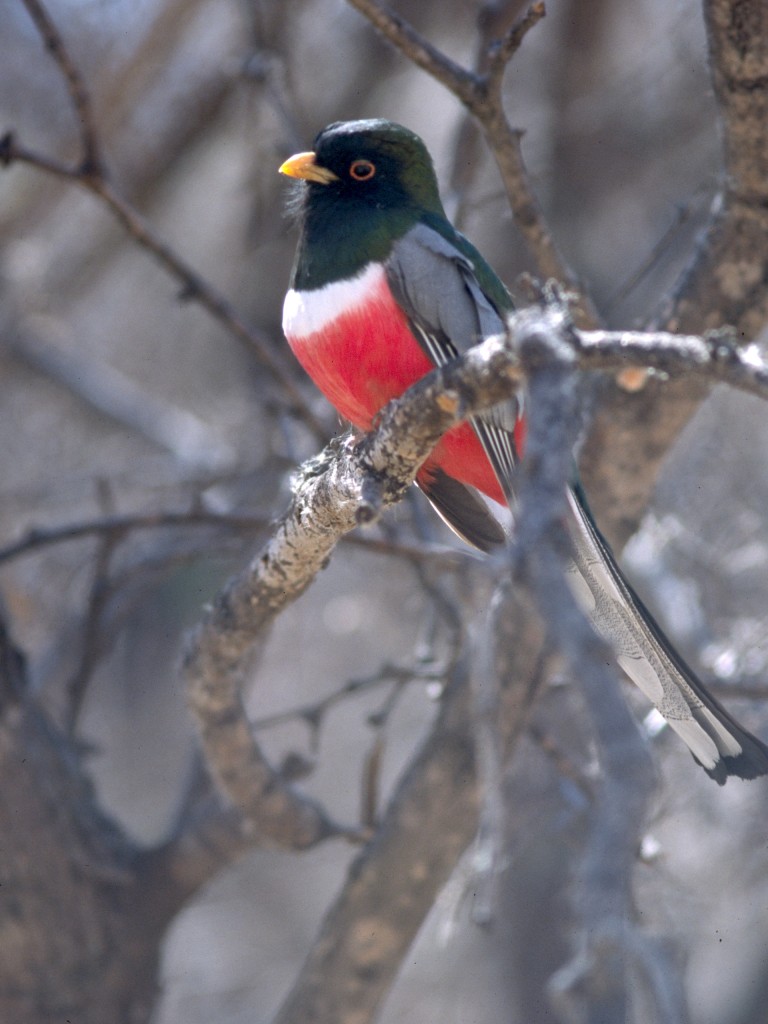
But apparently, the elegant trogon (Trogon elegans), a bird native to the southern United States and northern Costa Rica, uses one signal in both courtship and predator-deterrence; it raises its tail to expose the bright red plumage of its underside.

Pierre-Paul Bitton and Stéphanie M. Doucet from the University of Windsor noticed that previous scientific literature had described this tail-raising behavior either in mating or in response to other species. They set out to determine what would prompt this response from elegant trogons, as well as the function of this behavior when used interspecifically.

The Experiments

To get an idea of when elegant trogons raised their tails, Bitton and Doucet spent hundreds of hours in 2010 and 2011 observing them and noting the sex and age of the individuals performing and of conspecifics (members of the same species) in the area. The authors observed that trogons raised their tails to signal each other, both within a sex and to the other sex. They also noted that the birds would raise their tails in response to members of other species, humans, in particular.

Pitton and Doucet also tested the hypothesis that tail-raises could also be used to deter predators by constructing models of the collared forest falcon, a common predator of the trogons. They also constructed models of squirrel cuckoos, a non-threatening bird with a silhouette comparable to that of the falcons, in order to control for variables such as size and shape. The models were placed in strategic locations in order to lure trogons and observe their subsequent responses. They found that trogons were much more likely to raise their tails in encounters with the falcon models than with the non-threatening cuckoo models. Additionally, tail-raises happened much more frequently when the trogons were close to the falcon models.

These two experiments demonstrated that trogons indeed raise their tails to deter predators as well as to communicate with their own species. The evidence supported the conclusion that trogons use the same behavior to attract mates, communicate with each other, and tell predators to back off.

It’s possible that Bitton and Doucet missed something important. Most birds can perceive UV light, which can influence how they appear to other birds based on the UV reflectance or absorbance of their plumage. As the models did not emulate UV reflectance patterns, it’s conceivable that trogons responded differently to the falcon and cuckoo models than they otherwise would have. Given that the trogons responded to a wide range of other potential predators, however, it’s probably a minor oversight.

While there are plenty of examples of multifunctional bird songs that are meant for both intraspecific and interspecific use, this study uncovered a visual signal with the same range of purposes, which is rare. It’s really quite elegant; Need a mate? Dealing with pesky intruders? About to be eaten? Raising your tail is the universal gesture.

Bitton, P. and Doucet, S.M. 2014. A multifunctional visual display in elegant trogons targets conspecifics and heterospecifics. Behavioural Ecology 25: 27-34.

Share
Posted in What's New in Sensory Ecology? | Comments Off on Elegant Trogons: One Gesture for Everyone

SAD Ants (Seasonality Affected Decsion-making)

Should I, could I, would I? We make decisions at every moment, every day, every week, every month, and every season. These decisions are influenced by the environment and social interactions. Many animals exhibit social behaviors, such as feeding aggregations … Continue reading

Share
More Galleries | Comments Off on SAD Ants (Seasonality Affected Decsion-making)

Insect vision: New insight on a complex circuit

New neurogenic tools of Drosophila research have provided previously unknown information regarding the neural circuitry responsible for visually guided behaviors.  Researchers from the University of Sussex in the United Kingdom have stimulated specific sensory ring neurons using a combined two-photo calcium imaging technique that allowed for in-vivo behavioral observations. Drosophila have compound eyes that have a much lower resolution than camera-like eyes of vertebrates, so how are Drosophila able to extract the right type of information from visual cues?

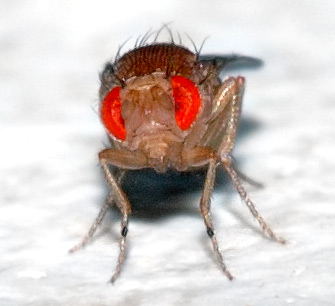
Frontal view of a Drosophila and its compound eyes

Frontal view of a Drosophila and its compound eyes

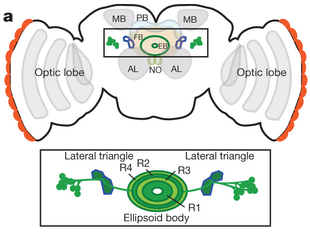
Previous research by Seeling and Jayaraman have proposed a higher brain structure called the central complex which contains a population of visual receptive field neurons. More specifically, they targeted ring neurons R2 and R3/R4d because they receive input from glomeruli. From their experiments, Seeling and Jayaraman were able to target specific cells within the ring neurons that responded to visual stimuli, however they only saw a few of these cells. With only a limited number of cells, it seems that the sparse and coarse encoding capabilities of these cells may not be able to completely reconstruct the visual world. Therefore, the researchers in this article ask what kind of behaviors could be supported by the coarse information encoded by these sensory ring neurons?

Schematic of a Drosophila central brain showing the specific ring neurons (Seeling and Jayaraman, 2013).

Schematic of a Drosophila central brain showing the specific ring neurons (Seeling and Jayaraman, 2013).

The researchers show that R2 cells, when stimulated, show a structured pattern of activation indicating that shape and location are organized within these neurons. Moreover, Drosophila were able to discriminate patterns in an experimental flight simulator. Together with the behavioral assays and the neurogenic tools utilized by Seeling and Jayaraman, the researchers show that R2 neurons are required for the discrimination of at least four visual parameters. Even though the coarse encoding by these cells most likely yields insufficient reconstructions of fine details, enough information is extracted to enable discrimination in the enivornment.

 Researchers have just touched the surface of the complex underpinnings of the sensorimotor behaviors in Drosophila. Further studies examining other sensory processes (such as sound) and their interactions with ring neurons of the central complex may yield even more information regarding Drosophila sensory processes. This article is a great example of how a multifaceted approach including both neurological and behavioral assays can provide value information regarding sensory processing.  For more information on the neurogenic techniques utilized, check out the paper by Seeling and Jayaraman, 2013 in Nature. If you want to learn more about the behavioral assays used in examination of Drosophila visual processing check out the paper in the January 2014 issue of the Journal of Current Biology.

Seelig, J.D., Jayaraman, V. (2013). Feature detection and orientation tuning in the Drosophila central complex. Nature 503:7475, 262-266.

Wystrach, A., Dewar, A.D.M., Graham, P. (2014). Insect vision: Emergence of pattern recognition from coarse encoding. Current Biology 24:2, R78-R80.

Share
Posted in What's New in Sensory Ecology? | Comments Off on Insect vision: New insight on a complex circuit

The secret life of the visual cortex: Plasticity in retinal damage and perceptual learning

eyes

Humans are just one of many species that rely heavily on visual information for survival. Accurate vision enables prey and predator detection and recognition of conspecifics, as well as navigational abilities. Because of this reliance on visual cues, damage to the retina (the layer of light-sensitive cells lining the back of the eye) could pose a serious problem. This type of damage can occur as a result of injury, disease, old age, or overexposure to light. So how can animals respond to this impairment to the sensory system?

Human_eye_diagram-sagittal_view-NEI

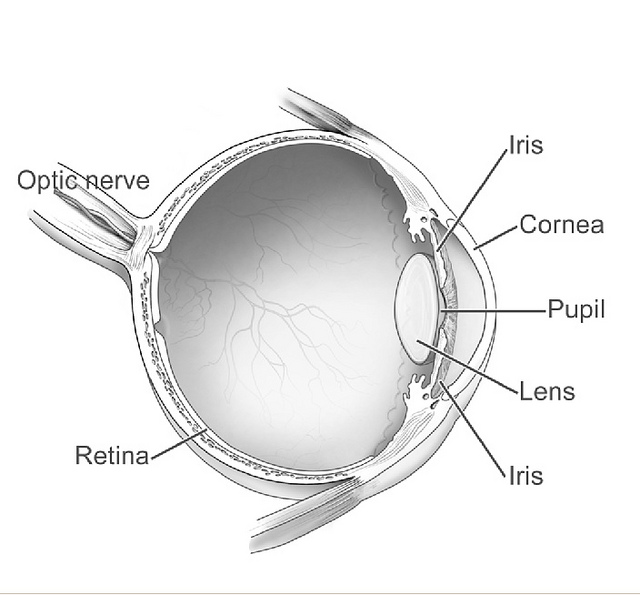
The human eye: The retina lines the back of the eye, and is covered with photoreceptors, which are cells that transmit information about light and color. These cells send this information through the optic nerve to the rest of the brain.

Immediately after the retina is damaged, the region of the visual cortex in the brain that receives information from the injured area stops responding. However, this region slowly recovers activity within a few months. How can this happen if the cells that send information to this region are all dead? Have they come back to life?

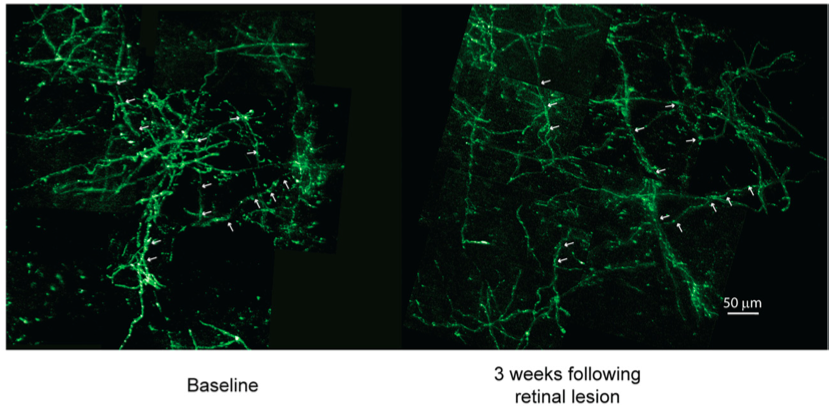
No—the retinal cells themselves cannot recover from damage, but instead, the neurons surrounding the unresponsive brain region can expand and increase the area of the visual field to which they will respond. Although this was already known to occur with excitatory neurons (those that increase neuronal signaling), it was unknown until recently whether inhibitory neurons (those that reduce neuronal signaling) might undergo the same process. By labeling the inhibitory neurons of monkeys (Macaca fascicularis) with a fluorescent tag so that they could be visualized, researchers found that these neurons did indeed undergo immense expansion following damage, in support of their hypothesis (Marik et al., 2014). They observed that after retinal damage had occurred, these normally stable neurons began growing rapidly into the unresponsive region, enabling it to encode visual information from the area of the visual field adjacent to the damage.

Screen shot 2014-02-13 at 11.42.42 PM

Fluorescently-labeled inhibitory neurons in the visual cortex of monkeys. The first image shows the neurons before retinal damage, and the latter shows the same region 3 weeks after the retinal damage. Although the density of the neurons has decreased, the area that they cover has increased (Marik et al., 2014)

These results indicate that inhibitory neurons in the visual cortex are capable of immense structural changes, sometimes expanding to several hundred percent their original size. The authors of this study propose that this expansion of inhibitory neurons could be due to the need to maintain a certain balance between excitatory and inhibitory neurons. Alternately, it could be because these inhibitory neurons are essential for targeting the excitatory neurons that also expand into this region. In any case, because of this process, known as neural plasticity, the part of the brain that used to respond to the damaged region now takes over to enhance the response to the remaining regions of the retina.

Interestingly, researchers further speculate that these mechanisms could be at play during normal sensory experience. In particular, there is some evidence that this type of plasticity is involved in perceptual learning, the process by which organisms can enhance their ability to discriminate between different visual stimuli by repeated exposure, so that very small differences can be detected. This is a crucial aspect of the visual system because it allows organisms to discriminate between various food types (some of which may be lethal) and to recognize mates. This learning mechanism is thought to involve structural changes in the same region of the brain in which the researchers observed neuron growth after retina damage. As a result, many people now believe that the mechanisms involved in neuronal expansion following damage may be the same ones that underlie our ability to train the visual system to make highly specific discriminations that are crucial for survival (Gilbert & Li, 2012).


For more information, see:

Marik, S. A., Yamahachi, H., Borgloh, S. M. A., & Gilbert, C. D. (2014). Large-scale axonal reorganization of inhibitory neurons following retinal lesions. The Journal of Neuroscience, 34(5), 1625-1632.

Gilbert, C. D. & Li, W. (2012). Adult visual cortex plasticity. Neuron, 75(2), 250-264.

Share
Posted in What's New in Sensory Ecology? | Comments Off on The secret life of the visual cortex: Plasticity in retinal damage and perceptual learning

Too fast to see? Touch instead!

If you’re running at 120 body lengths per second, as some species of diurnal tiger beetles (Carabidae: Cicindelinae) can, it would be rather difficult to see everything around you (Figure 1). Motion blur becomes a problem, as it substantially degrades visual contrast and compromises a beetle’s ability to detect obstacles in its path. The fast-running diurnal tiger beetles compensate for this by periodically stopping to reorient itself, especially when hunting down prey. However, entomologists Zurek and Gilbert showed that these insects also perceive the world via antennal touch mechanosensation, which is not affected by motion blur. Moreover, this mechanosensory perception method is both necessary and sufficient for navigation while running.

Figure 1. Hairy-necked tiger beetle, the fast-running diurnal tiger beetle used in Zurek and Gilbert’s study.

Adaptive use of mechanosensory perception in animals with poor vision is common, especially among nocturnal species. Insects living in dark environments use vibrissae and antennae to actively perceive environmental stimuli, including dimensions of a nest site and/or surrounding conspecifics. Diurnal tiger beetles, however, have great daytime vision, but are functionally blind while moving at top speed. Zurek and Gilbert were interested in whether mechanosensory perception can compensate for poor vision due to motion blur, as it does for low light levels, and allow for effective spatial navigation. To answer this question, the researchers first recorded the runs of 20 beetles, each for 10 trials in four different obstacle conditions with varying obstacle heights from 2mm to 4mm; a total of 800 runs. Then, the beetles were separated into four groups, with various physiological impairments (blindness or no antenna) and no impairment. These beetles were subjected to an additional 40 runs in with either obstacles of high contrast or low contrast. Success in obstacle conditions was determined by avoidance of an abrupt collision with the obstacle. Successes with and without antennal contact and failures were averaged in each group (Figure 2).

Figure 2.

Figure 2. Run outcomes, where the control group is the left-most group that is unimpaired and exposed to low-contrast obstacles. High contrast obstacles are marked by a black rectangular box above the beetle. The blinded group is shown with red eyes and the right-most two groups represent the antennectomized groups exposed to different contrast obstacles. Bars represent success/failure rate or runs with and without antenna contact with the obstacle.

Analysis of these runs revealed that presence of antennas and lower obstacle height led to more successful runs, whereas beetle vision or visual contrast of the obstacle had practically no effect on successful runs. Specifically, antennectomized beetles succeeded in as low as 40% of obstacles, while blindness did not affect obstacle success rate. Antennectomized beetles also decreased their ground clearance and pitch angle, suggesting that they may alter their posture to engage antennal contact with the ground in instances when the antenna is short. Such behavior has also been found in cockroaches, which use antennal-ground contact during wall-following. Altogether, the data suggested that the tiger beetles may rely almost exclusively on antennal mechanosensation to avoid collisions while running.

Source:

Zurek, D. B., & Gilbert, C. (2014). Static antennae act as locomotory guides that compensate for visual motion blur in a diurnal, keen-eyed predator. Proceedings of the Royal Society B: Biological Sciences281(1779), doi: 20133072.

Share
Posted in What's New in Sensory Ecology? | Comments Off on Too fast to see? Touch instead!

ENDURANCE MAKES THE HEART RACE: Females attribute a higher attractiveness rating to faster competitors of the Tour de France

For females, choosing a mate is no superficial task. Heritable genetic factors provide significant help along the choice journey, presetting female attractiveness towards reproductively favorable traits in males. Common seemingly shallow questions such as, “Is he attractive?”, or “Does he have motivation to make money?” translate on the genetic level to Is he healthy with strong genetics that will produce strong and healthy offspring, and will he be able to successfully provide for the offspring. A recent study by Erik Postma highlights the important male trait of endurance ability, and females’ propensity to pick up on this. Prehistorically, endurance could have been a basic indicator for our ancestors of a male’s optimal ability to provide in terms of hunting and gathering food across the land. Considering this, it is no surprise that in observing female attractiveness ratings towards male Tour De France competitors, Postma’s females attribute a higher attractiveness rating to males with better endurance before knowing the competitor’s actual performance scores.

pic1

To methodically explore whether women associate attractiveness with endurance ability in males, Postma created an online survey composite of 80 portraits of male participants of the 2012 Tour De France.   816 females participated in the online survey, and they only viewed the upper body ending at the shoulders of the competitors.  To take the analyses a step further, a questionnaire was included on the presence or absence of hormonal contraceptive use in the female participant, due to evidence that birth control impedes upon natural female mate choice as the pill makes the body unreceptive to fertilization.  Male competitors competed in the Tour de France after the survey, and were recorded for their time to complete the race.


survey


Results showed a significant pattern of higher attraction scores for males who subsequently performed better in the Tour De France race. Additionally, females using the pill showed significantly lower attraction scores toward high-performing males than females who were not using the pill.

http://www.dreamstime.com/stock-photos-young-woman-choosing-right-wrong-signs-beautiful-image34796163

This precious mate-quality detection tool is so precious for a reason: it is a fine-tuned production over millions of years.  Our female ancestors who possessed more attentiveness to traits that favored the reproductive success of their offspring were, quite simply, those whos’ offspring survived and made for our present existence. Evolution generally selects for efficiency in processes related to reproductive success, which explains the accurate endurance judgment that these women exhibit.  In a case like this, experimental results say not to ignore your intuition when it comes to mate choice.


Postma, E. (2014). A relationship between attractiveness and performance in professional cyclists. Biology Letters, 10(2),


Share
Posted in What's New in Sensory Ecology? | 1 Comment

Bats Use Terminal Buzz Calls to Drink While Flying!

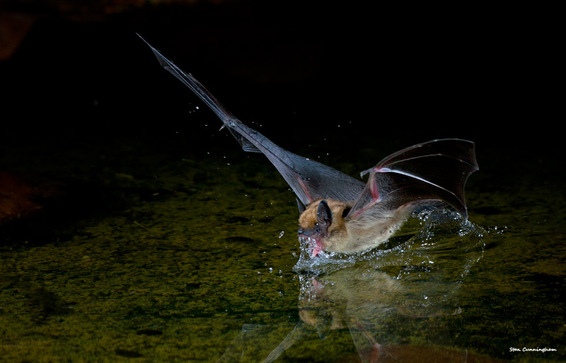
Bats often fly above bodies of water from dusk to early evening to drink and forage. Foraging bats use ultrasonic pulses, sounds that are inaudible to us, that are regularly synced with wing beats and respiratory cycles to orient and locate prey. Bats emit a terminal buzz while drinking which are similar to those emitted while foraging. A terminal buzz is the last pulses of an echolocation call sequence. Echolocation is the use of calls to listen to the echo that will provide them with information about how far the object is away from them. So a terminal buzz sequence is the last pulses of sound produced before reaching an object. This study sought to discover the level to which bats produce terminal buzzes while drinking in flight.

CC

Big Brown Bat drinking water from a pond. Picture taken by Stan Cunningham

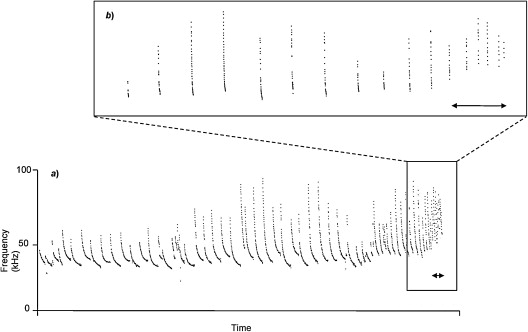
Over 6 hours of recording bats at Birdlife Australia’s Gluepot Reserve, Waikerie, South Australia, 809 drinking passes (drinking while flying low over water) by bats were recorded. Only those which touched the water and left a visible ripple on the surface were included in the study. All 809 drinking passes were accompanied by a terminal buzz call emitted before they touched the water to drink. Out of all the buzzes, 21% were in the range of 36-50 kHz range and the remaining 79% were in the 25-35 kHz range. Figure 1 shows a pattern unique to Gould’s wattled bat Chalinolobus gouldii with search phase pulses from 28 kHz to 31 kHz. Figure 2 shows a pattern with an upward sweeping tail at 43 to 45 kHz. This pattern is likely to be produced by Vepadeslus baverstocki or Vepadeslus regulus. This difference in frequency proves that bat terminal buzz sequences are not all the same and in this case can be placed into two groups. The frequency of the terminal buzz can help determine the species present.

PowerPoint Presentation

Figure 1: Chalinolobus gouldii terminal drinking buzz

PowerPoint Presentation

Figure 2: Vepadeslus baverstocki or Vepadeslus regulus terminal drinking buzz


To hear the difference between these two terminal drinking buzzes click the links below.

Chanlinolobus gouldii (First in real time, then in half time)   mmc1

Vespadelus sp. (First in real time, then in half time)    mmc2

Drinking water while flying is a complex aerial maneuver.  It requires very high precision and accuracy to avoid colliding with the waters’ surface. Bats that forage for insects produce a terminal buss to provide precise information about the size, shape and location of their prey. Bats also use this terminal buzz sequence to avoid obstacles in flight and to locate landing sites. Drinking buzzes provide the bat with spatiotemporal information to locate the surface before touching it with their mouth to drink. Drinking buzzes may be used in a similar fashion as foraging buzzes. This research suggests that other studies may overestimate the number of foraging buzz calls over water bodies if they were unaware of drinking buzz calls. Drinking buzzes can be used to document rates of drinking by bats in the future. The more we know about bats, the more we can do if they ever need our help.

Sources:

Cunningham, Stan. “Photographing Bats Drinking from Elephant Head Pond in Amado AZ.”           Web blog post. Cunningham Outdoors LLC. N.p., 06 Dec. 2012. Web. 14 Feb. 2014.

Griffiths, S.R. 2013. Echolocating bats emit terminal phase buzz calls while drinking on the             wing. Behavioral Processes 98:58-60.

Share
Posted in What's New in Sensory Ecology? | 1 Comment

Some Like it Hot, But Maybe Not Lizards: global warming and its effects on sexual signaling of rock lizards

Male Carpetan rock lizard

Male Carpetan rock lizard

With all of the crazy weather occurring around the world (unbelievable—literally—snowstorms in Atlanta?), climate change is receiving increasingly more attention from the public and scientists alike. There has been extensive research on evolutionary responses to climate change and how warming temperatures might affect species ranges.

But so far there has been very little research examining the effects of climate change on the sexual signals of animals. And while the mating behaviors of humans are probably safe from global warming, the threatened Carpetan rock lizard (Iberolacerta cyreni) living in the mountains of Central Spain may not be so lucky.

(The incredibly romantic mating strategy of rock lizards) http://www.youtube.com/watch?v=1l2zlbFKi9o

A recent study conducted by researchers from the National Museum of National History in Spain tested the hypothesis that increasing environmental temperatures would lower the efficiency of the lizards’ sexual signals. These signals are incorporated into the male’s chemical secretions, which are used to mark their territories and attract females. Previous studies have shown that females spend more time in territories marked by secretions containing higher levels of provitamin D (a compound that can be converted into vitamin D), therefore increasing the mating opportunities of the male controlling that area.

The study found that higher temperatures caused these secretions to degrade more rapidly, lowering the ability of females to detect them. Females also spent less time in areas that were experimentally maintained at higher temperatures compared to areas maintained under current environmental temperatures. Degraded signals may also provide less information to females about male body size, health, and other important factors that go into mate choice.

The inability to detect sexual signals could ultimately disrupt sexual selection in rock lizards. If signals become less informative, females might begin choosing mates at random rather than choosing the healthiest and strongest males, which could affect the evolution of the species in the future.

Although species have always had to adapt to changes in climate, human-induced climate change is occurring so rapidly that many species, including the Carpetan rock lizard, may not be able to keep up. Additional research needs to be done on how global warming will affect the biology of the species in order for conservation efforts to be as effective as possible.

Reference: Martín, J., López, P. 2013. Effects of global warming on sensory ecology of rock lizards: increased temperatures alter the efficacy of sexual chemical signals. Functional Ecology, 27: 1332–1340.

Share
Posted in What's New in Sensory Ecology? | Comments Off on Some Like it Hot, But Maybe Not Lizards: global warming and its effects on sexual signaling of rock lizards

Mosquitoes have difficulty finding hosts with high carbons dioxide background levels

There may be another way to protect yourself against mosquitoes. A new study in the Journal of Experimental Biology used mosquitoes (Aedes aegypti) in varying environments of carbon dioxide. Mosquitoes use carbon dioxide to locate a snack (i.e., your ankle). But what happens if carbon dioxide is already in the environment? Mosquitoes presumably may then have difficulty locating their blood host.

512px-Aedes_aegypti_biting_human

[The mosquito detected carbon dioxide from this host in order to find its meal.]

Researchers at the Swedish University of Agricultural Sciences wanted to see just how affected these mosquitoes would be by extra carbon dioxide in their hunting environment. They used a wind tunnel in which they could control background carbon dioxide levels as well as a “stimulus concentration” which acted as a host for the mosquitoes. Take-off time and time to source contact were measured. Take-off time refers to how long the mosquitoes take to decide that a host is nearby. Time to source contact refers to how long the mosquitoes take to locate this host.

When the mosquitoes were tested in an environment filled with carbon dioxide, they took more time to take-off. Not only this, but these mosquitoes also had a more difficult time detecting the stimulus concentration (fake host), even when this concentration was increased. In terms of finding this stimulus, whenever the wind tunnel had the least amount of carbon dioxide, the mosquitoes were able to find the source quicker.

To confirm these behavioral results, the study also looked at the electrical activity in olfactory-receptor neurons (also known as: nerves that detect smells) that were specific for carbon dioxide detection. The stimulation of these nerves correlated with the mosquitoes’ apparent difficulty detecting hosts in environments with high carbon dioxide levels already present. This implies that these nerves are experiencing a masking effect. So, if you’re looking for the best mosquito repellant on the market, search for a tank of carbon dioxide to fill your surrounding environment.

600px-The_Blue_Marble

The researchers actually concluded this may not be necessary, though. With rising atmospheric carbon dioxide levels in our environment, mosquitoes may have a tough time adapting to these constantly rising levels. This is big news, and it begs the question: will mosquitoes stick around in our changing climate? More research is necessary to make conclusions about mosquito adaptability in terms of rising levels of carbon dioxide, however. To find out more about this phenomenon, find this article in the most recent issue of the Journal of Experimental Biology.


Majeed, S., Hill, S. R., & Ignell, R. (2014). Impact of elevated CO2 background levels on the host-seeking behavior of Aedes aegypti. Journal of Experimental Biology, 217, 598-604.

Share
Posted in What's New in Sensory Ecology? | 2 Comments