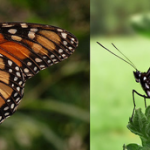
Gotcha! Investigating the effects of visual features used for trapping prey in carnivorous plants

This gallery contains 2 photos.

Living organisms need to have consistent and reliable methods for procuring food in order to survive any situation. A steady food supply ensures survival not only of an individual organism, but also its offspring, as a healthy individual is more likely … Continue reading

Share
More Galleries | Comments Off on Gotcha! Investigating the effects of visual features used for trapping prey in carnivorous plants

Using sound to mask sex: auditory mimicry found in Chinese cicadas

This gallery contains 3 photos.

One of the most interesting aspects of sensory and evolutionary ecology is the concept of mimicry between or within species. Mimicry is when a species has evolved a trait that allows it to imitate the appearance, behavior, scent, or sound … Continue reading

Share
More Galleries | Comments Off on Using sound to mask sex: auditory mimicry found in Chinese cicadas

The Millbrook School’s Trevor Zoo: A chance to explore animal behaviour, physiology and conservation

This gallery contains 1 photo.

This semester I am doing fieldwork at the Trevor Zoo and thinking about how zoos are related to behaviour and conservation. The Trevor Zoo is a small but diverse and well-run collection of animals located at the Millbrook School in … Continue reading

Share
More Galleries | 1 Comment

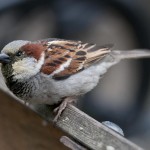
Implications of between-individual variation of cone photoreceptor densities in house sparrow visual systems

This gallery contains 3 photos.

Evolution through natural selection spends on variation of a trait within a species. Variation of a certain trait that has implications for Darwinian fitness within a species can lead to a population level shift towards one phenotypic realization of the trait over … Continue reading

Share
More Galleries | Comments Off on Implications of between-individual variation of cone photoreceptor densities in house sparrow visual systems

Our Global Big Day

This gallery contains 15 photos.

On May 9th, Dr. Mary Ann Cunningham (from the Earth Science Department) and I headed out to the Vassar Farm and Ecological Preserve to participate in the Cornell Lab of Ornithology’s Global Big Day (read more about that here).  We … Continue reading

Share
More Galleries | Comments Off on Our Global Big Day

Light at Night May Be Short-Circuiting Eared-Moths’ Evolutionary Gains

Everybody knows that moths are attracted to human light at night like, well, a moth drawn to a flame. However, what scientists are beginning to discover is that this fatal attraction is more harmful than previously thought! Researchers out of the University of Pretoria found that moths in an artificially lit environment were significantly more likely to be eaten by bats than moths in a naturally dark environment were.
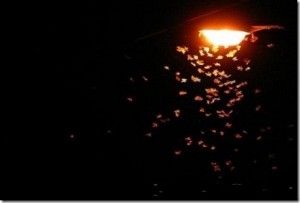

moths-light

“Drawn like moths to a flame”, a well known saying about fatal attraction, may prove to be more rooted in science than previously thought, thanks to Corneile Minnaar & colleagues.


For the past 65 million years that moths and bats have coexisted on earth they have evolved competing adaptations to get an edge on their respective side of the predator-prey relationship. Bats, of course, have evolved ultrasound echolocation that helps them locate prey without visual cues. However, to compete evolutionarily, some species of moth have evolved ultrasound-sensitive ears. These eared moths can detect, in hopes of evading, standard bat echolocation calls using flight maneuvers and echolocation-jamming calls.

These defensive responses are lowered when the moths do not need to utilize their nocturnal cues, such as when exposed to artificial light. Unfortunately for moths, artificial light is becoming increasingly ubiquitous. In fact, it is estimated that Earth’s night-time surface brightness has doubled in the last 20 years.

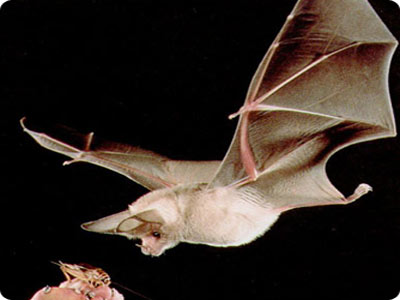
To better study the effect of lit environments on this predator-prey relationship, Corneile Minnaar and colleagues compared the diets of Cape Serotine bats (Neoromicia capensis) in artificially lit and naturally unlit conditions. They found that the bats were eating up to six times more moths in artificially lit conditions than in dark ones. What makes this statistic even more notable is the relative abundance of nocturnal insects in the lit and unlit environments– moths made up a smaller fraction of the nocturnal insects in the lit environments than they did in the unlit ones. That is to say that these bats consumed a disproportionally high number of moths in artificially-lit environments.
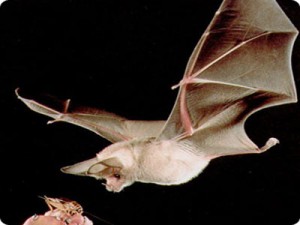

bat-lifespan-picture

Neoromicia capensis, or a Cape Serotine Bat, about to make a tasty meal out of an unlucky nocturnal insect. Normally, this species of bat does not consume many moths, but artificial light may be giving these, and other ultrasound-echolocators, a leg (er, wing?) up.


To corroborate their field study, and propose an explanation for these marked dietary differences, Minnaar and colleagues designed a series of mathematical models predicting the diet of Cape Serotine bats. These models took into account a variety of prey-selection factors, including the likelihood of prey encounter, detection, and capture given prey’s evasive behavior. Additionally, they considered how likely each type of prey was to be actively sought out by the predator, due to size, taste, and energy- content. The theoretical models that most closely matched the experimental results were the ones that supposed the moths successfully evaded bats under naturally dark conditions, and did not do so under lit conditions.

What these results propose are that eared-moths’ defensive behaviors, which are highly effective in dark conditions, are lowered or absent in artificially lit conditions. One hypothesis the researchers propose is that since moths can see more in lit conditions, they rely less on their defensive adaptations for survival, though further research must be done for a conclusive explanation. What is clear from the study, however, is that eared-moths are being eaten at a disproportionally high rate when exposed to artificial light. This poses a serious risk of survival to eared-moths when considering the exponential rate at which Earth is being urbanized and artificially lit.


References:

Minnaar, C., Boyles, J. G., Minnaar, I. A., Sole, C. L., McKechnie, A. E. (2014), Stacking the odds: light pollution may shift the balance in an ancient predator–prey arms race. J Appl Ecol.


Share
Posted in What's New in Sensory Ecology? | Comments Off on Light at Night May Be Short-Circuiting Eared-Moths’ Evolutionary Gains

Finding Mr. Right: How Aging Virgins Race Against the Ticking Biological Clock

This gallery contains 3 photos.

Have you ever wondered what the best way is to get the attention of someone you fancy? Being too subtle could result in that person not noticing you, but being too overt could lead to unwanted attention from other suitors … Continue reading

Share
More Galleries | Comments Off on Finding Mr. Right: How Aging Virgins Race Against the Ticking Biological Clock

Jacob Damsky Presents Thesis

This gallery contains 2 photos.

Congratulations to Jacob Damsky for presenting his thesis on the effects of anthropogenic noise on mobbing behavior in the tufted titmouse.  Jacob was joined by 19 other Vassar Biology Seniors in presenting a wide array of interesting research!  Best of … Continue reading

Share
More Galleries | 1 Comment

Gall Lab Publishes in Proceedings of the Royal Society B

The Gall Lab, in collaboration with Walt Wilczynski at Georgia State University has just published a paper entitled “Hearing conspecific vocal signals alters peripheral auditory sensitivity”.  But, what does that mean? Well, many animals (including humans) are exposed to the … Continue reading

Share
More Galleries | 1 Comment

Food with Friends: How Bats May Interact more than We Think

This gallery contains 4 photos.

Have you ever asked a friend, “What you want to eat for lunch?” and they replied saying “I heard this place was really good, we should go here!” ?Using the friend’s information about certain restaurants, you are more likely to find … Continue reading

Share
More Galleries | Comments Off on Food with Friends: How Bats May Interact more than We Think