This summer, research assistants Lily Elliott ‘28 and Madison McCleskey ‘28 worked together with Professor Robert DeMaria Jr. to assist with the editing and commentary of the Cambridge University Press Tatler. The Tatler is a British periodical that ran from 1709-1710 authored by Richard Steele and Joseph Addison under the pseudonym Isaac Bickerstaff.
The course of the eight weeks may be divided into four sections: overview of scholarly editing, preparing the text, providing commentary, and beginning a bibliography. On June 8, the first day of the project, Professor DeMaria gave us a crash course in the history of scholarly editing. We discussed how its objective, founded by early editing in light of Humanism, preferred “purifying the text.” In the 17th C., the primary scholarly works were editions of Shakespeare and Milton. The literary critic Samuel Johnson, most known for his incredible Dictionary (we owe much to the 1755 edition) rejected the idea of “purifying” the text and the author. He defined the role of the editor as the aim to communicate the author’s original intention. This is the core of our approach as we prepared Nos. 241-270 of The Tatler.
The process of preparing each Tatler entailed referencing 3 texts: the octavo (8vo), which served as our copy-text (the chosen basis for the edited text), the folio (F), and the duodecimo (12mo) to note substantive differences (“changes in wording,” MLA Guidelines for Editors of Scholarly Editions) within the second collected edition (~1710). The Tatler Vol. IV edited by George Aitken (1899) and The Tatler Vol. III edited by Donald F. Bond (1987) served as helpful models.
Lily (left) and Madison (right) working together to prepare a Tatler. Lily reads from the folio. On the table is a notebook and the octavo. Madison looks up a word in Johnson’s Dictionary (online).
When collaborating with each other, one of us would read from the 8vo, F, and 12mo while the other typed. This provided great entertainment at times as The Tatler notably used character-types reflective of London circa 1710. Reading each number to each other expanded our understanding of political, religious, and social life during the reign of Queen Anne.
This summer, I worked alongside research assistant Kelsey Wang ‘28 to rebuild and improve GRST105: Introduction to Greek and Roman Civilizations for Professor Curtis Dozier. Our main goal for the class is to provide a worthwhile learning experience for students who have never interacted with Classics before. This means exposing them to a range of fields within the GRST department: Greek and Roman history, literatures, archaeology, and languages, all to get a meaningful understanding of how ancient Mediterranean peoples lived. We wanted to improve the class by reworking the material, and the presentation of material, to better align with this goal.
At the beginning of the project, I decided to interview 16 of the students who took the first iteration of the class in the spring semester. This helped me understand why people choose to take an introductory GRST class like this: general interest in Greek mythology, room in their schedule for a 100-level class, recommendations from their GRST friends, etc. Also importantly, students helped me understand what was already working for them in the class. The ‘deeper dive’ assignments allowed for students to participate in their own learning with a topic that interested them. Students also appreciated the lack of weekly readings in this class, because it meant that attending lectures was low-pressure. The students gave helpful feedback about areas of content they struggled with the most (e.g. Roman history), and what they most enjoyed (e.g. lives of Greek women) which helped me understand which areas we needed to focus on in our revision. It was clear that the way content was organized in the previous iteration, with ‘history’ being separated from ‘social history’ themes such as literature, language, politics, and material culture, hindered students from appreciating themes in their context while also making the history lectures dense and confusing. So, from the onset of this project we were aware of a needed integration of so-called ‘history’ and ‘culture’. After all, how could you seperate them when learning about any civilization?
In its previous iteration, the class was split in half between Greece and Rome. In the first week of the project, Professor Dozier gave us the lectures on Greek history so that we could see the existing content and what needed to be rearranged, removed, and/or added. It was clear that there was enough information on Greek history to fill many more days than the class had given space for. Then, Kelsey and I attempted to restructure the Greek half of the class. I reorganized content from the entire Greek class to fit a chronological order of themes, with politics, literature, and other themes integrated into the time period of history they were in. As shown in Figure 1, the original content was widely scattered into many locations, which needed to be put in a different order. Later in the summer, Kelsey and I also brainstormed the Roman half of the class and reorganised existing content to fit into a chronological story of Roman society.
Fig. 1: A sample of my proposed layout of archaic Greek history.
Fig. 2: Brainstorm Kelsey and I did in the library on how to teach the Roman Republic period.
Once the layout was refined, we created new presentation slides which were mostly based on pre-existing material, but we also needed to fill in some gaps. Here is one example of how I tackled this: before, there was a ‘language’ session and an ‘early Greek history’ session. Since we were now telling the story of the Greek language chronologically as the class progressed through time, there was now space to explicitly talk about the advent of Greek writing in the 8th century BCE. One important facet of this story is the iterations of writing styles during the invention of the Greek alphabet that were used for hundreds of years before the Greeks enforced a standard. I created the lecture slide (Fig. 3) which shows an example of the early Greek alphabet being written right-to-left, rather than our expected left-to-right. The slide also includes a skill that students interested in Classics should be aware of: when you are translating a language like Ancient Greek, there are extra steps that you wouldn’t have to deal with with a language like Latin which uses the same alphabet that we do. Transcription and transliteration are important concepts to be aware of for those interested in Greek, and are helpful to know before you join GRST125: Introduction to Ancient Greek. This example shows the method I took towards course design, where I focused not only on declarative knowledge (knowing ‘what’) but also procedural knowledge (knowing ‘how’).
Fig. 3: a sample lecture slide taken from the Greek half of the class.
The college-level textbooks used last summer to create the course, while often thought-provoking and detailed, had several issues, including never having rigorous citations, and telling imperialist stories uncritically. We wanted to tell critical stories backed up by evidence that challenged stereotypes about ‘barbarians’, enslaved people, and other marginalized groups. This meant we had to re-research topics using other sources that were more up-to-date than the textbooks. Online reference databases, the Oxford Classical Dictionary and Brill’s New Pauly: Encyclopaedia for the Ancient World, were a good first step in grounding myself in relatively up-to-date information about a topic. The next batch of sources that we drew from were several Cambridge Companions to specific topics such as Ancient Slavery and the Aegean Bronze Age. Kelsey and I also went to the Art Library to look at the Lexicon Iconographicum Mythologiae Classicae (LIMC), a multivolume encyclopaedia which catologues mythological representations in Classical art. The L’Annee Philologique online database was helpful if we were exploring a niche topic, such as the cult of Athena in Sparta, and needed to actually read specialized articles and books.
Working on this project alongside Professor Dozier has been an invaluable experience. As I go into my final year at Vassar I’m contemplating whether or not I want to explore teaching in my future, and this collaborative project on course design showed me a glimpse into professorial teaching and planning. For one, I learned that absolute perfection is unreachable when it comes to planning for a lecture, because there will always be more to learn about a topic, and every model or layout will have its strengths and weaknesses. Even if perfection is unattainable, it’s still important to be intentional about from where information and research is obtained, and record everything you come across. That is a skill which I can apply to other research projects. Conversely, I learned through attempting to teach a model lecture myself to Professor Dozier and Kelsey that there is a higher level of preparation needed than I expected. Preparing for teaching wasn’t like preparing to talk about a reading in class– even if the content itself is for a beginner-level class, there is so much more that goes into an instructor’s understanding behind the scenes. I am grateful for the opportunity I was given to learn these lessons while at the same time delving into Greco-Roman culture with the goal of making other students as excited about the GRST department as I am.
This summer, I worked with Professor Sarah Pearlman to research how immigrant inflows affect the immigration legislation that is subsequently passed at the state level. I started by reading academic articles on the history and future of immigration in the United States, and refamiliarized myself with the program Stata, which I already had some experience with through my econometrics coursework. I practiced making graphs and maps using IPUMS census data, which also allowed me to understand the strengths and limitations of this dataset.
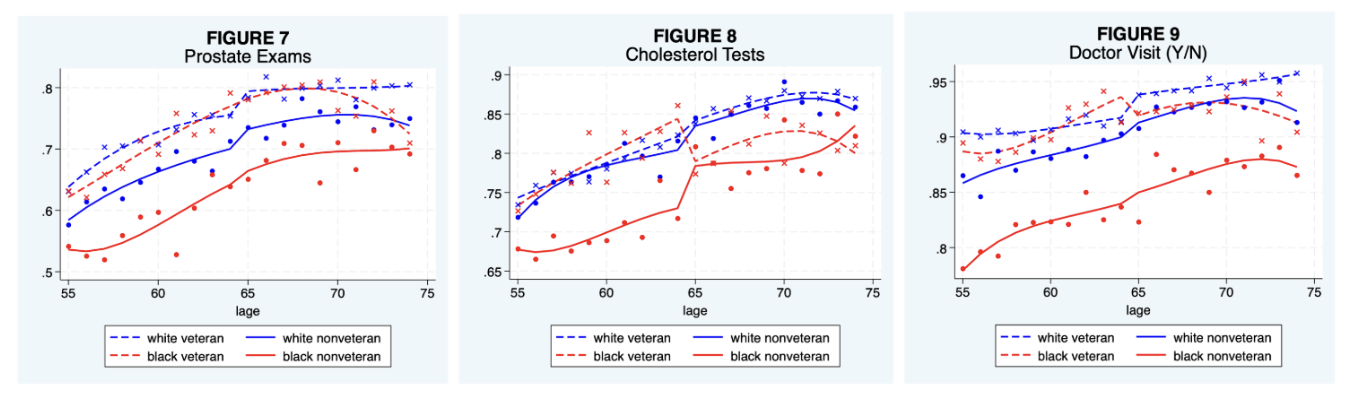
Next I studied the existing literature surrounding our research question. A paper by Mayda, Peri, and Steingress showed a correlation between republican vote share at the federal level and the skill levels of immigrants. Specifically, inflows of lower skilled immigrants, meaning those with a high school education or below, led to an increase in republican vote share, while inflows of high skilled immigrants led to a decrease in that vote share. Professor Pearlman and I hypothesized that the same effect exists between immigrant inflows of different skill levels and state legislation. To answer this question, I looked at different legislative databases with different methods for tracking and categorizing bills. I created scatterplots which indeed showed a correlation between the skill levels of immigrant inflows into each state and the inclusiveness or exclusiveness of the legislation those states passed. While not conclusive, the scatterplots showed that inflows of lower skilled immigrants were correlated with more restrictive legislation, while inflows of high skilled immigrants were correlated with more inclusive legislation.
The questions of what legislation to include, where to draw the lines between inclusive, neutral, and exclusive legislation, and how to score the scope of each bill proved to be some of the biggest challenges of my research. To give a concrete example: In 2016, Maine’s state legislature passed a bill raising crossbow fees by one dollar for non-citizens. How can this extremely narrow restriction be compared to laws like a 2011 omnibus bill passed in Indiana which bars undocumented immigrants from public benefits, heavily restricts their ability to be employed, and creates new crimes for harboring them? These examples give a sense of the massive variety of immigration legislation passed at the state level and the challenges of categorizing them.
Eventually Professor Pearlman and I decided the existing databases of legislation were inadequate, either because of flawed methodology or because they were too outdated. Since manually coding every bill wasn’t feasible with our timeframe, we decided to have the AI program Claude categorize every bill passed at the state level between 2009-2023 (4404 bills). I drafted a detailed prompt and directed Claude to code them as either inclusive, exclusive, or neutral. I also had it add a scope, other 0 (symbolic), 1 (minor impact), or 2 (major impact). After that I manually checked and corrected half of the bills. It became clear by the end that my prompt left open grey areas which Claude did not code consistently. I think that with a more refined prompt covering more of the many edge cases, it would perform more consistently. I created scatterplots from my constructed dataset, which differed slightly from the scatterplots I created previously, however the general trends remained the same.
This summer ended up being a great opportunity to both design and code my own dataset as well as work with existing datasets. I saw my data analysis skills improve significantly, and made real progress towards answering a research question I find genuinely fascinating. I’m excited to present my work at the Symposium and hopefully see the research pushed forward in the future.
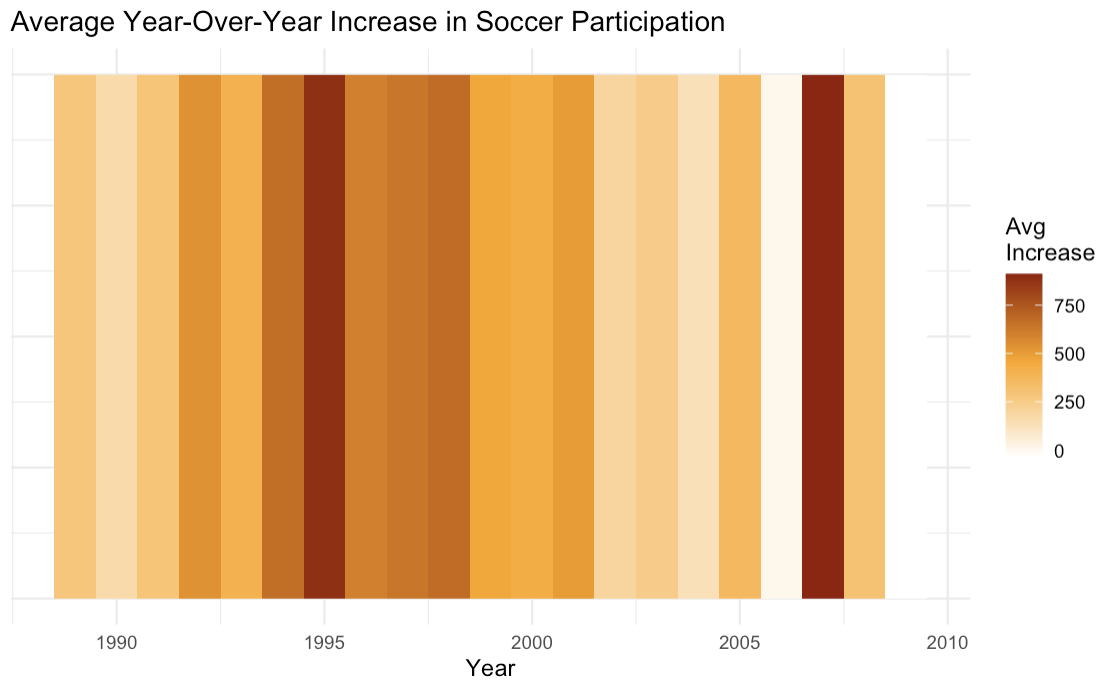
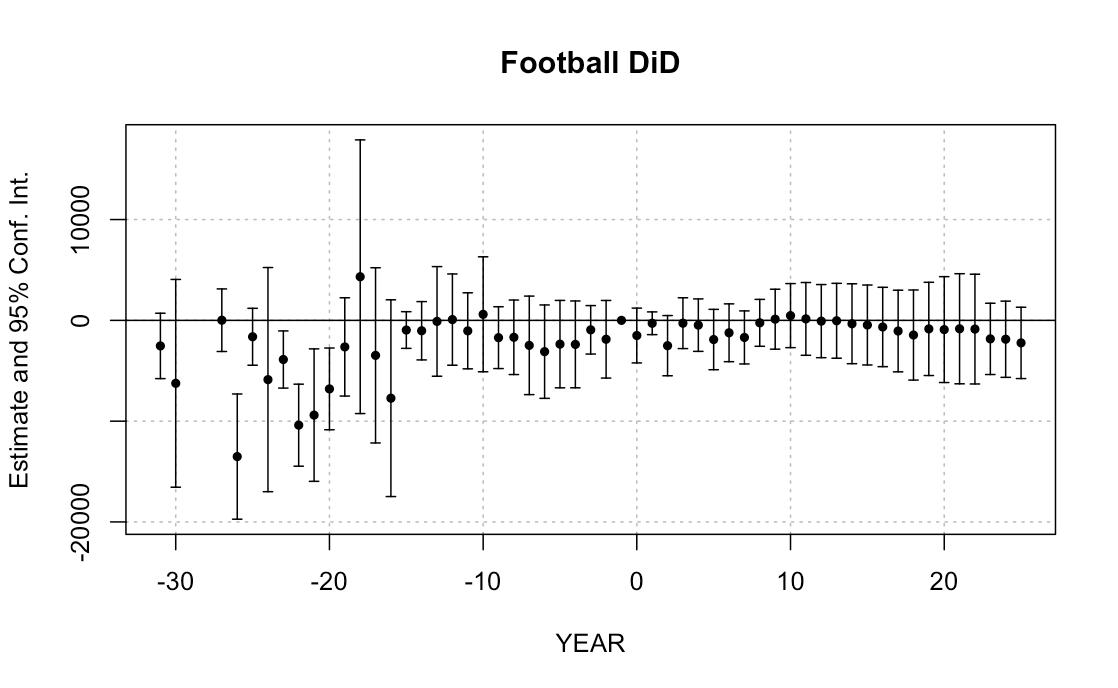
(Positive Y axis is more inclusive legislation, negative Y axis is more exclusive)
(Red is more restrictive, green is more inclusive)
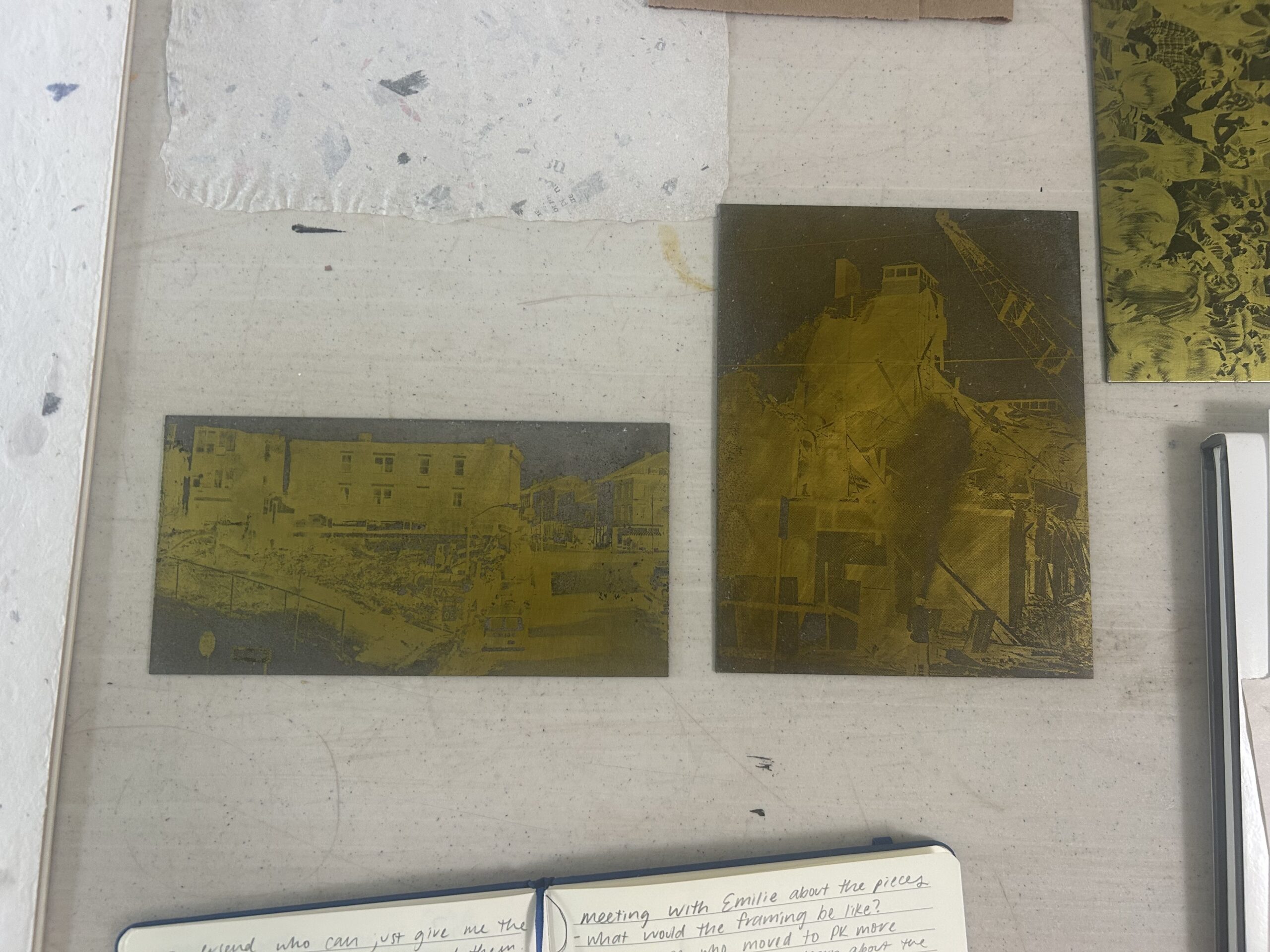
This summer, I worked with Dr. Maria Hantzopoulos of the Education and International Studies Departments on a nascent project related to the impact of neoliberal urbanism, gentrification/displacement, and educational policy on schooling in NYC.
Since the project is in its early stages, gathering background information was a priority. I spent time organizing demographic data on NYC public schools over the last 30 years (citywide, along with District 30 in Queens and District 15 in Brooklyn). Data included the racial compositions of schools, along with their proportions of economically disadvantaged students, disabled students, and English language learners. These data will help contextualize more complex observations. I also read Pauline Lipman’s The New Political Economy of Urban Education: Neoliberalism, Race, and the Right to the City to familiarize myself with how neoliberal policies and logics have shaped systems of education.
An important feature of this project was that it was done in collaboration with a group of students who joined for Independent Study credit. Those collaborators were Heba Elkouraichi (‘2029), Hana Afiz (‘2027), Justine Katimbang (‘2027), and Erika Shiffman (‘2027). Together, we discussed Lipman’s book, engaged with other materials, and brainstormed different directions for continued research. Because we’re all from the NYC metropolitan area, our personal experiences informed our conversations and the directions we hope to take this project.
On July 16, members of the Independent Study group and I attended a virtual meeting hosted by Public Land for Public Good. The meeting featured a group of local organizers resisting the aggressive privatization and commercialization of NYC’s public land. (The moderator, Ron Shiffman, is coincidentally the grandfather of one of our research group members, Erika!) The meeting was a moment of hope for the future of grassroots resistance, community togetherness, and coalition building.
As our project concludes, we’re thinking about areas for future investigation. Part of my proposal is below. Essentially, I am curious about the tension between increased academic agency fostered through the proliferation of progressive, project-based education in the city and decreased agency over city space itself. These competing realities may complicate students’ ability to succeed in project-based learning environments, but they may also create opportunities for meaningful engagement with local communities.