
Nika Ungurianu
This summer I worked with Professor Tcherkassova in researching the Datsan Gunzechoinei in St. Petersburg. The goal of this project was to examine how Buddhism, which was the indigenous religion of rather small groups at the edges of the empire, became anchored in the imperial capital, and also influenced religious philosophy, literature, and visual arts. Among the fascinating questions of our research was the way in which the Datsan merged with the city not only spiritually, but also aesthetically and architecturally.
The first Buddhists in St. Petersburg, the capital of the Russian Empire, were Kalmyks and Buryats, Mongolian peoples, coming from the Eastern and Southeastern borders. They practiced a variety of Tibetan Buddhism, which is known in Russia as Lamaism. At the beginning of the 20th century, the local population of Buddhists had outgrown the use of private apartments as houses of worship, and the construction of a Buddhist temple was initiated by the emissary of the 13th Dalai Lama, Agwan Lobsan Dorjiev. With all that, the population of ethnic Buddhists in St. Petersburg was rather insignificant, and they lacked financial resources for building their own temple. Crucial for the enterprise was the support that came from Russian artists, intellectuals, and aristocrats, as Buddhism was becoming increasingly fashionable throughout the Western world. A board of trustees was formed to oversee the construction of a Datsan, which is the term for a Buddhist monastery of Tibetan tradition that acts as both an educational and religious center.
The design and construction of the temple involved prominent artists and architects of the Silver Age, which is the Russian term for ‘Belle Epoque’. The overall design belongs to Gavriil Baranovsky, the architect best known for the Eliseyev Emporium in St. Petersburg, one of the most vibrant examples of the Art Nouveau style in the city. Among chief artistic contributors was Nicholas Roerich, a major painter who was infatuated with Buddhism in the context of his interest in Theosophy and religious experimentation (decades later he would declare himself the Dalai Lama of the West). He was aided by Buryat artists in designing the interior of the temple, including the stained glass windows of the prayer hall. Gunzechoinei was built in the tradition of Transbaikal datsans, fulfilling all the requirements of the Buddhist building canon. This unique combination of traditional Buddhist imagery and conspicuously Petersburgian Northern Art Nouveau style created a veritable architectural masterpiece that became a prominent addition to the numerous houses of worship of various religions in Russia’s Imperial capital.
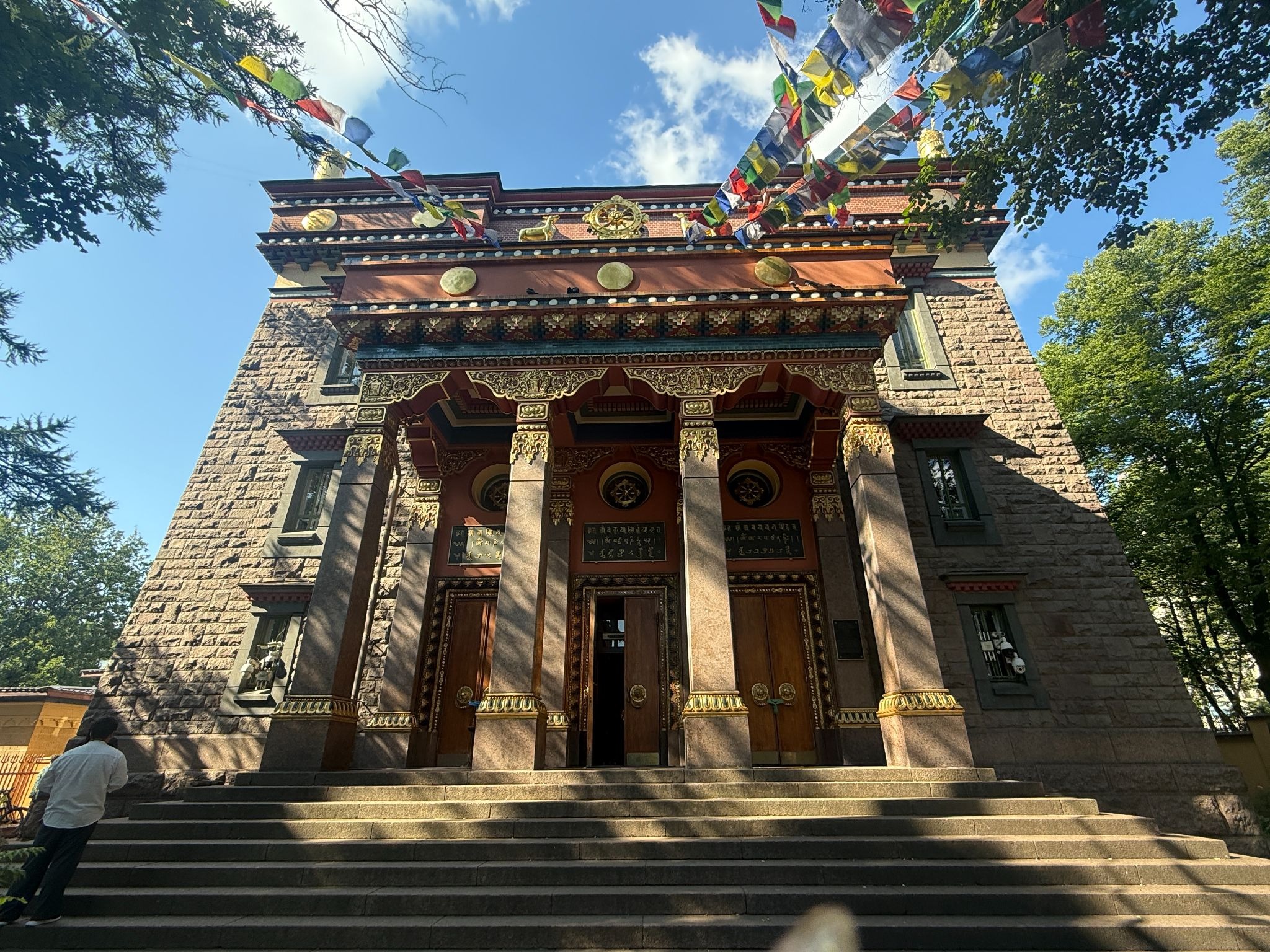
View of the entrance to the temple.
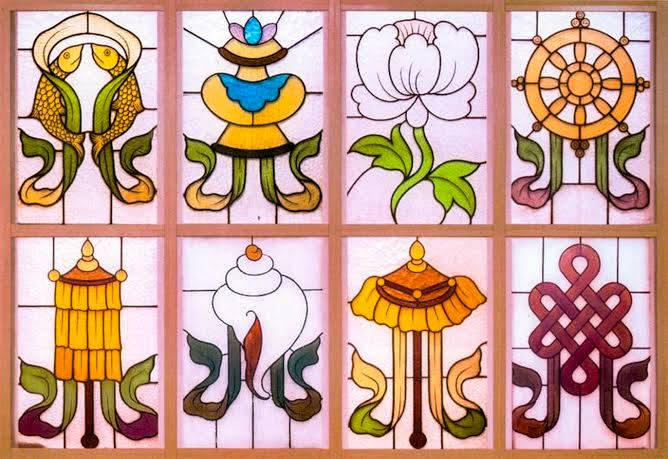
Roerich’s stained glass window designs from the interior of the temple.
Another important aspect of the project is examining the public discourse and debates in connection with the construction of the Datsan. While during the turn of the century St. Petersburg was extremely cosmopolitan and tolerant, there were objections to the construction coming from some conservative Orthodox clergy and politicians. However, the supporters of the project prevailed, as they included prominent academicians, artists, and public figures such as Prince Esper Ukhtomsky, who had close ties to Emperor Nicholas II.
The construction of the Datsan was completed in 1913 and it performed its first worship on the day of the 300th anniversary of the House of Romanovs. It faced a tumultuous future through the First World War, the Russian Revolution, and the early Soviet years, and was eventually closed in 1933. It was reopened as a house of worship in 1990, and since then has become an important Buddhist center in Russia.
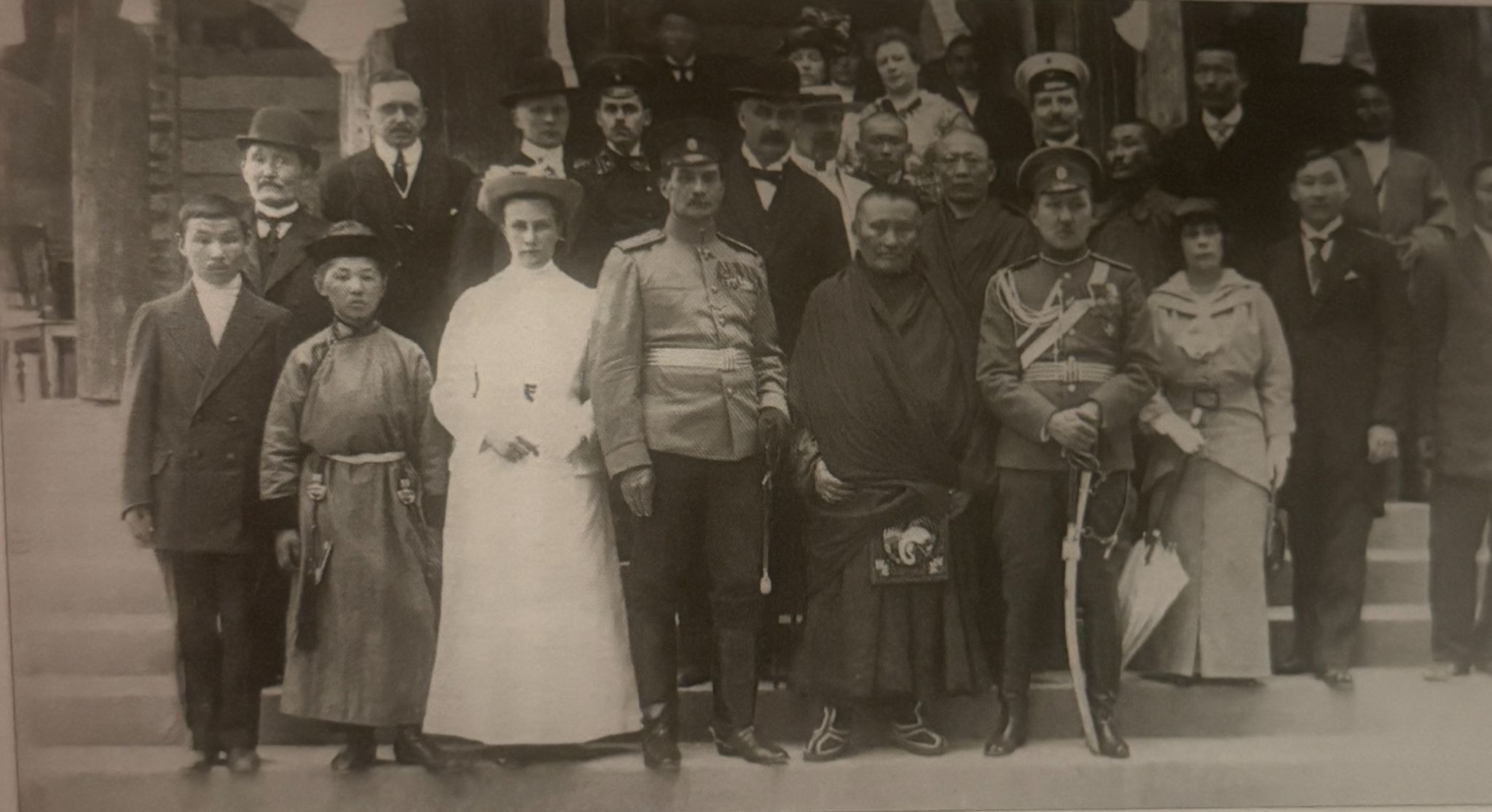
A group of St. Petersburg’s Buddhists and Datsan trustees outside the temple, 1914. Photographer: Karl Bulla