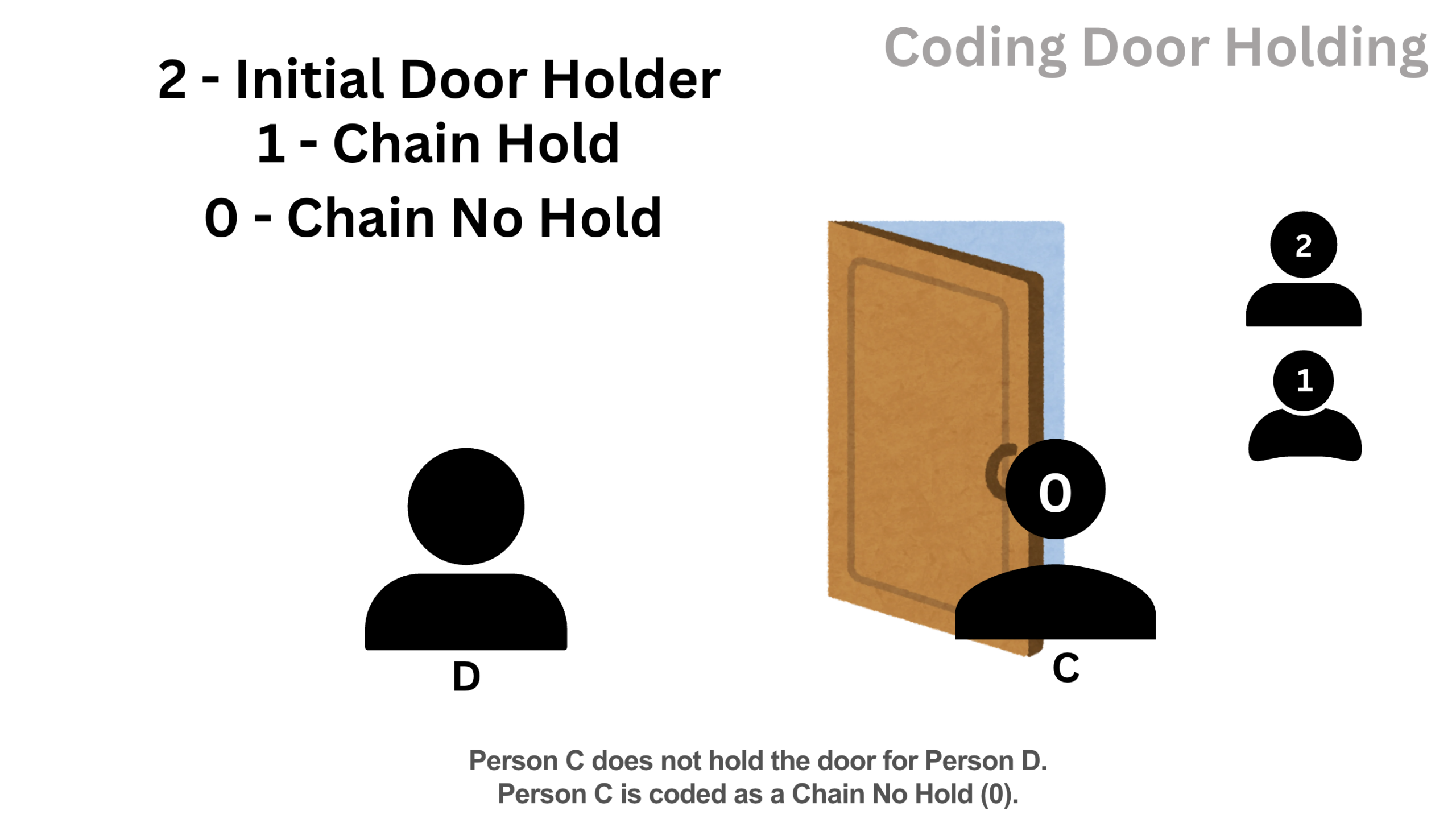
The Data Analysis for Behavioral Economics Ford project seeks to investigate how the value of favors appreciates or depreciates over time. Put simply, “If someone did you a favor, how does that affect your willingness to do someone else a favor?”
The behavior of interest is door holding, where favor size is operationalized as time. Door-holding was chosen as it is an easily observable, novel, everyday behavior. Time can be viewed as an economic resource. From this, we investigate economic decision-making through the lens of favors and upstream reciprocity (ie., paying it forward). Other factors that may influence the appreciation/depreciation of favors: distance, the number of followers, culture, gender norms, etc.
What distinguishes this project from previous studies is our use of public feeds for data collection. With the rapid development of computer vision and LLM tools, the grand vision of this project is to have a fully automated analysis pipeline, where hundreds upon thousands of samples may be observed across different locations, cultures, and countries. Further, natural observation affords greater external validity.
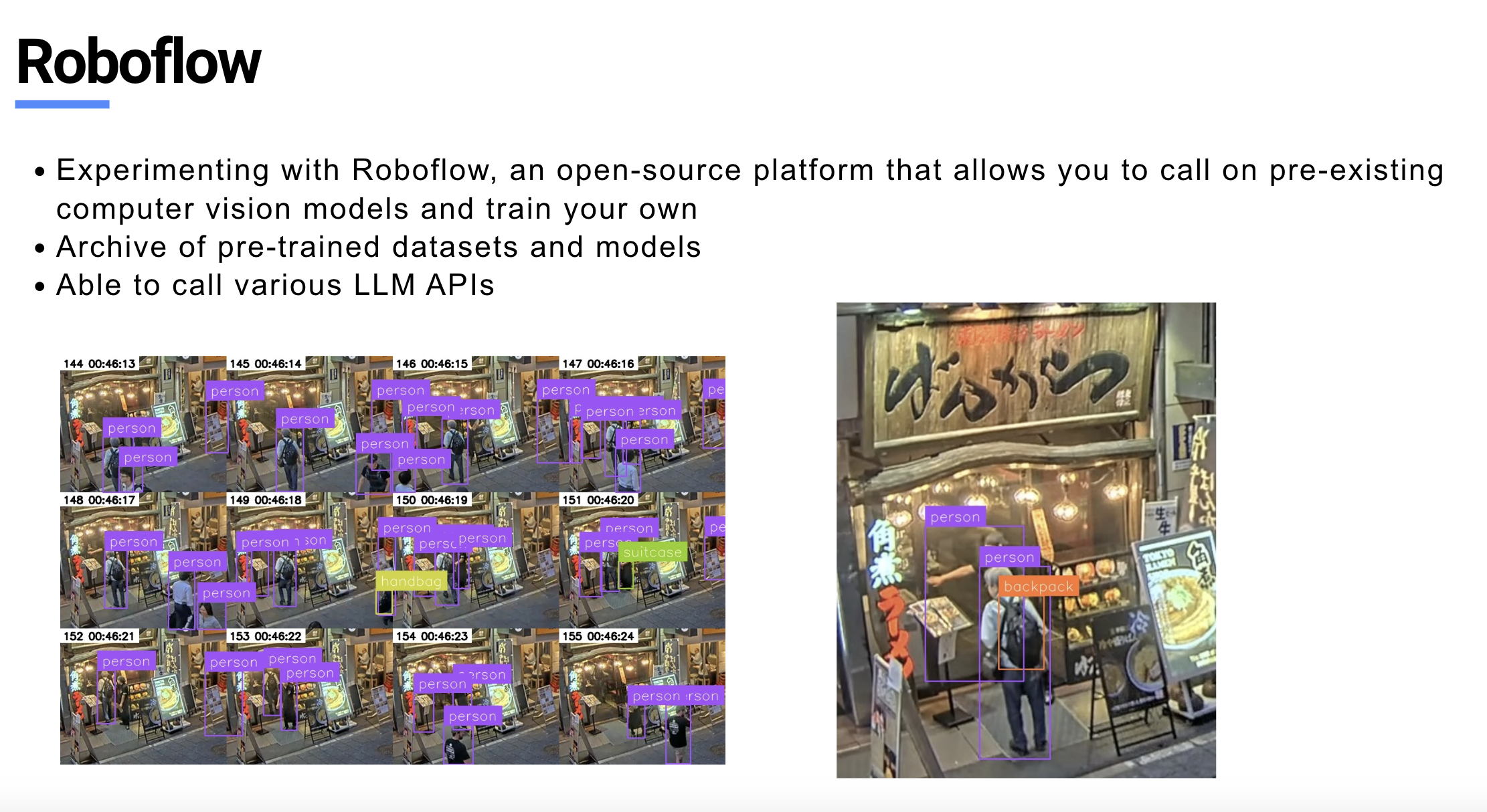
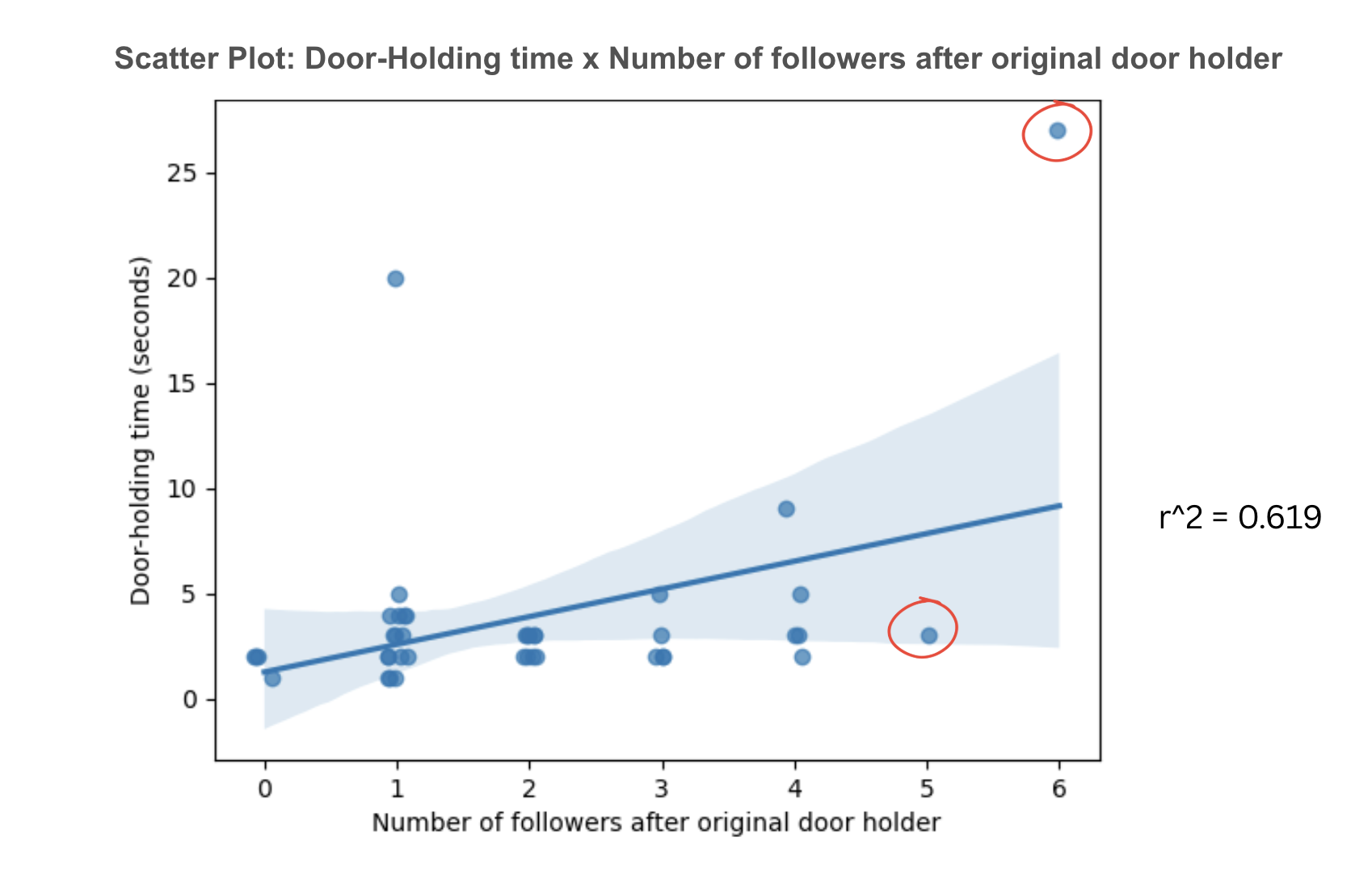
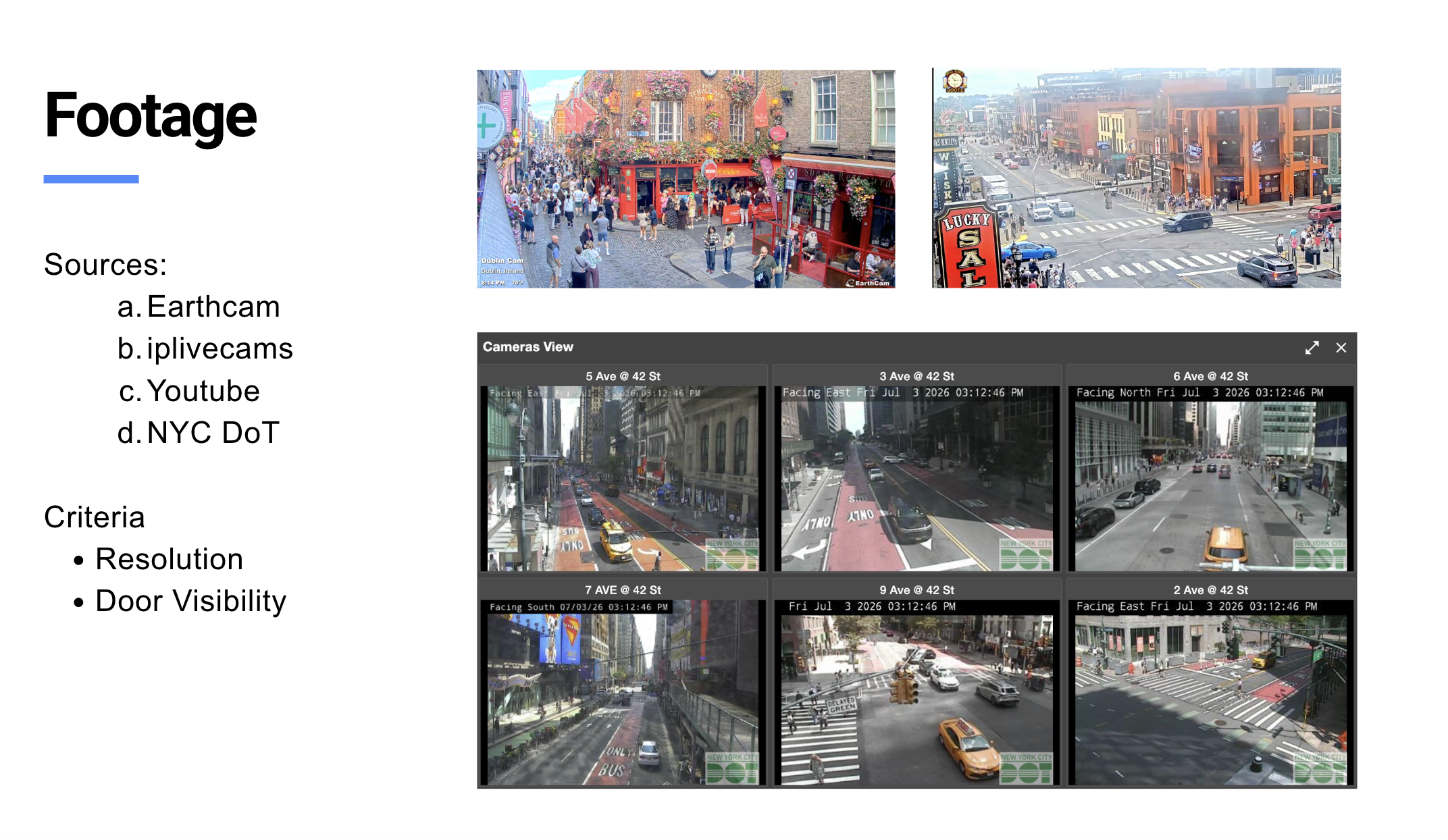
My work focused on laying out the groundwork for this project, from literature review, generating hypotheses, amassing a log of public feeds (NYC DoT, EarthCam, etc.) experimental design, creating data collection templates, and experimenting with different tools such as Codex and Roboflow. To flesh out the pipeline logic, I conducted a hand-scored pilot study using an archive of street footage from Kabukicho, Tokyo, Japan. This yielded ~120 observations, from which exploratory plots were produced. These preliminary trends provide insight to what hypotheses may be worth investigating in the future. Our next steps consist of developing a Roboflow Hybrid API-LLM pipeline, revising our data collection methods, and expanding to different locations and observing larger samples.