This summer, I worked as the Ford Scholar under Professor Paravisini-Gebert and Professor Aronna for Vassar’s Oviedo Project. In total, this project aims to translate all four volumes of Gonzalo Fernández de Oviedo’s 16th-century Historia general y natural de las Indias, islas – y tierra firme del mar océano into English for the first time. By doing so, we seek to make this source more accessible for research, as it contains pivotal information on the colonization of the Caribbean, Mexico, and Latin America.
The work is also notable for being a translation largely undertaken by undergraduates. As a class during the academic year, the Oviedo Project guides Vassar students through the independent translation of one to two chapters. My job for the summer was to help prepare these students’ translations of Volumes I and II for publication.
Annotations
For the first half of the summer, I worked primarily on annotating Volume II. The annotations will help current students and researchers better understand the text by explaining terminology, names, and places that would have been known to a 16th-century audience.
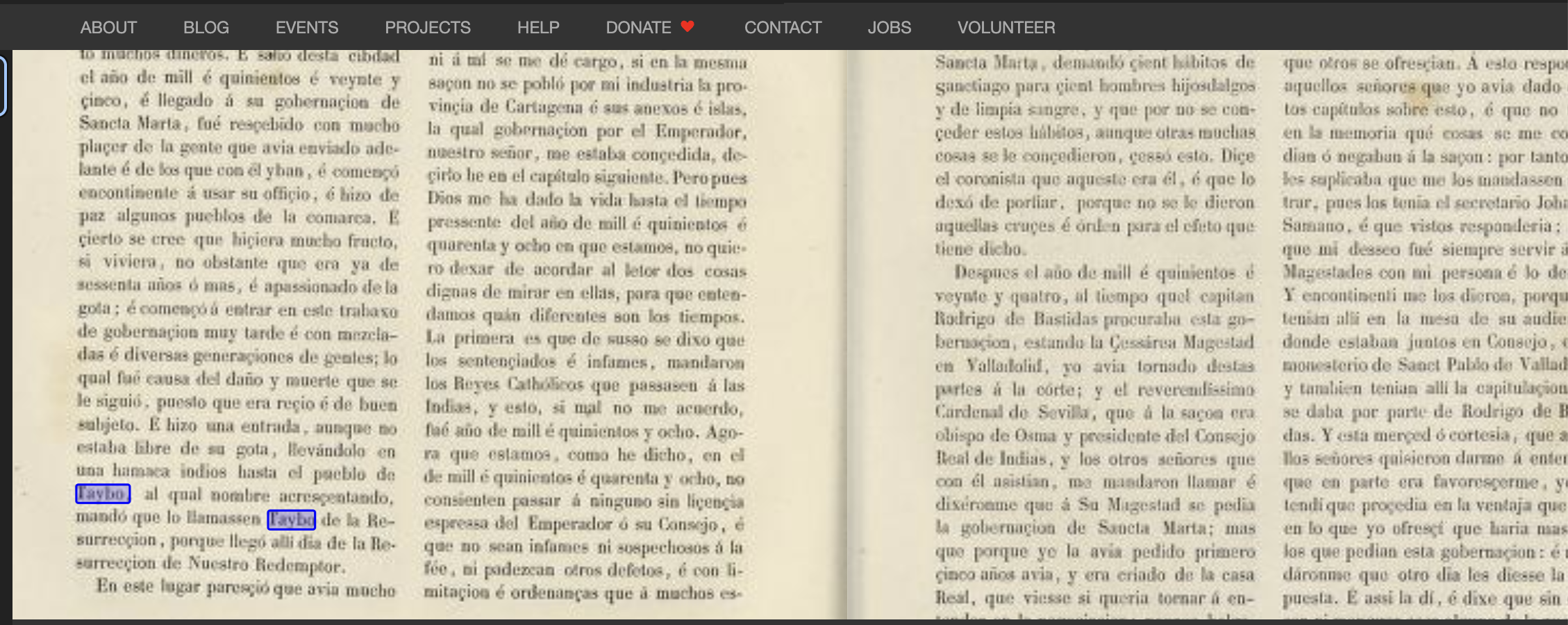
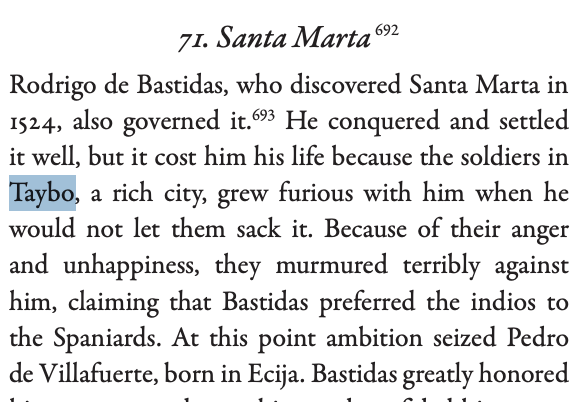
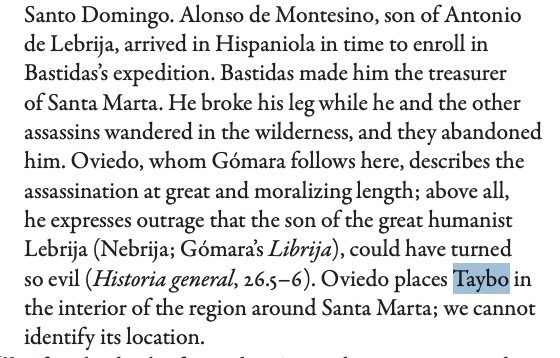
An example of a section of Historia general y natural de las Indias, islas – y tierra firme del mar océano where a town [highlighted] needed annotationA section of The History of the Indies by Francisco López de Gómara that I used to research information about the town
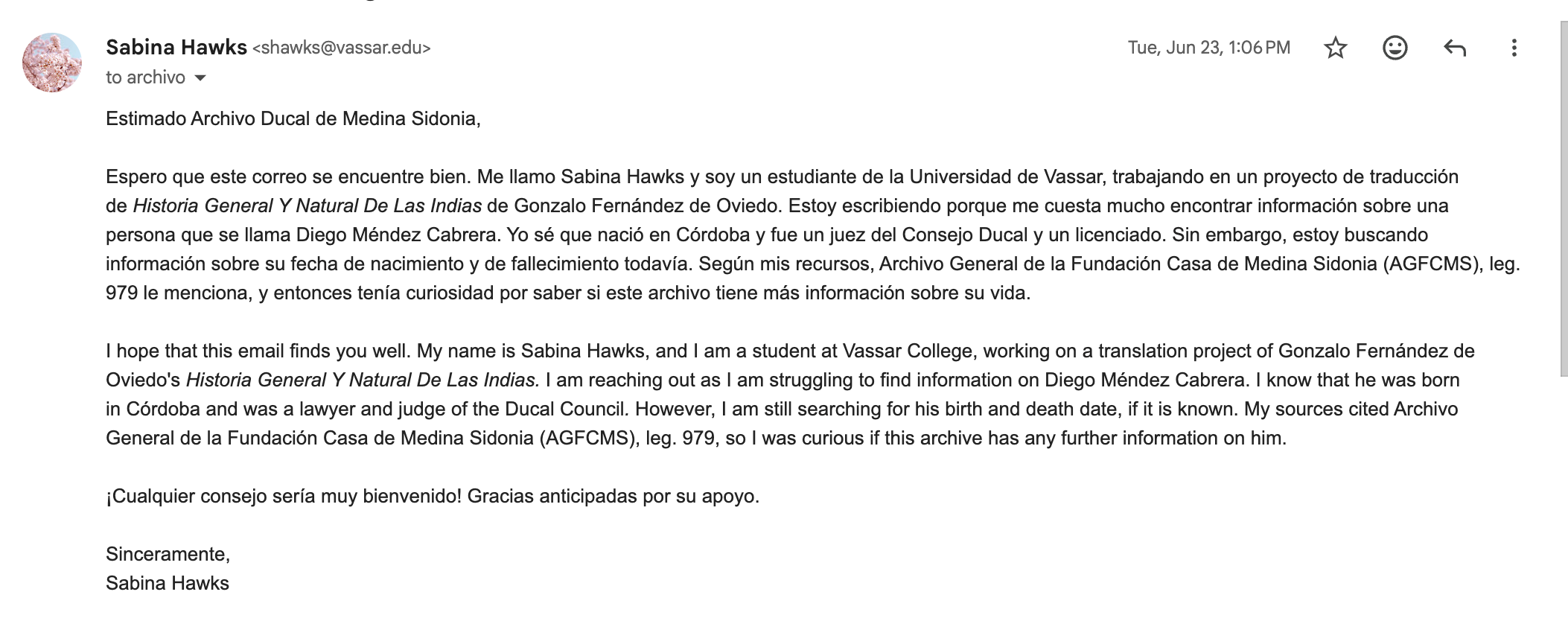
As part of this research, I was also in communication with several archives, including some in Spain, and heavily utilized the Vassar Library collection.
An example of correspondence with archives
Index
The second half of the summer took an unexpected turn. Volume I, currently in the works for publication, ended up exceeding the 1150-page limit that the publisher could print. So, the publisher reformatted it to fit within this boundary. However, this pagination issue meant that all the entries in the book’s 52-page index were suddenly incorrect. Given the purpose of this translation for helping in research, an accurate index is vital. Therefore, I spent the later half of the summer rewriting the index in Volume I, as well as continuing to annotate Volume II.
This summer, I worked with Professor Pier Carlo Tommasi and research assistant Julia Onishi by reading 16th century Japanese warrior diaries to analyze the importance of the diary as a form of self-expression and for understanding cultural practices in the daily lives of samurai warriors. Previous scholarship on Medieval Japanese diaries has either focused on the works of priests and noblemen and neglected those of warriors, or was entirely focused on the politics behind the diaries. For our project, we tried to view them from a different perspective than other scholars, focusing on the identity of each warrior and the intention behind each event they chose to note from both their professional and private lives.
Uwai Kakuken Nikki Original Document, Iwanami Shoten
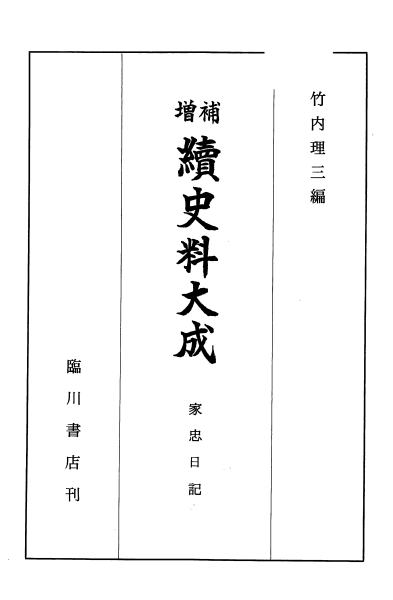
Matsudaira Ietada Nikki Original Document, Rinsen Shoten
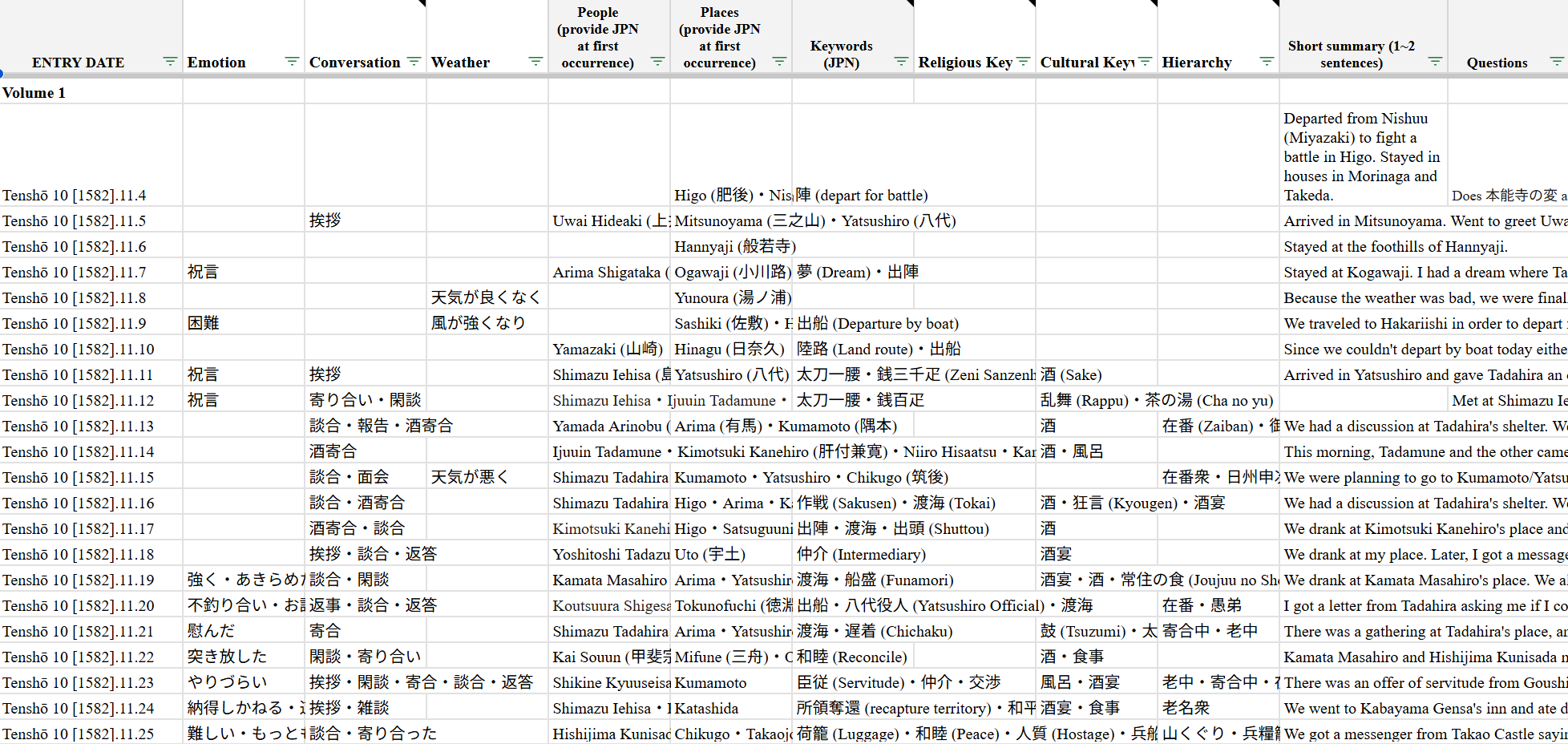
All three of us worked on different warrior diaries. For my portion of the project, I worked on the Uwai Kakuken nikki (上井覚兼日記) and the Matsudaira Ietada nikki (松平家忠日記), written by Uwai Kakuken and Matsudaira Ietada, respectively. The bulk of the summer was spent reading a modern Japanese translation of the diaries, noting any mentions of keywords related to Japanese culture, politics, and social norms. Additionally, I would write a translated summary of each journal entry and organize it in a spreadsheet. I also worked on reading through and annotating secondary scholarship on the diaries to better understand the time period and the opinions of other scholars before forming my own conclusions.
Spreadsheet for data from the Uwai Kakuken Nikki
Uwai Kakuken and Matsudaira Ietada share multiple similarities. Both were mid-rank samurai who presumably started their diaries at a turning point in their lives: Kakuken, when he became the official messenger of the Shimazu clan, and Ietada, when he became the head of the Fukouzu Matsudaira clan after his father’s passing. However, the content and style of their diaries are drastically different. Kakuken’s diary consists of a variety of topics that he writes down with precise details, both in his work and private life. Due to his position as a messenger, he has a large vocabulary when describing interactions with others. The entries vary in length depending on how many messages he received that day, and he is consistent with writing every day. On the other hand, Ietada’s diaries are short, limited in the number of topics discussed, and mainly focus on his work rather than his private life. My current hypothesis is that Kakuken and Ietada had different intentions behind writing their diary; Kakuken simply wrote down everything that happened to him and wanted it to be more personal, while Ietada used it to record work-related events.
This is a long-term project that I’ve been working on since my freshman year, and will continue doing so during the school year. My current goal is to finish gathering data and reading through more secondary sources on the Matsudaira Ietada nikki before switching gears to conduct a more thorough comparison between the two diaries. In the later part of the project, the three of us will share our findings from our respective diaries and work to come to a conclusion on the significance of the Medieval Japanese diary genre as a whole.
This Summer, I worked alongside Professor Amanda Culp in the translation of Polish director Jerzy Grotowski’s Siakuntala from Polish to English. A pioneer in Polish theatre, Grotowski sought to incorporate experimental approaches that eclipsed the boundaries between audience member and actor, or, in his eyes, initiate and priest/brahman. Through a style he termed “Poor theatre,” he transmuted “oriental” theatre through the imagination of Europeans. In the early 1960s, Siakuntala was created.
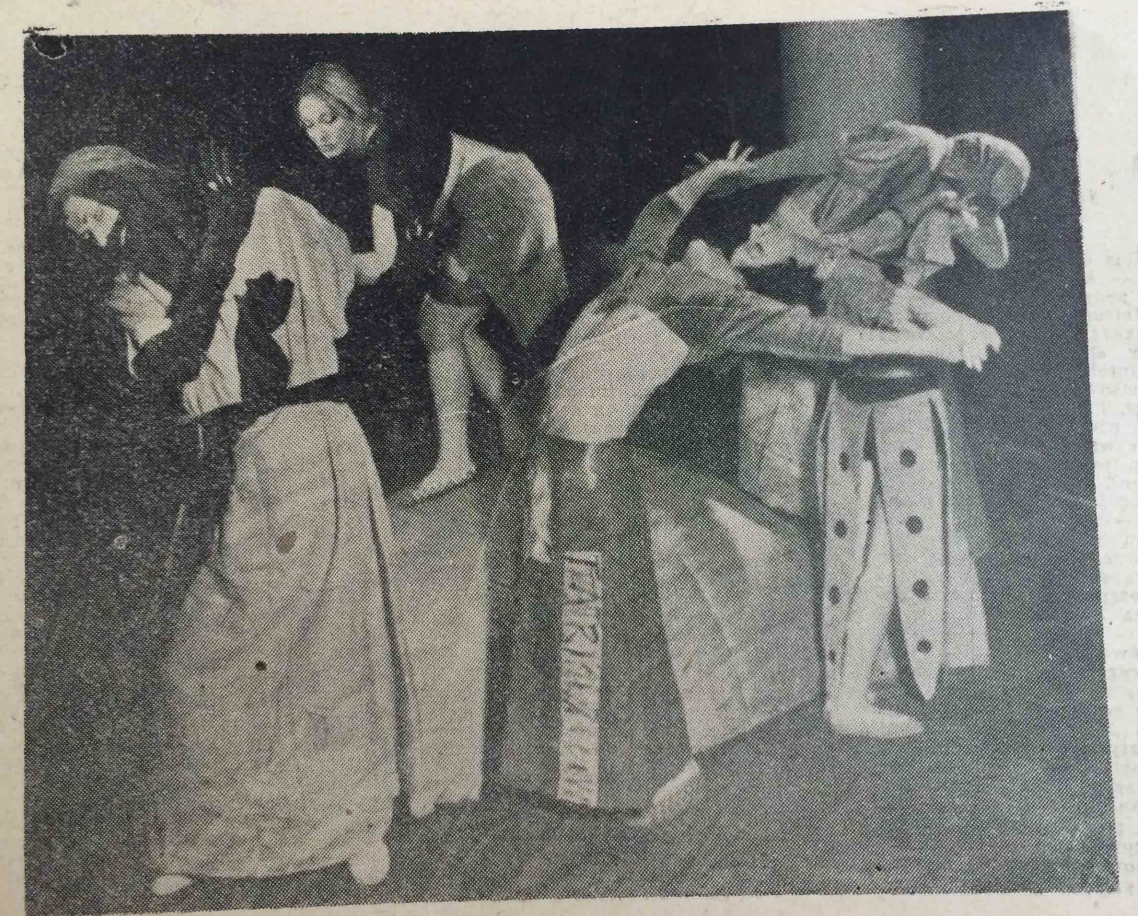
Image from the Siakuntala program, depicting Siakuntala “giving herself over to love.”
In his re-imagining of Kalidasa’s Shakuntala, Grotowski intentionally transcended traditionality. Throughout the translation, Dr. Culp and I were brought on a wild ride of countless diversions from Schayer’s original base translation: complete eliminations, replacements, and most curiously, inclusions of passages from Sanskrit sources such as the Law of Manu, the Kama Sutra, and the Mahabharata. He conveyed the topics of feminism, righteousness, religious duty, love, sex, and eroticism in a way that challenged his Polish audience and forced them to confront their unease. Grotowski clearly wanted to transcend the base plot and transmit his own moral, philosophical, and spiritual teachings to his audiences… but what exactly was he trying to convey?
To understand this, we probed his consistent emphasis on Shiva by translating the postscript Gra w Sziewie. Here, Grotowski makes it clear that he yearned to encapsulate the infinite, cosmic, transcendent, and inherently non-dualistic qualities of Shiva through dance, motion, and “trance.” Through embodying Shiva in performance, his theatre became a ritualistic, “therapeutic” practice that forced the viewer to confront the nature of existence; the contemplation of “…human fate, of the condition of man, of multifacetedness.”
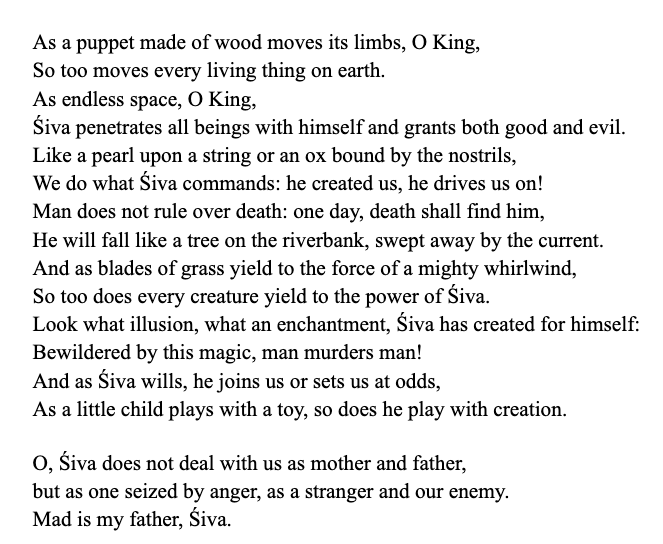
Siakuntala’s speech after her love abandoned her.
Perhaps Grotowski desired his performance to be the physical manifestation of what the Mahabharata represents: an exploration of duty, morality, and cosmic order, and an encyclopedia of human emotion. This play was certainly the precursor to his future performances (i.e., rituals), and I am very grateful to have had the opportunity to offer it to the English-speaking audience.
Harper Jamison ’28, working under Professor Esteban Argudo
The purpose of this project was to understand the effects of rising deportation and related enforcement rates on access to credit for immigrants and natives. Access to credit is important as it enables anyone residing in the U.S. to access capital to invest in themselves and their lives, and we theorize that increased deportation/enforcement rates will impact access to credit in multiple ways. On the applicant side, immigrants may be apprehensive about applying for credit during periods of heightened enforcement due to the process involving questions/documents surrounding an immigrant’s status in the U.S. and bank reporting regulations. Lenders may also be apprehensive about approving loans for immigrants, as increased deportation could lead to deported borrowers being unable to repay their loans.
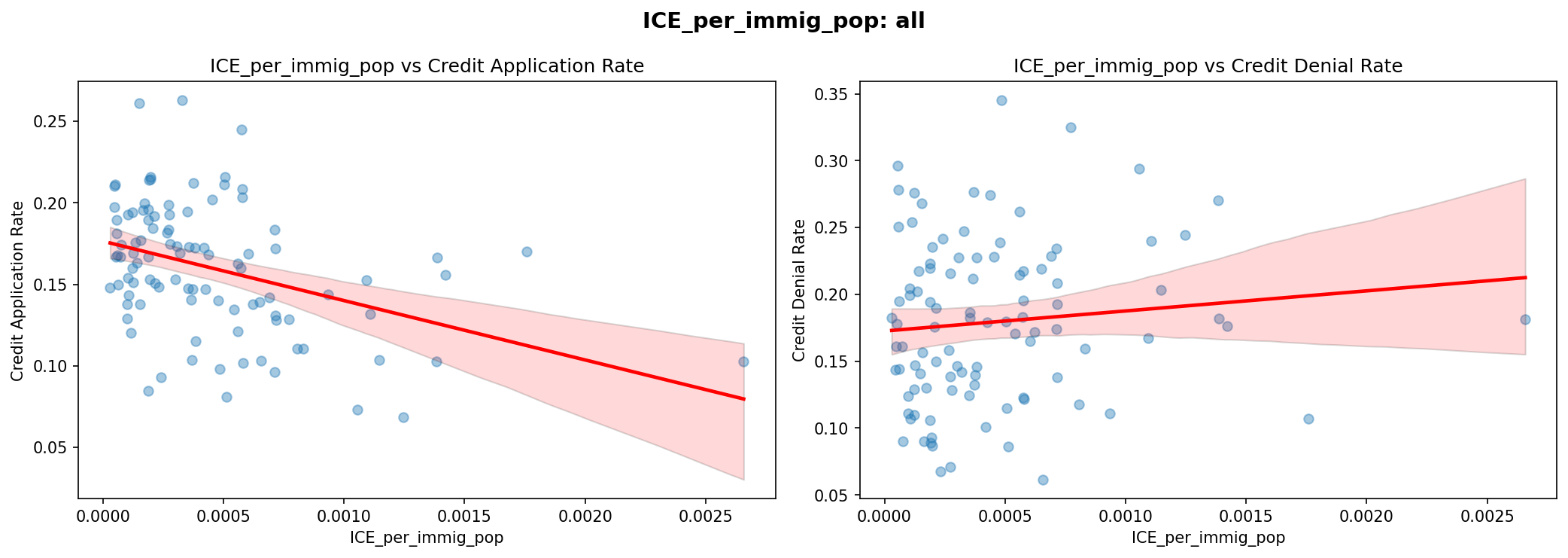
To investigate this, we used ICE/DHS Enforcement Data in conjunction with the CPS Unbanked/Underbanked survey. The ICE/DHS data provided us with enforcement events (arrests, deportations, and detentions) for individual immigrants by state and year, and the CPS survey provided us with household-level data on immigrants’ and natives’ credit application and denial rates, as well as other useful demographic information. Using Python and Excel, I cleaned and consolidated these datasets so they could be used in Stata. I also created preliminary regressions, using state averages of credit application rates, to ensure that there was a relationship present and to get a general idea of trends. This is one graph:
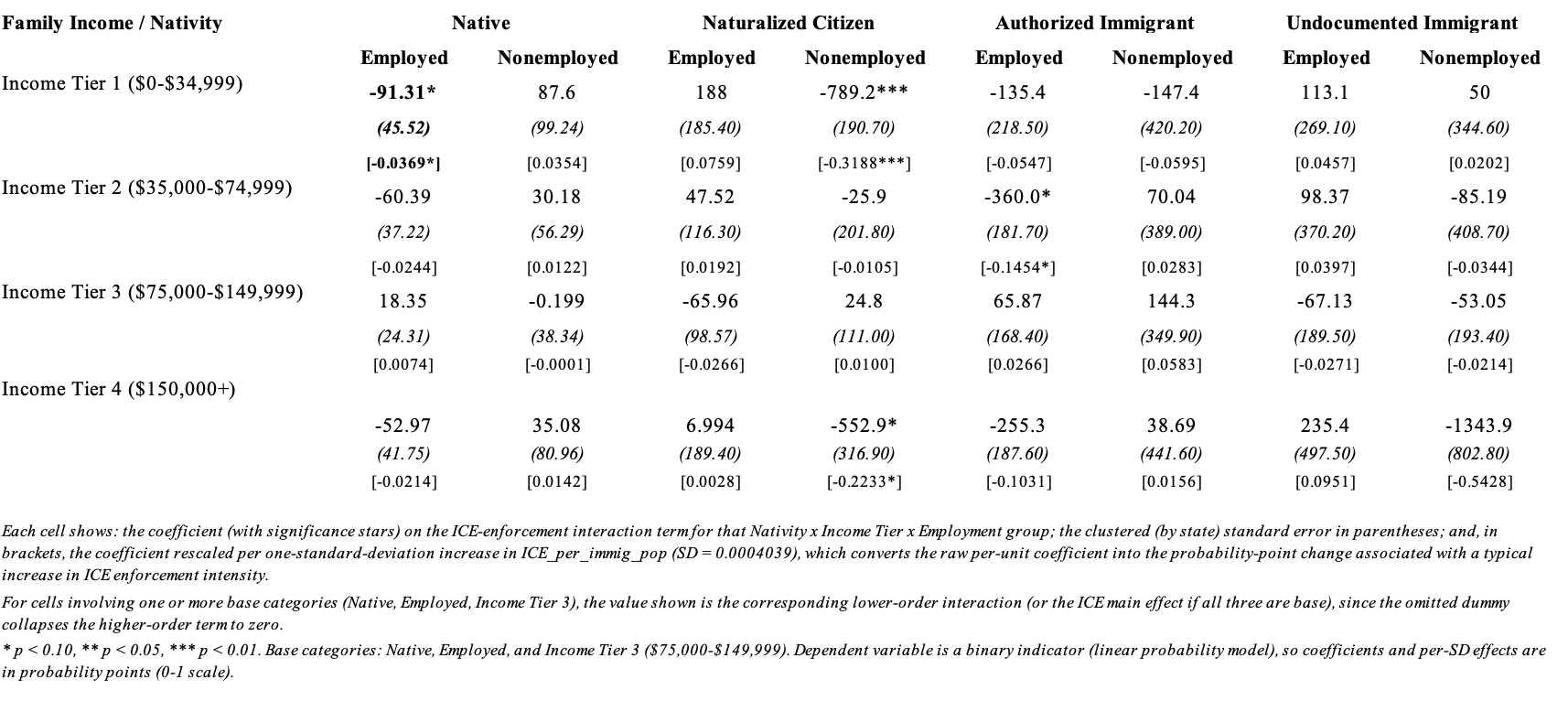
The next step was designing and running regressions in Stata to explore the explanatory variables and their effects on credit application and denial rates. This process involved adding different control variables, such as delinquency rates and demographic variables. We kept adding different explanatory variables, such as unemployment rates and family income tiers, to further isolate the effects and how interactions between these different variables affected the relationship between credit rates and enforcement rates. After multiple versions of regressions with different levels of controls, we settled on a regression that used family income, employment, and nativity status alongside enforcement rates to explain the dependent variable. The result is shown below in a table for credit application rates.
The next steps for this project include writing a paper covering in detail the processes and results I’ve summarized in this blog post. I also want to delve into differentiated geographic variables, such as metropolitan areas or counties, as conditions for multiple variables aren’t the same across a state.
Assisting with this project was an extremely valuable experience for me for multiple reasons. Firstly, I found it so interesting to learn about and take part in the research process. Research is something that has been appealing to me for a while, and so learning about how it works and getting to do it myself was incredibly exciting. It was also incredibly fulfilling to be able to see the process from start to finish. It was great getting to use the data that I found and cleaned to run regressions, and now beginning to write a paper on the methods and processes I used. I also got to learn and improve upon my skills, especially my coding abilities. I also enjoyed working alongside my mentor, Professor Argudo, as well as the rest of the Economics students and faculty. I learned so much from them, and I grew a lot in multiple areas. I’m so grateful for this experience and everything I learned.
This summer I worked on multiple projects with Professor Means tied together by the common theme of emphasizing the importance of judicial diversity and restorative justice. Over the course of eight weeks I co-authored a journal article with Professor Means for the Louisiana Creole Research Association, worked as a research assistant at The Next Act therapeutic theater arts program for Dutchess County youth, helped with planning the 2027 Jane Bolin Day program, and organized potential spotlights for publicity for Professor Means’s book, Robed Representatives: How Black Judges Advocate in American Courts.
As part of my research for La Creole, I reached out to Louisiana federal judges for interviews, speaking with them about judicial diversity and Creole representation on the federal bench. Further, I researched and wrote the literature review of the journal article on Louisiana Creole history and origins, and I highlighted how Creole judicial representation has been underrepresented. I also wrote and performed qualitative analysis of Creole judges’ biographies and policy work—underscoring the importance of the multifaceted background they bring to the bench.
Working as a research assistant on The Next Act, I interviewed previous staff to possible areas of improvement in the program, as well as to prepare for my own role. For the duration of the program, I observed and also participated in the theater activities, writing reflective notes on the students’ progress. Each week I created a newsletter with highlights from the program to be sent home with the students for their parents/guardians to see. I conducted interviews and administered surveys to the students to assess their progress in terms of comfortability, helpfulness, and self-confidence.
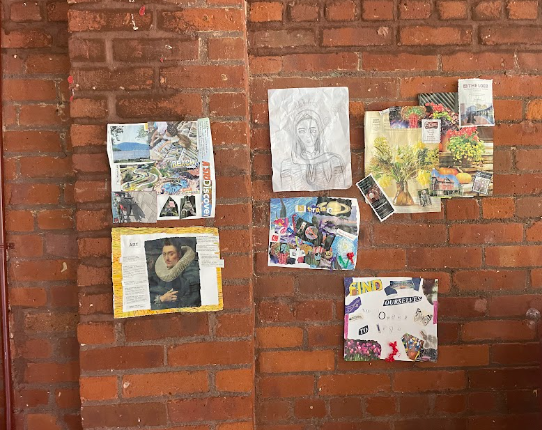
Some of the artwork created from The Next Act’s young artists during a college-prep workshop.
Through this project, I learned more about the academic processes of researching and writing. I enriched myself in the learnings of judicial representation and rehabilitative practices in the justice system.
Over the Summer, I worked with Professor Tracey Holland on her project assessing the state of children’s rights and human rights due diligence (HRDD) in the arms industry.
In recent years, across many industries, companies have adopted voluntary human rights policies intended to protect their employees, and the communities that they affect, in line with international frameworks like the United Nations Guiding Principles on Business and Human Rights (UNGPs). The defense industry however has historically been reluctant to enact effective HRDD policies, particularly with regards to the use of their products by state actors, arguing that it is the responsibility of state regulators to protect human rights by imposing export controls on weapons. Increasingly this view has begun to shift, as some defense companies have acknowledged the reputational, and potentially legal risks, posed by their potential complicity in human rights violations. But at the moment the defense sector takes an inconsistent and varied approach to human rights in their corporate policies.
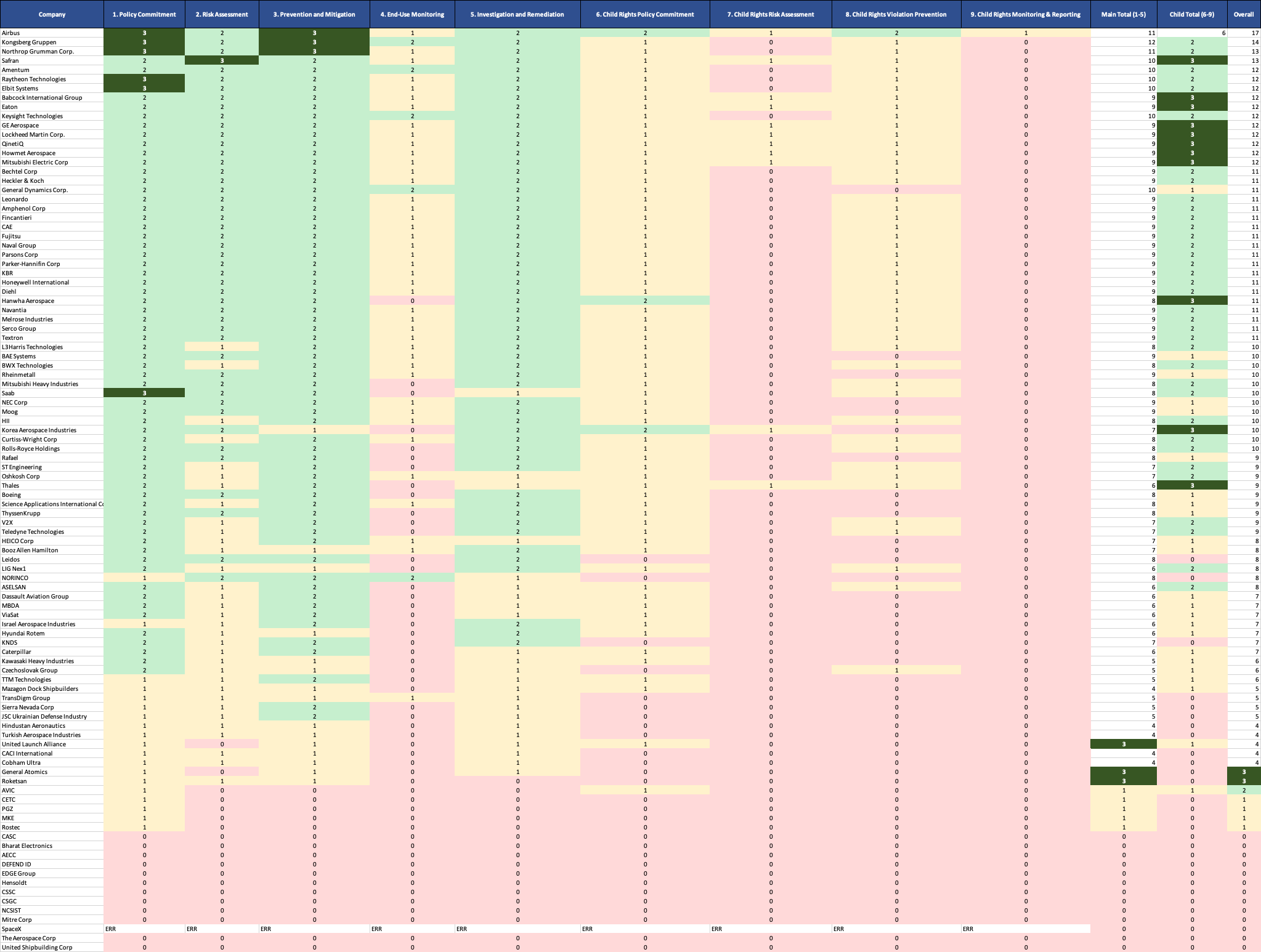
The part of the project I have been working on has primarily involved analyzing prominent defense firms to create a ranked index assessing firms based on their compliance with HRDD standards, and to identify where the industry is currently falling short, with the ultimate goal of providing a helpful tool for investors. At the start of the Summer, I worked with another student researcher (Lydia Mhando, 2029), building off of research done by previous years’ Ford Scholars, to assess a set of companies by hand. We read companies’ publicly released documents, like annual shareholder reports, codes of conduct, and official human rights policies, to gather evidence and qualitatively assess the strength and extent of their policy commitment and system for mitigating risk, monitoring end-use, and carrying out investigation and remediation in cases of human rights abuse.
I then built on the work of a previous researcher, Rishika Mamidibathula (2027), who had built a program that uses Claude to pull all available information about companies’ policies online and score them according to set criteria based on UNICEF/UNGPS/other international frameworks. The program also produces separate “reasoning” and “audit” tabs explaining its decision-making and its sources. I discovered that the program was not actually fetching data from the web, but was fabricating company policies based on its training data. Additionally, it was not limited to just analyzing company documents, but would have analyzed news stories and reports by NGOs about companies, somewhat different from the data this part of the project is trying to focus on. I tried to implement a web fetch component, as well as a system to check the fidelity of direct quotes that the program sourced from company documents, and I limited the program to gather evidence from each company’s respective domains. I also attempted to limit the time and cost by using batch processing. I was then able to run the program for the top 100 defense firms globally.
So far, I have found that the program has been useful for finding a huge amount of evidence on company documents, and is helpful for showcasing some wider trends in the industry, but the fidelity check process has not worked, and on reviewing the output, I have found that it sometimes misses key corporate documents.
This summer has been a great opportunity for me to gain experience doing research on a fascinating topic. There are still several areas that I would like to pursue in the future, particularly with regards to improving the program, as well as reaching out and having conversations with people who work in the defense industry to understand how their companies have developed HRDD policies.
Throughout the eight weeks, I worked alongside Professor Osman Nemli to study the concept of sovereignty in its contradictions and examine its manifestations in the US government. We each prepared notes on the readings before our weekly discussions.
Sovereignty in Theory
In the first part, we focused on philosophico-historico-theoretical texts, reading two per week in a (somewhat) chronological manner. This generated initial contrasts and connections that we expanded upon each subsequent week. We began with Rousseau’s The Social Contract and Hobbes’ Leviathan, forming a basic foundation of some fundamental ideas and terminologies.
To illustrate some contradictions: Rousseau conceptualizes an indivisible, inalienable sovereignty of the people, in a small direct democracy. Contrastingly, Hobbes locates sovereign authority in the supreme rule of absolute monarchy.
Contents of Schmitt’s Political Theology (Week 2)First Page of Derrida’s Force of Law (Week 3)
With sovereignty as the focus, we branched out into related concepts, including theology, states of exception, violence, vulnerability, and the Other.
Contents of Brown’s Walled States, Waning Sovereignty (Week 4)Contents of Section III from Levinas’ Totality and Infinity (Week 5)
Sovereignty in the US Government
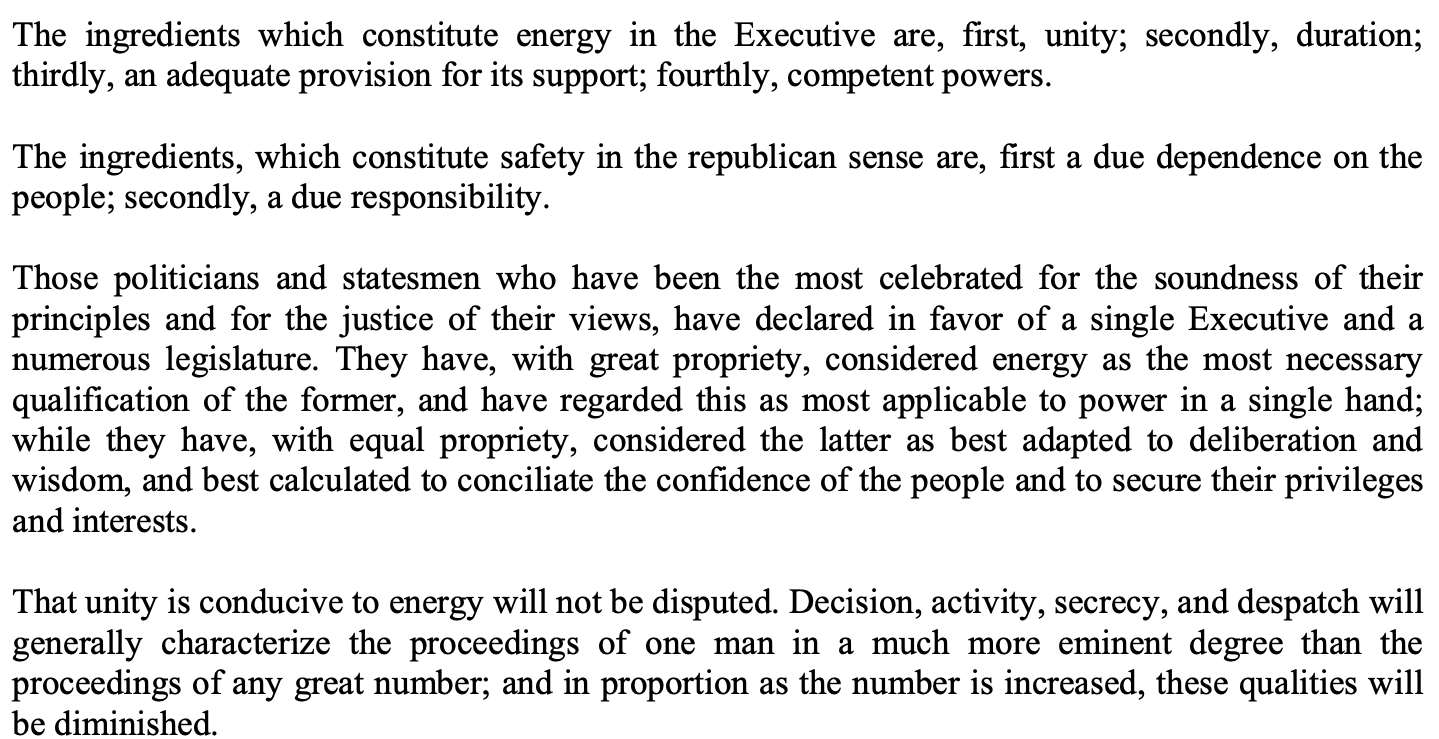
The second part focused on the US with theoretical and case-based studies. We covered selections from the Federalist Papers, 2026 executive orders, and contemporary articles on unitary executive theory to analyze the US government as a manifestation of modern sovereignty. In particular, we looked at the executive branch as a representative of modern sovereign power.
Excerpt from Federalist 70 on the Unity of the Executive
Recent Executive Orders from The White House
Sovereignty, in the US, appears as a strange, contradictory chimera. It is divided and limited by checks and balances. At the same time, it is sourced in a single entity under the unity of the executive branch. The executive is not quite an absolute authority; but neither is sovereign power shared in an indivisible, inalienable manner. Driesen’s article on unitary executive theory adds additional worries over the possible transition from the executive branch’s centralized head-of-state control into autocracy.
First Page of Sunstein & Vermeule’s The Unitary Executive: Past, Present, FutureAbstract from Driesen’s The Unitary Executive Theory in Comparative Context
We can see slippages from the Constitution and Federalist Papers into our current-day, carrying potentially devastating consequences to our constitutional republican structure. Despite being an abstract (nonphysical) concept, it is undeniable that sovereignty carries concrete, material consequences in its manifestations.
Future Work
I will continue working out my ideas and questions in a writing sample and in syllabi outlines, intended for implementation in a future course in the Philosophy Department.
Additional Information
Complete Reading List:
1) Rousseau – The Social Contract, Hobbes – The Leviathan
2) Schmitt – Political Theology, Agamben – State of Exception
3) Benjamin – Critique of Violence, Derrida – Force of Law: The Mystical Foundation of Authority
4) Brown – Walled States, Waning Sovereignty, Butler – Endangered/Endangering: Schematic Racism and White Paranoia
5) Levinas – Totality and Infinity, Derrida – The Animal That Therefore I Am.
6) Selections of Federalist Papers
7) Selections of 2026 Executive Orders
8) Driesen – The Unitary Executive Theory in Comparative Context, Sunstein & Vermeule – The Unitary Executive: Past, Present, Future.
Brief Overview of Concepts: sovereign and sovereignty; state of nature; authority/force/power; social contract; general will and particular will; commonwealth/general body/”the people”; language and definitions; secularized theology; states of exception; possibilities of justice; violence of law; forms of violence, i.e. mythic/divine, law-making/law-preserving, police violence; violence of language; deconstruction; the Other; the animal and the human; transnationalism and globalism; political economy; political sovereignty; co-constituency between subjects and state; decline of nation-state sovereignty; borders and walls; containment/boundedness; phantasmic productions; phenomenological and psychoanalytic frameworks; vulnerability and protection; processes of disavowal; forms of government; separation of powers.
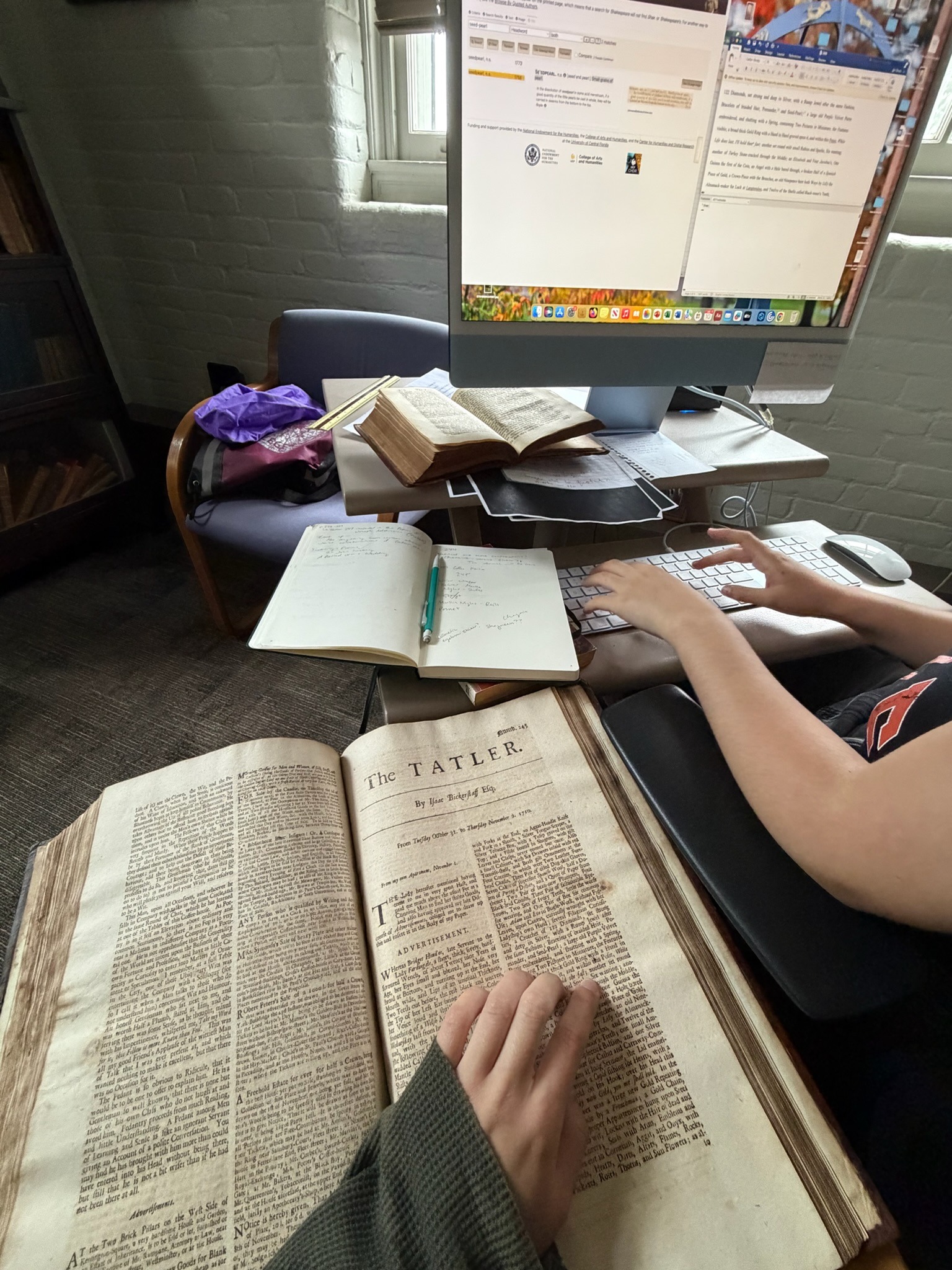
This summer, research assistants Lily Elliott ‘28 and Madison McCleskey ‘28 worked together with Professor Robert DeMaria Jr. to assist with the editing and commentary of the Cambridge University Press Tatler. The Tatler is a British periodical that ran from 1709-1710 authored by Richard Steele and Joseph Addison under the pseudonym Isaac Bickerstaff.
The course of the eight weeks may be divided into four sections: overview of scholarly editing, preparing the text, providing commentary, and beginning a bibliography. On June 8, the first day of the project, Professor DeMaria gave us a crash course in the history of scholarly editing. We discussed how its objective, founded by early editing in light of Humanism, preferred “purifying the text.” In the 17th C., the primary scholarly works were editions of Shakespeare and Milton. The literary critic Samuel Johnson, most known for his incredible Dictionary (we owe much to the 1755 edition) rejected the idea of “purifying” the text and the author. He defined the role of the editor as the aim to communicate the author’s original intention. This is the core of our approach as we prepared Nos. 241-270 of The Tatler.
The process of preparing each Tatler entailed referencing 3 texts: the octavo (8vo), which served as our copy-text (the chosen basis for the edited text), the folio (F), and the duodecimo (12mo) to note substantive differences (“changes in wording,” MLA Guidelines for Editors of Scholarly Editions) within the second collected edition (~1710). The Tatler Vol. IV edited by George Aitken (1899) and The Tatler Vol. III edited by Donald F. Bond (1987) served as helpful models.
Lily (left) and Madison (right) working together to prepare a Tatler. Lily reads from the folio. On the table is a notebook and the octavo. Madison looks up a word in Johnson’s Dictionary (online).
When collaborating with each other, one of us would read from the 8vo, F, and 12mo while the other typed. This provided great entertainment at times as The Tatler notably used character-types reflective of London circa 1710. Reading each number to each other expanded our understanding of political, religious, and social life during the reign of Queen Anne.
This summer, I worked alongside research assistant Kelsey Wang ‘28 to rebuild and improve GRST105: Introduction to Greek and Roman Civilizations for Professor Curtis Dozier. Our main goal for the class is to provide a worthwhile learning experience for students who have never interacted with Classics before. This means exposing them to a range of fields within the GRST department: Greek and Roman history, literatures, archaeology, and languages, all to get a meaningful understanding of how ancient Mediterranean peoples lived. We wanted to improve the class by reworking the material, and the presentation of material, to better align with this goal.
At the beginning of the project, I decided to interview 16 of the students who took the first iteration of the class in the spring semester. This helped me understand why people choose to take an introductory GRST class like this: general interest in Greek mythology, room in their schedule for a 100-level class, recommendations from their GRST friends, etc. Also importantly, students helped me understand what was already working for them in the class. The ‘deeper dive’ assignments allowed for students to participate in their own learning with a topic that interested them. Students also appreciated the lack of weekly readings in this class, because it meant that attending lectures was low-pressure. The students gave helpful feedback about areas of content they struggled with the most (e.g. Roman history), and what they most enjoyed (e.g. lives of Greek women) which helped me understand which areas we needed to focus on in our revision. It was clear that the way content was organized in the previous iteration, with ‘history’ being separated from ‘social history’ themes such as literature, language, politics, and material culture, hindered students from appreciating themes in their context while also making the history lectures dense and confusing. So, from the onset of this project we were aware of a needed integration of so-called ‘history’ and ‘culture’. After all, how could you seperate them when learning about any civilization?
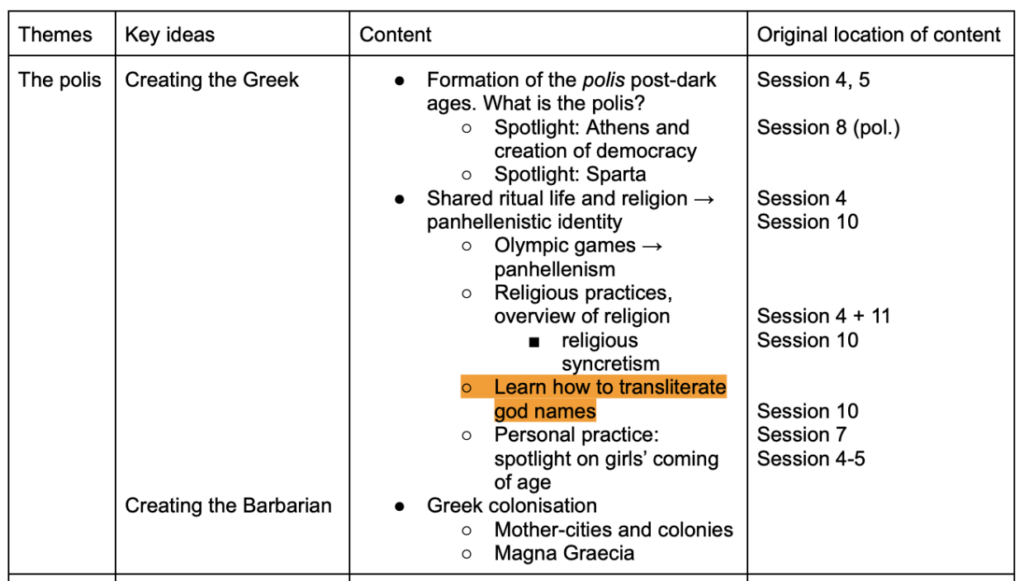
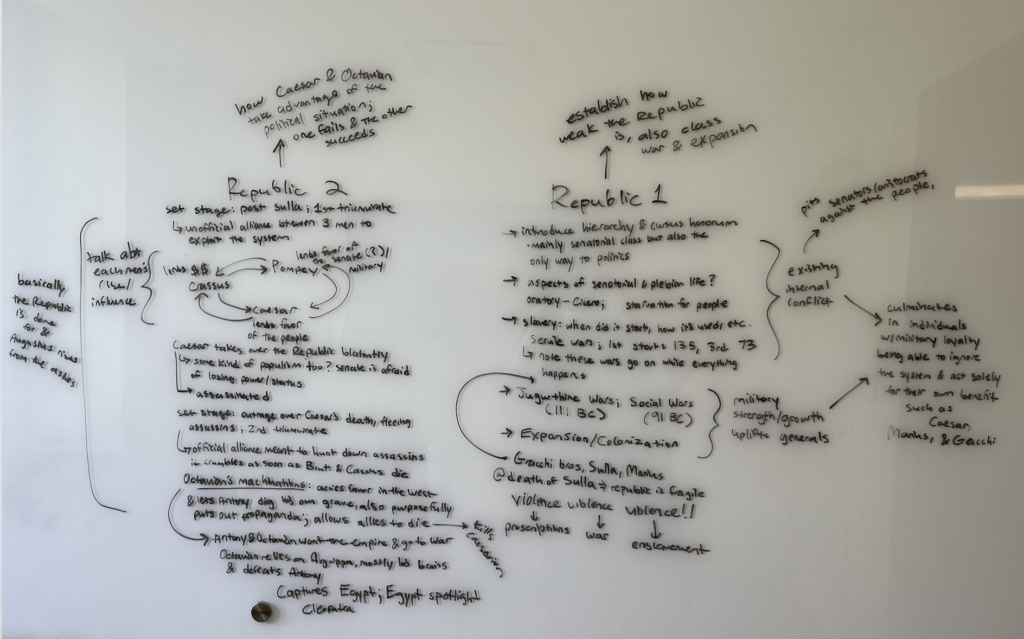
In its previous iteration, the class was split in half between Greece and Rome. In the first week of the project, Professor Dozier gave us the lectures on Greek history so that we could see the existing content and what needed to be rearranged, removed, and/or added. It was clear that there was enough information on Greek history to fill many more days than the class had given space for. Then, Kelsey and I attempted to restructure the Greek half of the class. I reorganized content from the entire Greek class to fit a chronological order of themes, with politics, literature, and other themes integrated into the time period of history they were in. As shown in Figure 1, the original content was widely scattered into many locations, which needed to be put in a different order. Later in the summer, Kelsey and I also brainstormed the Roman half of the class and reorganised existing content to fit into a chronological story of Roman society.
Fig. 1: A sample of my proposed layout of archaic Greek history.
Fig. 2: Brainstorm Kelsey and I did in the library on how to teach the Roman Republic period.
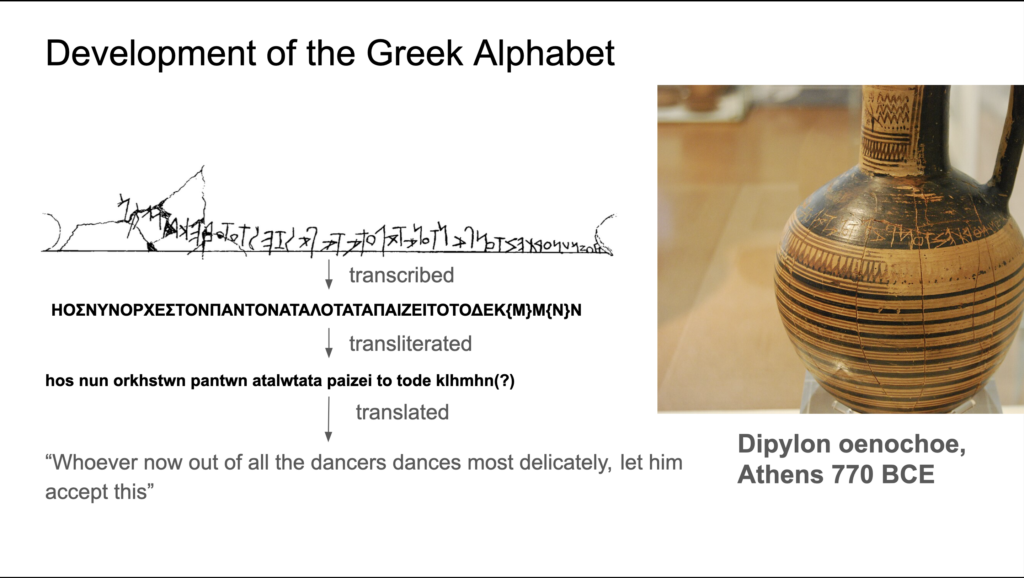
Once the layout was refined, we created new presentation slides which were mostly based on pre-existing material, but we also needed to fill in some gaps. Here is one example of how I tackled this: before, there was a ‘language’ session and an ‘early Greek history’ session. Since we were now telling the story of the Greek language chronologically as the class progressed through time, there was now space to explicitly talk about the advent of Greek writing in the 8th century BCE. One important facet of this story is the iterations of writing styles during the invention of the Greek alphabet that were used for hundreds of years before the Greeks enforced a standard. I created the lecture slide (Fig. 3) which shows an example of the early Greek alphabet being written right-to-left, rather than our expected left-to-right. The slide also includes a skill that students interested in Classics should be aware of: when you are translating a language like Ancient Greek, there are extra steps that you wouldn’t have to deal with with a language like Latin which uses the same alphabet that we do. Transcription and transliteration are important concepts to be aware of for those interested in Greek, and are helpful to know before you join GRST125: Introduction to Ancient Greek. This example shows the method I took towards course design, where I focused not only on declarative knowledge (knowing ‘what’) but also procedural knowledge (knowing ‘how’).
Fig. 3: a sample lecture slide taken from the Greek half of the class.
The college-level textbooks used last summer to create the course, while often thought-provoking and detailed, had several issues, including never having rigorous citations, and telling imperialist stories uncritically. We wanted to tell critical stories backed up by evidence that challenged stereotypes about ‘barbarians’, enslaved people, and other marginalized groups. This meant we had to re-research topics using other sources that were more up-to-date than the textbooks. Online reference databases, the Oxford Classical Dictionary and Brill’s New Pauly: Encyclopaedia for the Ancient World, were a good first step in grounding myself in relatively up-to-date information about a topic. The next batch of sources that we drew from were several Cambridge Companions to specific topics such as Ancient Slavery and the Aegean Bronze Age. Kelsey and I also went to the Art Library to look at the Lexicon Iconographicum Mythologiae Classicae (LIMC), a multivolume encyclopaedia which catologues mythological representations in Classical art. The L’Annee Philologique online database was helpful if we were exploring a niche topic, such as the cult of Athena in Sparta, and needed to actually read specialized articles and books.
Working on this project alongside Professor Dozier has been an invaluable experience. As I go into my final year at Vassar I’m contemplating whether or not I want to explore teaching in my future, and this collaborative project on course design showed me a glimpse into professorial teaching and planning. For one, I learned that absolute perfection is unreachable when it comes to planning for a lecture, because there will always be more to learn about a topic, and every model or layout will have its strengths and weaknesses. Even if perfection is unattainable, it’s still important to be intentional about from where information and research is obtained, and record everything you come across. That is a skill which I can apply to other research projects. Conversely, I learned through attempting to teach a model lecture myself to Professor Dozier and Kelsey that there is a higher level of preparation needed than I expected. Preparing for teaching wasn’t like preparing to talk about a reading in class– even if the content itself is for a beginner-level class, there is so much more that goes into an instructor’s understanding behind the scenes. I am grateful for the opportunity I was given to learn these lessons while at the same time delving into Greco-Roman culture with the goal of making other students as excited about the GRST department as I am.
This summer, I worked with Professor Sarah Pearlman to research how immigrant inflows affect the immigration legislation that is subsequently passed at the state level. I started by reading academic articles on the history and future of immigration in the United States, and refamiliarized myself with the program Stata, which I already had some experience with through my econometrics coursework. I practiced making graphs and maps using IPUMS census data, which also allowed me to understand the strengths and limitations of this dataset.
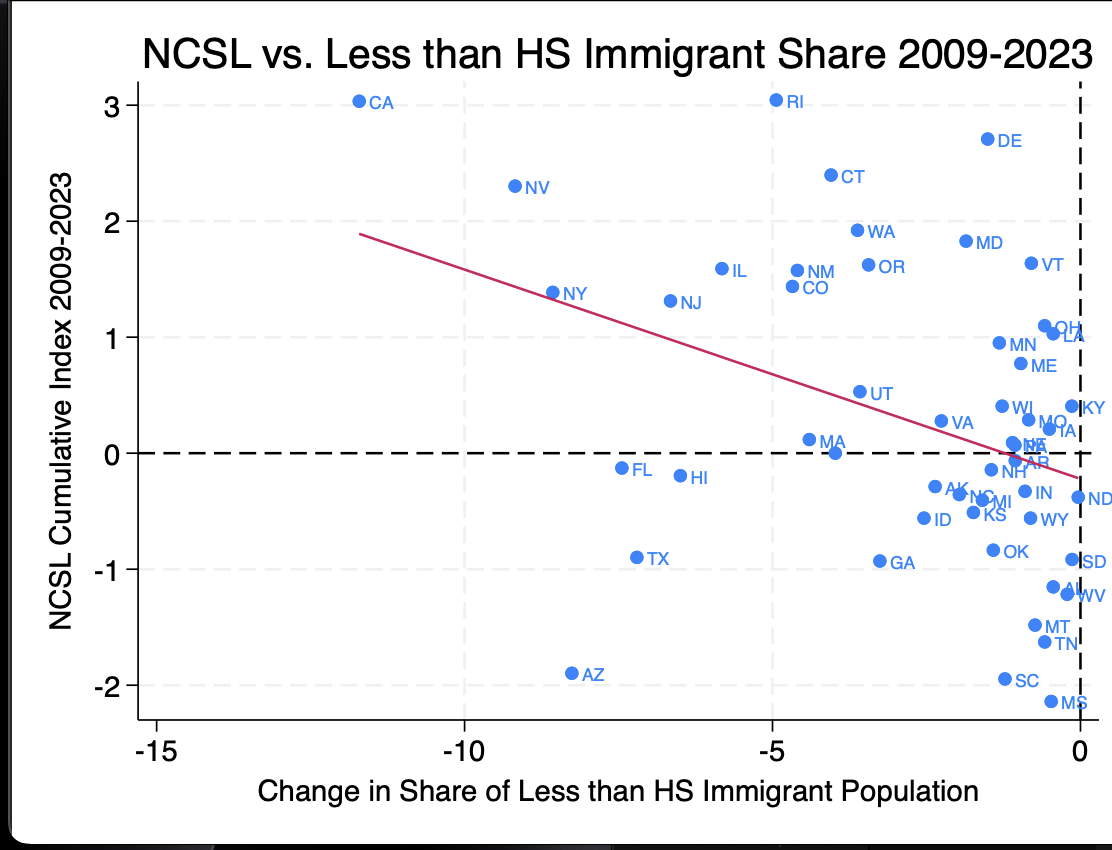
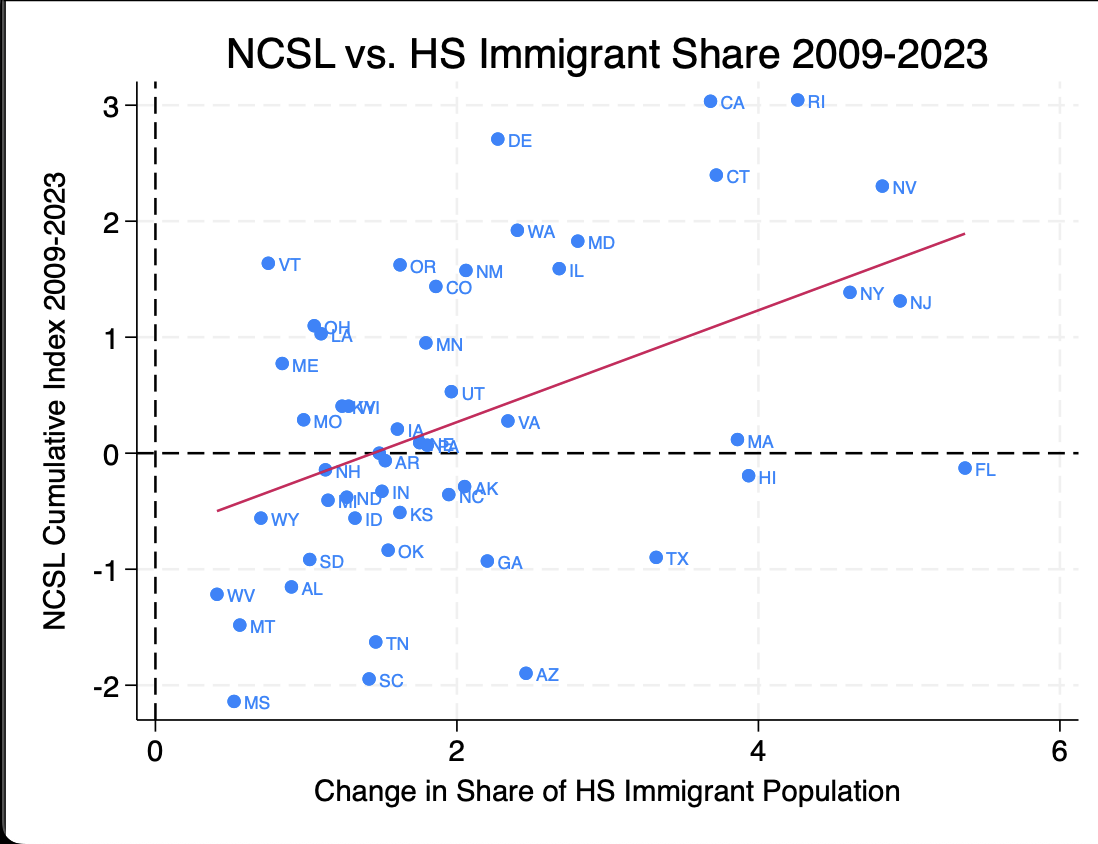
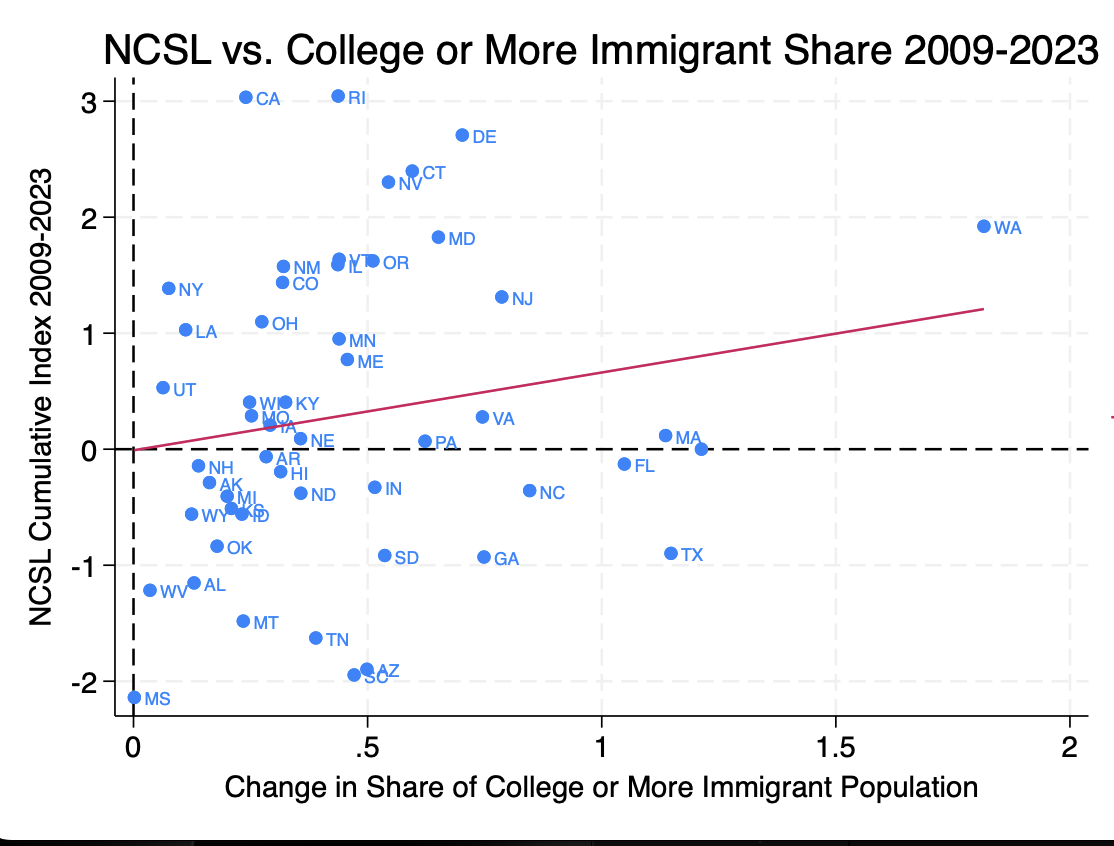
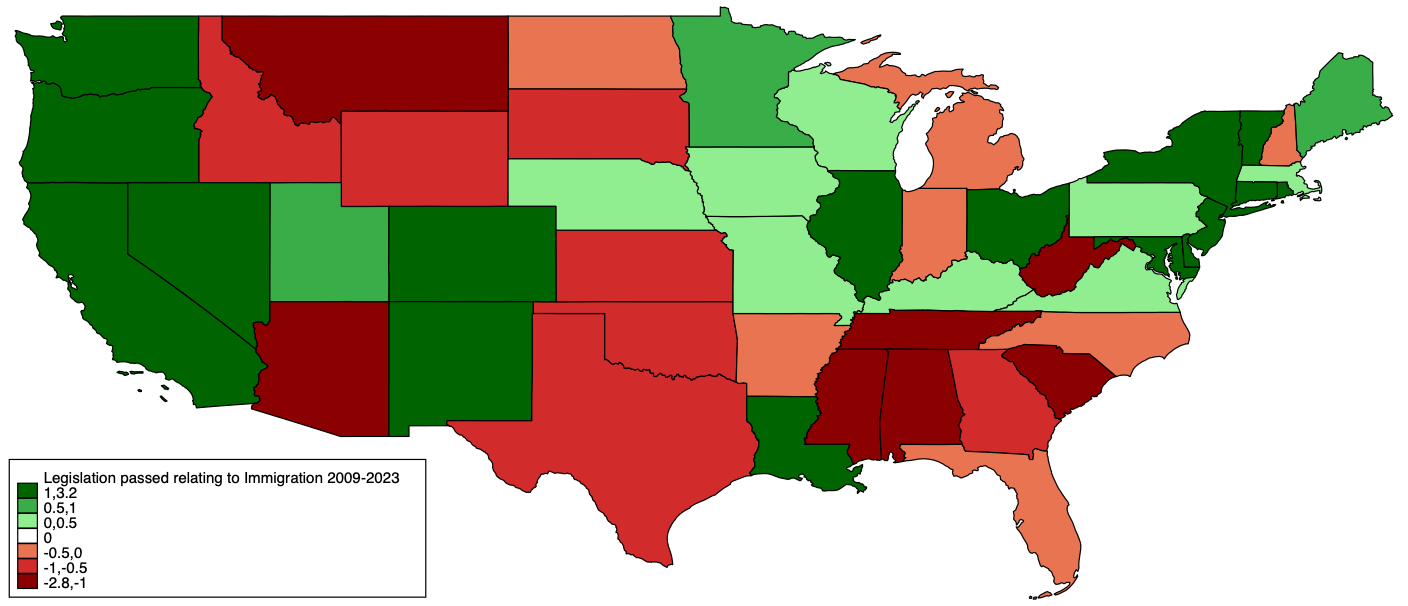
Next I studied the existing literature surrounding our research question. A paper by Mayda, Peri, and Steingress showed a correlation between republican vote share at the federal level and the skill levels of immigrants. Specifically, inflows of lower skilled immigrants, meaning those with a high school education or below, led to an increase in republican vote share, while inflows of high skilled immigrants led to a decrease in that vote share. Professor Pearlman and I hypothesized that the same effect exists between immigrant inflows of different skill levels and state legislation. To answer this question, I looked at different legislative databases with different methods for tracking and categorizing bills. I created scatterplots which indeed showed a correlation between the skill levels of immigrant inflows into each state and the inclusiveness or exclusiveness of the legislation those states passed. While not conclusive, the scatterplots showed that inflows of lower skilled immigrants were correlated with more restrictive legislation, while inflows of high skilled immigrants were correlated with more inclusive legislation.
The questions of what legislation to include, where to draw the lines between inclusive, neutral, and exclusive legislation, and how to score the scope of each bill proved to be some of the biggest challenges of my research. To give a concrete example: In 2016, Maine’s state legislature passed a bill raising crossbow fees by one dollar for non-citizens. How can this extremely narrow restriction be compared to laws like a 2011 omnibus bill passed in Indiana which bars undocumented immigrants from public benefits, heavily restricts their ability to be employed, and creates new crimes for harboring them? These examples give a sense of the massive variety of immigration legislation passed at the state level and the challenges of categorizing them.
Eventually Professor Pearlman and I decided the existing databases of legislation were inadequate, either because of flawed methodology or because they were too outdated. Since manually coding every bill wasn’t feasible with our timeframe, we decided to have the AI program Claude categorize every bill passed at the state level between 2009-2023 (4404 bills). I drafted a detailed prompt and directed Claude to code them as either inclusive, exclusive, or neutral. I also had it add a scope, other 0 (symbolic), 1 (minor impact), or 2 (major impact). After that I manually checked and corrected half of the bills. It became clear by the end that my prompt left open grey areas which Claude did not code consistently. I think that with a more refined prompt covering more of the many edge cases, it would perform more consistently. I created scatterplots from my constructed dataset, which differed slightly from the scatterplots I created previously, however the general trends remained the same.
This summer ended up being a great opportunity to both design and code my own dataset as well as work with existing datasets. I saw my data analysis skills improve significantly, and made real progress towards answering a research question I find genuinely fascinating. I’m excited to present my work at the Symposium and hopefully see the research pushed forward in the future.
(Positive Y axis is more inclusive legislation, negative Y axis is more exclusive)
(Red is more restrictive, green is more inclusive)