whale

It is not hard to notice the human induced pollution found in the oceans. However, the pollution that is disrupting marine ecosystems by killing various underwater wildlife is not limited to the physical waste that we can see on the ocean’s surface. Humans have managed to find even more creative ways to change the underwater ecosystems. However strange it may seem, the effect of anthropogenic sound on marine mammals has become a serious concern in recent years.

Anthropogenic noise is any human generated sound that can disrupt the hearing and vocalization for cetacean species. Marine mammals greatly rely on their sound-based senses for foraging, communicating, and navigation, among other sensory capabilities. Therefore, any human activities such as oil exploration, fishing, and transportation that are based out of or on the ocean’s surface that use machinery such as boats which emit sounds, can adversely affect surrounding organisms. This sound pollution of various frequencies and intensities have the power to disrupt the sounds needed for cetacean survival.

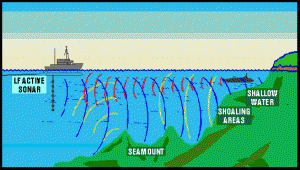
One recent study designed an experiment to investigate how both natural sounds and anthropogenic (unnatural) sounds increases the perception of risk in marine mammals. A small sample size of 12 sperm whales were tagged with audio and movement recording data loggers over the course of five years. In the first phase of testing, the experimenters exposed three types of solar sound transmissions of various frequency active sonar from an approaching vessel to the whales, simulating anthropogenic disturbance. They continued in the second phase by exposing the sperm whales to previously recorded killer whale playback stimuli at naturally occurring sound levels which simulated predation.
sound

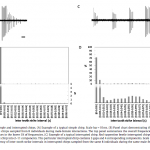
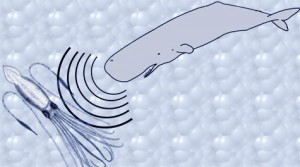
Tagged sperm whales were subject to controlled exposure experiments which included low frequency active sonar from an approaching vessel (1-2 kHz)

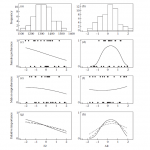
Although there was no formal hypothesis, the quantitatively estimated time and energetic cost of the cetacean behavioral responses to the sonar proved that the tagged whales switched to a non-foraging, active state during experimental transmissions of low frequency active sonar (1-2 kHz) (Figure 2) with similar responses coming from the playbacks of the killer whale vocalizations. Due to the increased time spent in the active non-foraging behavior, the experimenters were able to conclude that there would be a statistically significant reduction in prey intake, a necessary tradeoff for survival.

The significance of these results depends on the reader and is up for debate. On one hand, the reduction of anthropogenic noise by stopping necessary manufacturing could lead to harmful economic repercussions and negative opportunity costs to society. This research does, however, provide insight into the marine impacts of anthropogenic sound using a small sample size of only one species. The small sample size limits the impact of this paper but opens the door to further research regarding the consequences of the tradeoff between normal behaviors, such as foraging, and perceived level of risk. Further research and debate is needed to determine the significance of anthropogenic noise in the ocean.

Reference:

Isojunno, S., Curé, C., Kvadsheim, P. H., Lam, F.-P. A., Tyack, P. L., Wensveen, P. J. and Miller, P. J. O. (2016), Sperm whales reduce foraging effort during exposure to 1–2 kHz sonar and killer whale sounds. Ecological Applications, 26: 77–93. doi: 10.1890/15-0040

Share
Posted on by maaltman | Comments Off on Sound Kills! Examining the Threat Anthropological Noise Poses to Cetacean Populations

Who finds your call sexy? How both sexes have a say in sexual selection.

This gallery contains 1 photo.

*Grace Day* Sexual selection, a derivation of natural selection in which some individuals out-reproduce others because they are more attractive mates, takes place in all species. In order to understand sexual selection, simply ask yourself, would you rather marry Ryan Gosling … Continue reading

Share
More Galleries | Comments Off on Who finds your call sexy? How both sexes have a say in sexual selection.

Risk Assessment: Scorpions’ Ability to Moderate Venom Spraying Behavior

This gallery contains 1 photo.

Many animals use chemical spraying as a defensive response to aggressors. It is considered a secondary tactic that renders the prey less easily captured, as opposed to a primary tactic, which reduces the likelihood of the prey being detected initially. … Continue reading

Share
More Galleries | Comments Off on Risk Assessment: Scorpions’ Ability to Moderate Venom Spraying Behavior

Does my voice turn you on? Female bark beetle preference for courtship song

This gallery contains 2 photos.

The process of finding a mate is not fully understood in a lot of animals. Some animals use olfaction, while others use mating calls. Close-range courtship signals are thought to be the most influential type of acoustic signal for mating … Continue reading

Share
More Galleries | Comments Off on Does my voice turn you on? Female bark beetle preference for courtship song

You Are Where You Live: How Environmental Changes Affect Life-History

This gallery contains 4 photos.

What They Did and Didn’t Know Changes in the environment occur naturally over geological periods, and in some cases are induced by human impact. These changes include ecological and climate events, such as algal blooms or El Niño years, and … Continue reading

Share
More Galleries | Comments Off on You Are Where You Live: How Environmental Changes Affect Life-History

Even Fish Know Interrupting is Rude

This gallery contains 2 photos.

Most people know that humans are having an effect on the environment. Through pollution, overpopulation, and habitat destruction, we’re already impacting the way many animals live. Lately, people have realized another way we’re changing nature: by adding sound. Noise pollution … Continue reading

Share
More Galleries | Comments Off on Even Fish Know Interrupting is Rude

Prey capture ecology of the Cubozoan Carukia barnesi

This gallery contains 3 photos.

Cnidaria is a diverse phylum containing over 10,000 species, all belonging to two basic body forms: swimming medusae (jellyfish) and sessile polyps. These organisms employ a wide range of strategies for food acquisition ranging from filter feeding and symbiotic relationships … Continue reading

Share
More Galleries | Comments Off on Prey capture ecology of the Cubozoan Carukia barnesi

Early-life Stress Disadvantages Female Starlings’ Perception of Male Songs

This gallery contains 2 photos.

              Environmental stress can cause adverse effects on an animal’s health via the pressure it places on behavioral and physiological processes. These effects may last throughout an animal’s life, especially when the stress occurs … Continue reading

Share
More Galleries | Comments Off on Early-life Stress Disadvantages Female Starlings’ Perception of Male Songs

Gall Lab Publish in Zoology

This gallery contains 1 photo.

The Gall Lab has just published a paper entitled “Frequency sensitivity in the auditory periphery of male and female black-capped chickadees (Poecile atricapillus)”.  The first author is one of the first student members of the Gall Lab, Arick Wong. In … Continue reading

Share
More Galleries | Comments Off on Gall Lab Publish in Zoology

Is sex worth being eaten? The use of silk pheromones when determining female quality in black widow spiders

This gallery contains 3 photos.

Background An organism preferentially choosing a mate by determining their quality is a mechanism that exists within many species. We usually associate selection as females choosing their mates from a large number of potential suitors, but the reverse is also … Continue reading

Share
More Galleries | Comments Off on Is sex worth being eaten? The use of silk pheromones when determining female quality in black widow spiders