
Harper Jamison ’28, working under Professor Esteban Argudo
The purpose of this project was to understand the effects of rising deportation and related enforcement rates on access to credit for immigrants and natives. Access to credit is important as it enables anyone residing in the U.S. to access capital to invest in themselves and their lives, and we theorize that increased deportation/enforcement rates will impact access to credit in multiple ways. On the applicant side, immigrants may be apprehensive about applying for credit during periods of heightened enforcement due to the process involving questions/documents surrounding an immigrant’s status in the U.S. and bank reporting regulations. Lenders may also be apprehensive about approving loans for immigrants, as increased deportation could lead to deported borrowers being unable to repay their loans.
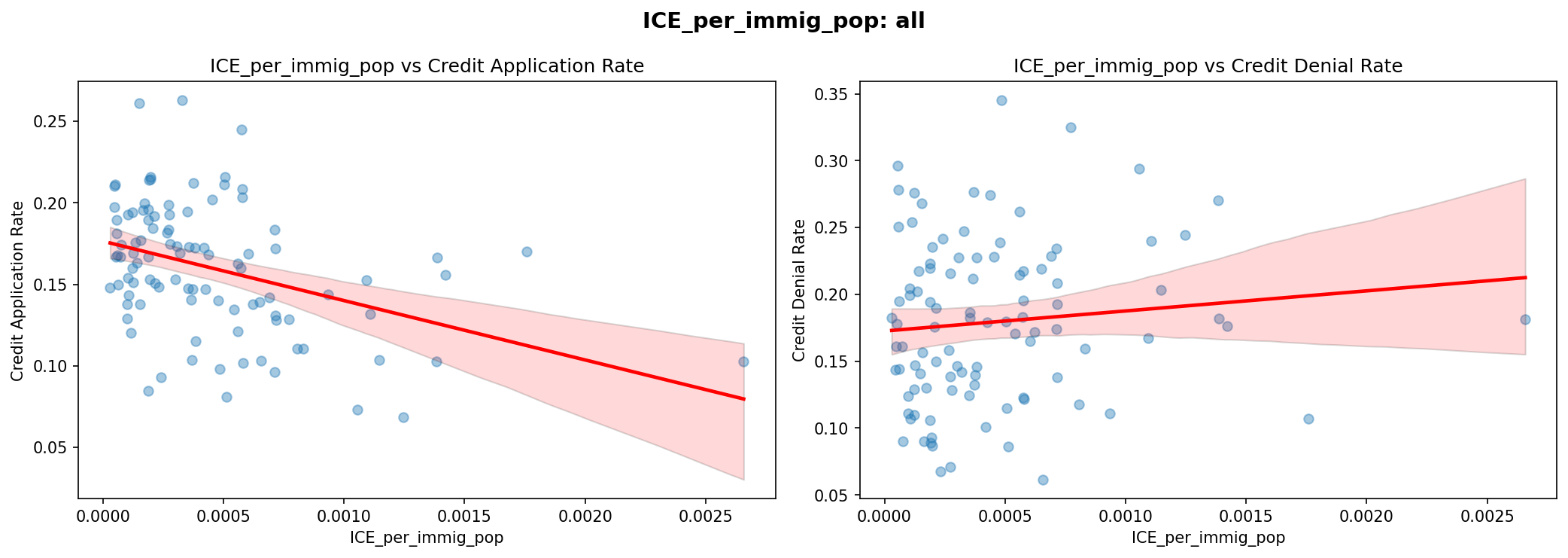
To investigate this, we used ICE/DHS Enforcement Data in conjunction with the CPS Unbanked/Underbanked survey. The ICE/DHS data provided us with enforcement events (arrests, deportations, and detentions) for individual immigrants by state and year, and the CPS survey provided us with household-level data on immigrants’ and natives’ credit application and denial rates, as well as other useful demographic information. Using Python and Excel, I cleaned and consolidated these datasets so they could be used in Stata. I also created preliminary regressions, using state averages of credit application rates, to ensure that there was a relationship present and to get a general idea of trends. This is one graph:
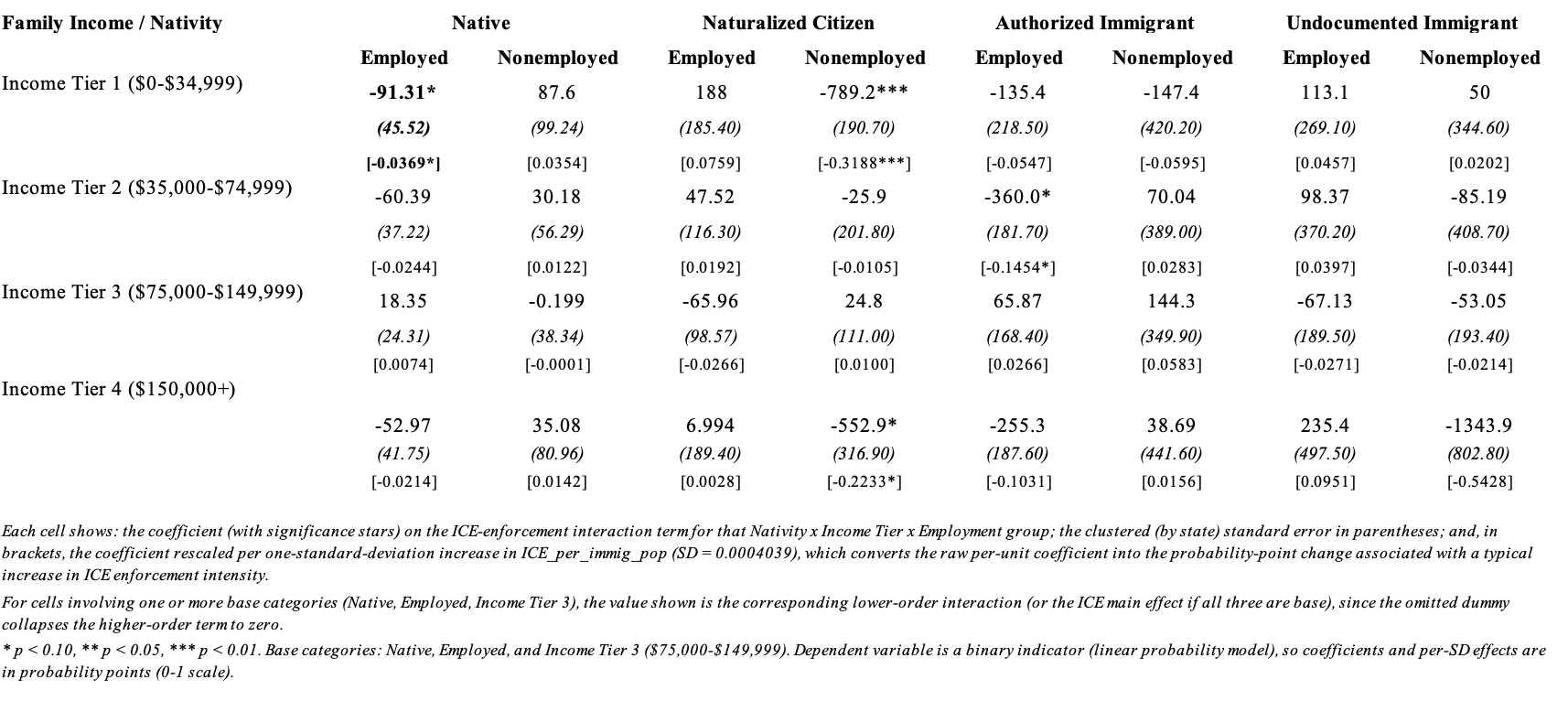
The next step was designing and running regressions in Stata to explore the explanatory variables and their effects on credit application and denial rates. This process involved adding different control variables, such as delinquency rates and demographic variables. We kept adding different explanatory variables, such as unemployment rates and family income tiers, to further isolate the effects and how interactions between these different variables affected the relationship between credit rates and enforcement rates. After multiple versions of regressions with different levels of controls, we settled on a regression that used family income, employment, and nativity status alongside enforcement rates to explain the dependent variable. The result is shown below in a table for credit application rates.
The next steps for this project include writing a paper covering in detail the processes and results I’ve summarized in this blog post. I also want to delve into differentiated geographic variables, such as metropolitan areas or counties, as conditions for multiple variables aren’t the same across a state.
Assisting with this project was an extremely valuable experience for me for multiple reasons. Firstly, I found it so interesting to learn about and take part in the research process. Research is something that has been appealing to me for a while, and so learning about how it works and getting to do it myself was incredibly exciting. It was also incredibly fulfilling to be able to see the process from start to finish. It was great getting to use the data that I found and cleaned to run regressions, and now beginning to write a paper on the methods and processes I used. I also got to learn and improve upon my skills, especially my coding abilities. I also enjoyed working alongside my mentor, Professor Argudo, as well as the rest of the Economics students and faculty. I learned so much from them, and I grew a lot in multiple areas. I’m so grateful for this experience and everything I learned.