Discovery of 500-Year-Old Slave Burials Allows Locals to Reclaim Island’s History

Cidade Velha, former capital of the Cabo Verde Islands off the coast of West Africa, is home to a 500-year-old secret—a church, buried and left in ruins for hundreds of years, has been recently excavated and recognized as “the oldest formal European colonial building” discovered in sub-Saharan Africa to date (Cambridge). However, the mystery surrounding it is rooted in something much darker.

Colonized by Portuguese settlers, Cidade Velha was once a booming port city that owed its success to the slave trade, functioning for over 300 years as a holding point before slaves were sent to Portugal and the Americas (Phys.org). The previously mentioned Portuguese church, upon its excavation by a team from Cambridge University, was discovered alongside a massive cemetery of about 1,000 bodies. Interestingly enough, at least half of these bodies buried in Christian tradition were African, and presumed slaves (Discovery). These graves give rise to evidence of religious conversion of locals by the Portuguese settlers, and begin to raise important questions about Cabo Verde’s history that haven’t yet been addressed. The teeth and bodies of the dead have the potential to be examined in order to provide a deeper context of slaves’ diets and living conditions, as well as provide an objective truth about what life was really like in Cabo Verde in the 1500s as a result of colonization.
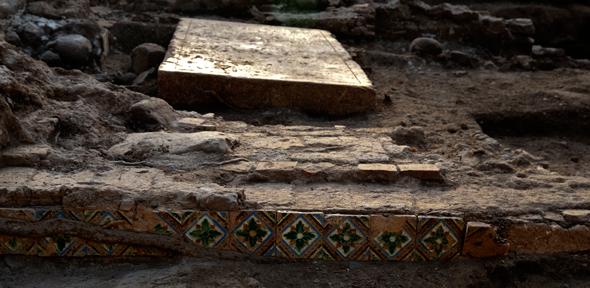
Excavated Tombstones in Cidade Velha

Excavated tombstones in Cidade Velha (Cambridge)

The excavation of this church in particular was an effort by Cambridge University that successfully began to rewrite the story of the Cabo Verde Islands and clarify a national history long-shrouded by the lingering remains of colonialism, slavery, and religious conversion. It is important to note that archaeologists from Cambridge collaborated with local workers on the excavation, making it a truly community effort. The digs were also made public and generated an immense amount of interest and support from locals.
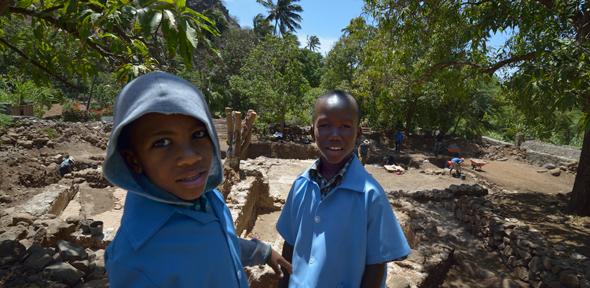
Local children at excavation site (Cambridge)

Local children at excavation site (Cambridge)

The stories of Cabo Verde are now being claimed by the Cabo Verdeans, and rightfully so. Archaeological excavations such as this slowly but surely strip colonialism of its power over history’s narratives and let us remember history as it was, not as a dominant power structure wanted us to believe. This is a long-overdue reclamation of power, and it gives depth to local heritage, culture, and pride. “It’s a profound social and political story to which these new archaeological investigations are making an invaluable contribution,” says Marie Louis Stig Sørensen of Cambridge, and she’s absolutely correct—through archaeology, a local community can reclaim the ability to tell their own stories, and that is undeniably powerful.


Further Reading:

500-Year-Old Church Found in Slave Trade Settlement

Earliest church in the tropics unearthed in former heart of Atlantic slave trade – phys.org

Earliest church in the tropics unearthed in former heart of Atlantic slave trade – Cambridge

Uncovering the first European church in the tropics – YouTube


Link to original post in Reall Archaeology

Mayan Identity Lost to Looters

The Mayan people, who are indigenous to Mexico and Central America, are publicly perceived as being one the most influential cultures of the Archeological world. While their culture may not be as mysterious as the public imagination believes, it’s slowly being altered by a big issue plaguing archeological sites, looting. As early as 1970, the Mayan city of Xultún , located in northern Guatemala, has been plundered by looters referred to locally as “huechoros”. These huechoros craved tunnels into many of the pyramids adorning the Mayan city and used the tunnels to access the artifacts stored inside. From there the artifacts are takened and placed on the black market to be sold illegally to the affluent for personal want or for display in institutions like  museums. The looted materials included stone figurines and statues, hieroglyphic panels, ceramic pottery, and jade jewelry. Though the amount of looting has decreased in the passed years, archeologists are still trying to fully grasp the damage incurred by the huechoros.

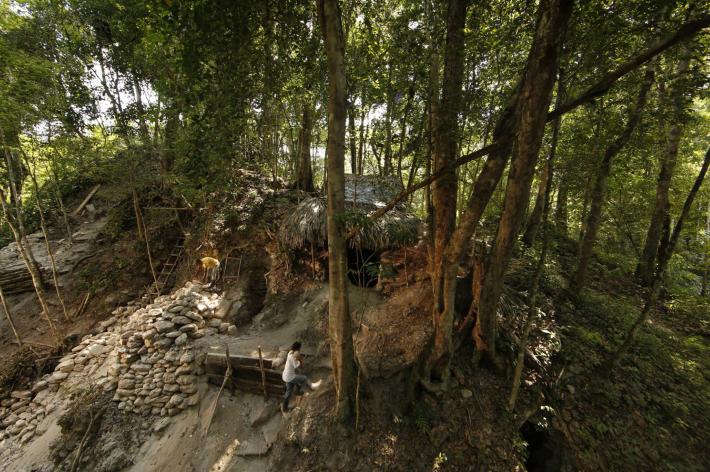
82499.ngsversion.1422281467160.adapt.710.1

Re-excavation of one of the many tunnels created by the huechoros in an Xultun pyramid

Huechoros, who are often just individuals desperate for money, have inflicted grave harm on not only culture of the Mayans but ultimately their extensive history. The city of Xultún was once a major metropolitan center filled with the rich art, culture, and religion that have contributed to the Mayans identity. For example, stone tablets known as Stelae have been frequent favorites of the looters. These tablets describe the deeds of the Mayan Kings and were seen as very valuable to buyers, so looters would divide the tall stones into small pieces. With the destruction of those tablets came the destruction of Mayan history. No longer are archeologists able to visit sites within Xultan pyramids without the telltale signs of looters being present. Not only aren’t artifacts not being found but the tunnels have allowed for rainwater to travel into the structures damaging the remaining artifacts. These looters aren’t just stealing artifacts but also the existence of the people who left them behind.

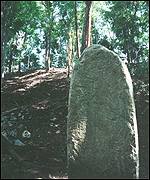
Stelae

A  Mayan Stelae of unknown origins

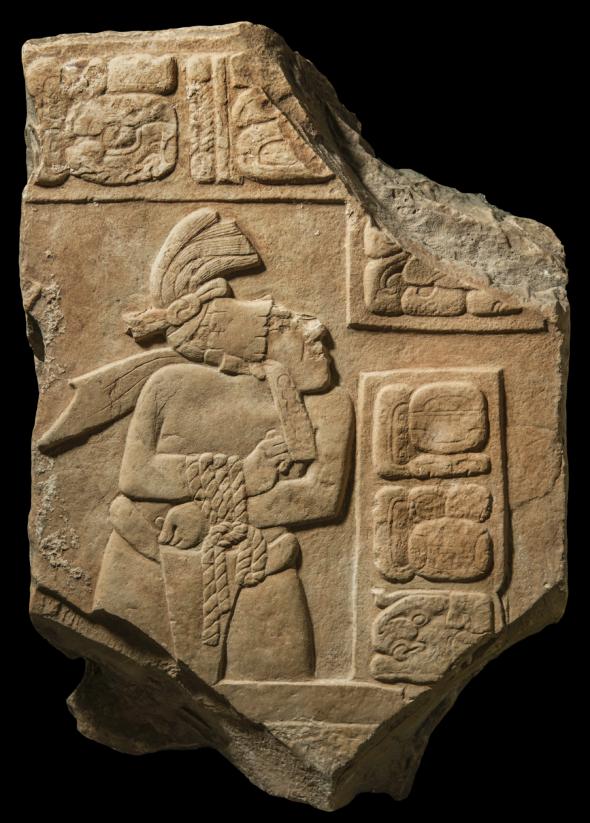
One of many recovered looted artifacts, a limestone panel

One of many recovered looted artifacts, a limestone panel

The government, in conjunction with archeologists, has enacted several measures to halt the looting of the pyramids. Since a majority of the looting is due to financial strife resulting from Guatemala’s Civil War in the 1960’s, the government has enacted new stable avenues of commerce for communities in the jungle. They have also stationed Guatemalan military officials to patrol the city of Xultún on a 24/7 schedule. Archeologists, on the other hand, are now re-excavating the tunnels left behind by the heuchoros in order to find new artifacts for preservation and future reference. There has even been talk of Guatemala arguing for repatriation of stolen artifacts now displayed in American and European museums and galleries. Though many may only view the stolen artifacts as souvenirs to the Mayans once thriving civilization, they also represent the rich history of a prevalent culture. Archeologists are striving to rediscover and preserve the identity of a people whose culture served as a prime example for the modern civilizations we call home today.

Guatemalan soldier patrolling the border surrounding the Mayan city  Xultun

Guatemalan soldier patrolling the border surrounding the Mayan city Xultun

Links:

National Geographic

BBC News

http://ambergriscaye.com/pages/town/article21.html

Further Reading:

Looted or Legal?

Stolen Mayan Artifacts Returned

Los Arboles structure under excavation in Xultun

Los Arboles structure under excavation in Xultun

Link to original post in Reall Archaeology

The Three Gorges Dam and the Preservation of Archaeological Sites

The Three Gorges Dam along the Yangtze River in China’s Hubei Province is the largest hydroelectric project every constructed. Begun in 1994 and completed in 2009, the dam is a source of hydroelectric power, shipping locks, and flood control for the middle and lower Yangtze River. However, there were quite a few drawbacks of a project flooding an area of more than 600 square kilometers. As water levels rose, nearly 1.3 million people were forced to relocate. The effects of this displacement were devastating to the population and many Chines cultural sites and artifacts, as the places they had to leave behind have some of the oldest history in China.

The Three Gorges Dam is the largest hydroelectric project ever constructed, and flooded 632 square kilometers of land beyond the existing banks of the Yangtze River.

The Three Gorges Dam is the largest hydroelectric project ever constructed, and flooded 632 square kilometers of land beyond the existing banks of the Yangtze River.

Some of the above ground historic sites that were below the final water level have had to be preserved on site or moved. The Baiheliang Stone, the best preserved ancient hydrologic station in the world, has been saved through constructing an underwater museum around it. Shibaozhai, an ancient Buddhist temple built by the Ming emperor Wan Li, is now an island in the center of the new lake, surrounded by a concrete dike. Some structures are being moved altogether, such as Zheng Fei Temple, which was moved one brick at a time and reassembled at a higher elevation. However, much of the above ground archaeology is only left in data collected, as the sites themselves have disappeared beneath the water.

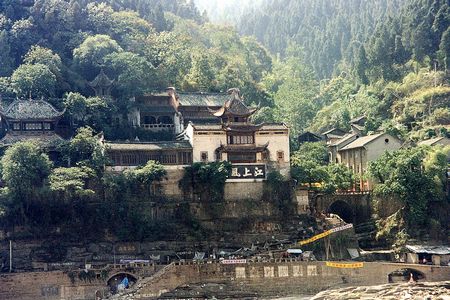
Zheng Fei Temple was moved to higher elevation to prevent it from being submerged

Zheng Fei Temple was moved to higher elevation to prevent it from being submerged

The Three Gorges region is the birthplace of Chinese civilization, but archaeology in the region has traced human habitation of the gorges back to the Paleolithic. In preparation for it to be submerged, over 1000 Chinese archaeologists descended on the region to do what preservation could be done in this culturally rich region before the water covered everything. Budgeting problems hindered efforts both with lack of funds and complications with distribution, but archaeologists have still investigated some 1087 sites throughout the valley, gaining information about habitation of the region as early as 2 million years ago, as well as for nearly every era of habitation since. However, countless more data has been lost to the rising water levels.

Looting, too, has been an enormous problem for the archaeological record as both professional scavengers and local farmers descended on sites throughout the gorge. Many of the sites found in the region were left without surveillance before they were able to be excavated or were submerged. Over the course of dam building, many artifacts from the Three Gorges area went up for sale through dubious channels, most notably a bronze spirit tree dating to the Han dynasty. Though these pieces have been saved from submersion, their context has been destroyed, causing the loss of valuable archaeological data.


Sources

http://digital.csic.es/bitstream/10261/27902/1/Lopez-Pujol_01.pdf

http://news.xinhuanet.com/english2010/culture/2010-11/29/c_13627200.htm

http://gadling.com/2010/11/29/archaeological-treasure-trove-found-at-three-gorges-project-in-c/

http://articles.latimes.com/2003/jun/08/opinion/oe-see8

http://archive.archaeology.org/9611/abstracts/3gorges.html

http://www.npr.org/templates/story/story.php?storyId=17810431

http://archive.archaeology.org/online/news/china.html

http://www.china.org.cn/english/features/Archaeology/96925.htm

http://news.cision.com/se/ifs/i/three-gorges-dam-small,c1262559

http://www.ancient-origins.net/news-history-archaeology/20-han-dynasty-tombs-found-near-three-gorges-dam-00496


Further Reading

More about the Ba people, who flourished in the Three Gorges area until the Warring States Period

http://www.chinaculture.org/gb/en_curiosity/2004-02/11/content_45954.htm


More about history and legend in writing about the Three Gorges region

http://www.sacu.org/threegorges.html

Link to original post in Reall Archaeology