Shored Up: Dealing With the Realities of Climate Change

Shored Up is a documentary that delves into the impact that climate change is having on sea levels and therefore beachfront property that is close to the shoreline.  Included in the documentary are interviews with scientists, activists, lobbyists, and others with opinions on beach erosion and its effect on homes.  The focus of the documentary is on Long Beach Island, an island off the coast of New Jersey that is 18 miles long and about 400 meters (around a quarter of a mile) wide.

On the island in question, beaches are being eroded by rising sea levels and by general ocean activity (the movement of waves and such).  Owners of expensive waterfront property are having the beaches in front of their property “replenished”, which means essentially that extra sand is being dumped in front of their houses to replace that lost to erosion.  This is all being done at the expense of taxpayers through the federal, state, and local governments (although most of the funds are being raised federally).  This “beach replenishment” has sparked a wide-ranging debate concerning whether it is a good idea or not.  Some feel that it is, some feel that federal funds are being squandered, and some feel that “beach replenishment” is not an effective long-term solution due to the fact that rising sea levels projected by scientists over the next century (over a meter) will flood over the houses that are being temporarily protected anyways.

I agreed with the overall argument of the movie that rising sea levels will eventually destroy any economic or residential development close to the shoreline and that we should therefore think more carefully about where we build.  However, I noticed that mentions of “global warming” were scarce and that talk of greenhouse gases generated by human activity was lacking altogether, although this would be a logical explanation to give for the rising sea levels.  I believe that this was done to avoid alienating those who deny the existence of “global warming” and still appeal to them.  Mention of recent temperature increase was given, but this was not attributed to “global warming”.  I personally believe that deniers of global warming would much more easily object to “global warming” itself than an abject statement of temperature change, meaning that the film would still be able to appeal to those non-believers.  I don’t believe in the use of these tactics and I think that the full scientific argument should have been presented, not parts of it.  After all, making one’s argument more “presentable” is not going to have a real impact on our nation’s anti-scientific political climate, which is at the heart of the problem.

The relation between the climate change described in the documentary to archaeology was implicit yet relatively simple.  As long as this erosion of the beaches due to sea level rise continues, archaeological sites that formerly existed under those beaches will be destroyed.  In addition, the “beach replenishment” itself may be destroying archaeological remains, as heavy plows which could damage those records are being used to spread the new sand.  In other words, the only way to save archaeological sites on the coast is to find a long-term solution to the erosion problem that would most likely involve combating rising sea levels and global warming.

Sources:

http://en.wikipedia.org/wiki/Shored_Up#mediaviewer/File:Shored_Up_poster.jpg

One of the release posters for the Shored Up film.  The image of waves flooding a construction plow and coastal houses perfectly conveys the film's anti coastal development message.

One of the release posters for the Shored Up film. The image of waves flooding a construction plow and coastal houses perfectly conveys the film’s anti coastal development message.


Link to original post in Reall Archaeology

Isotopic Analysis in Environmental Archaeology

The use of isotope analysis in environmental archaeology has expanded. By measuring the ratio of different isotopes found in human and animal remains, archaeologists may be able to tell a human or animal’s geological origin, including climate and seasonal movements, as well as their diet.

Most forms of isotopic analysis consist of analysis on bones and teeth and shells. An individual’s tooth is said to be able to provide a “geological snapshot from the early years of life, when teeth were developing.” An archaeologist could gain evidence of a person’s environment when they were younger as the isotopes in that environment during the period of time when the tooth was forming influences the isotopes found in that tooth. Another less used part of the body that can be analyzed is hair. It is thought to be not as susceptible to change due to age as bone and teeth may be and absorbs many isotopes from the surrounding environment.

Examples of various human diets

Examples of various human diets

The ecosystem a person lives in transfers isotopes to the people and animals feeding there. They are transferred when people eat animals and/or plants and by reading the different levels of different isotopes a pretty accurate construction of what their diet consisted of can be formed. For example vegans and vegetarians differ from those who are neither vegan nor vegetarian in the composition and levels of isotopes in their bodies. Isotope analysis sometimes shows cultural differences through dietary habits. Stable carbon and nitrogen values found in the bones from an Early Anglo-Saxon cemetery site provided results on how class distinctions altered dietary habits between the “wealthy,” “intermediate wealthy” and “poor.” It also showed how diets were not different between the sexes at the time. Another study in Europe, through isotopic research, was able to propose the idea that the Late European Mesolithic era diet consisted of mostly marine fish with small contributions from shellfish or marine mammals.

Dr. Thorton using strontium isotope analysis to investigate faunal resource exchange among the ancient Maya

Dr. Thorton using strontium isotope analysis to investigate faunal resource exchange among the ancient Maya

Climate leaves is mark on human beings and animals alike with its own isotopic signature. A carbon ration may be used to show where an individual obtains his or her food, displaying if the food was from an arid environment or not. The isotope strontium can be used to discover an individual’s geologic origins. The prevalence of the isotope found in remains can indicate the area a person lived in according to the area’s own isotopic record. Oxygen isotopes provide a good climactic indicator as well as evidence to animal movements. If an individual lived at higher altitudes the air would have been thinner than someone living at or below sea level and they would have, consequentially, had a different oxygen isotope ratio.

Isotopic Analysis is growing in its significance and use in archaeology. It can be used to do more than just date remains or artifacts. It can create a picture of the object or artifact’s environment.

Sources:

http://envarch.net/environmental-archaeology/no-longer-do-archaeologists-have-to-rely-solely-on-seeds-bones-and-shells-isotope-analysis-is-the-future-of-environmental-archaeology/

http://rstb.royalsocietypublishing.org/content/354/1379/65.short

http://www.sciencedirect.com/science/article/pii/S030544030190785X

http://www.sciencedirect.com/science/article/pii/S0305440398903879

Additional Resources:

Biological Anthropology of the Human Skeleton, Second Edition

american archaeology: a quarterly publication of The Archaeological Conservancy


Link to original post in Reall Archaeology

A Social Bias in the Approach to Understanding Paleolithic Art

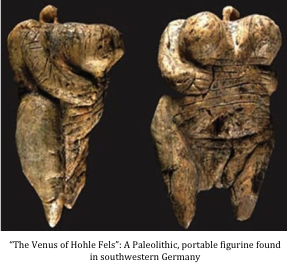
Until the 1970’s, Paleolithic art was classified into two major groups: parietal art, including cave and rock art, and portable art. The clear difference between the two is that one form is moveable and the other is not. This classification gave rise to a bias in understanding and interpreting Paleolithic art, especially when considering portable and nonfigurative representations.

Many archaeologists derived working concepts of art from art historians when looking at style, perspective and form. However, the bias that arose from this method came as a result of art theory ideals prevalent since the Renaissance. There was an emphasis and focus on the “naturalistic” ideal in which artists were praised for their accuracy in representing the world. These guidelines then put great importance on cave paintings, which had more “realistic” art representations, and often underestimated or ignored portable artifacts and ornaments.

To further this bias, 18th century Europe saw the growth of public art museums, such as The British Museum and the Spanish Royal Museum of Painting and Sculpture. With this new appreciation for aesthetics, crafts were pushed aside and judged as mechanical and unrefined. During this period, the parietal/portable classification of Paleolithic art, which already rejected portable work for its lack of naturalism, started to adapt to the fine arts/crafts distinction in which portable art was seen as naïve or infantile. At this time, some archaeologists assumed that painting was an indicator of higher cognitive function as compared to the skills in making portable pieces.

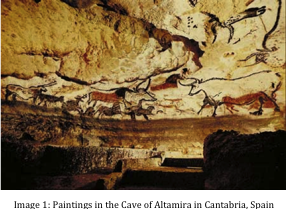
What is clear is that if art theorists were captivated by paintings yet denigrated crafts, archeologists followed suit, ignoring many portable works while celebrating cave paintings, such as those at Altamira and Niaux.

Untitled1

Many culminating factors, such as the globalization of Paleolithic art studies and the development of new approaches to art and symbolism, led to a change in archaeologists’ viewpoints in 1970. These new methods took into account that the making of artifacts was the culmination of the artistic experience. To understand the value of the piece, the creator’s stance toward a work of art must be considered. Furthermore, portable art and personal objects, while previously ignored, were now recognized for their value in assessing the social culture of Paleolithic groups. While parietal images on a wall might serve as landscape markers, portable objects are now regarded as indicators of social and individual identities. Since portable objects have the potential of traveling distances, it is acknowledged that these artifacts and art pieces could have been used to express the social statuses of individuals or groups within a larger Paleolithic culture.

Untitled2

Overall, social stigma derived from art theorists and artistic culture previous to 1970 influenced archaeologists interpretations of Paleolithic art in such a way that cave paintings were generally overemphasized relative to portable art pieces. However, with the rejection of this Eurocentrism and an anthropological turn in the conceptualization of Paleolithic art, movable and fixed forms of art are now considered distinct yet equal in their insight into different aspects of Paleolithic culture.


Works Cited:

Renfrew, Colin, and Paul G. Bahn. Archaeology Essentials: Theories, Methods, and Practice. New York, NY: Thames & Hudson, 2010. Print.

Moro Abadía, Ór 2013, ‘Paleolithic art cultural history’, Journal Of Archaeological Research, 21, 3, pp. 269-306, Anthropology Plus, EBSCOhost, viewed 27 September 2014.


Image 1: http://www.thehistoryhub.com/cave-of-altamira-facts-pictures.htm

Image 2:http://ns1.wynja.com/hohlefelsvenus.html


Additional Reading:

http://link.springer.com/article/10.1007/s10816-010-9085-9/fulltext.html

http://www.jstor.org/stable/pdfplus/3630753.pdf?acceptTC=true&jpdConfirm=true

Link to original post in Reall Archaeology

The ethics of population and society

Biologists often study the population dynamics of other animal species. Population sizes are described as being controlled by factors such as resource availability and prevalence of predators. Populations fluctuate in size based on the combined effects of these various influencing factors.

The world’s human population, in the last several hundred years, has been increasing exponentially and relatively undeterred. This has contributed to many contemporary problems. There is major strain on natural resources which has resulted in extensive ecological destruction. There is much social and political strife, often by way of the aforementioned environmental pressures.

anthro 2

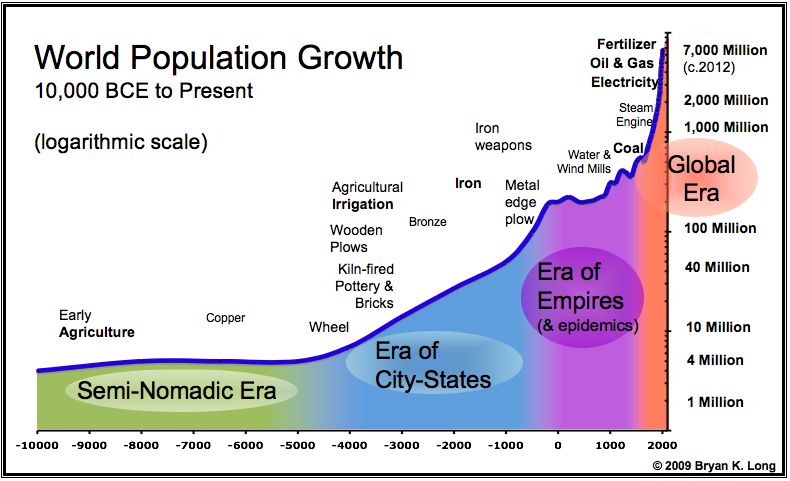
Image 1: World population growth over the last 12 000 years. Population size is correlated with types of society over the time scale.

However, human populations across the globe and through time have existed in varying types of societies. One major characteristic of a society is its population size. The relationships between population dynamics and society are intricate. Does the size of a population influence the type of society in which it is found? Or conversely, does a type of society influence its population size?

One common question refers to whether human populations can exist in a more “natural” or “balanced” state, more similar to those of other animal species. And if so, what does this mean for the type of society in which such a population would have to exist?

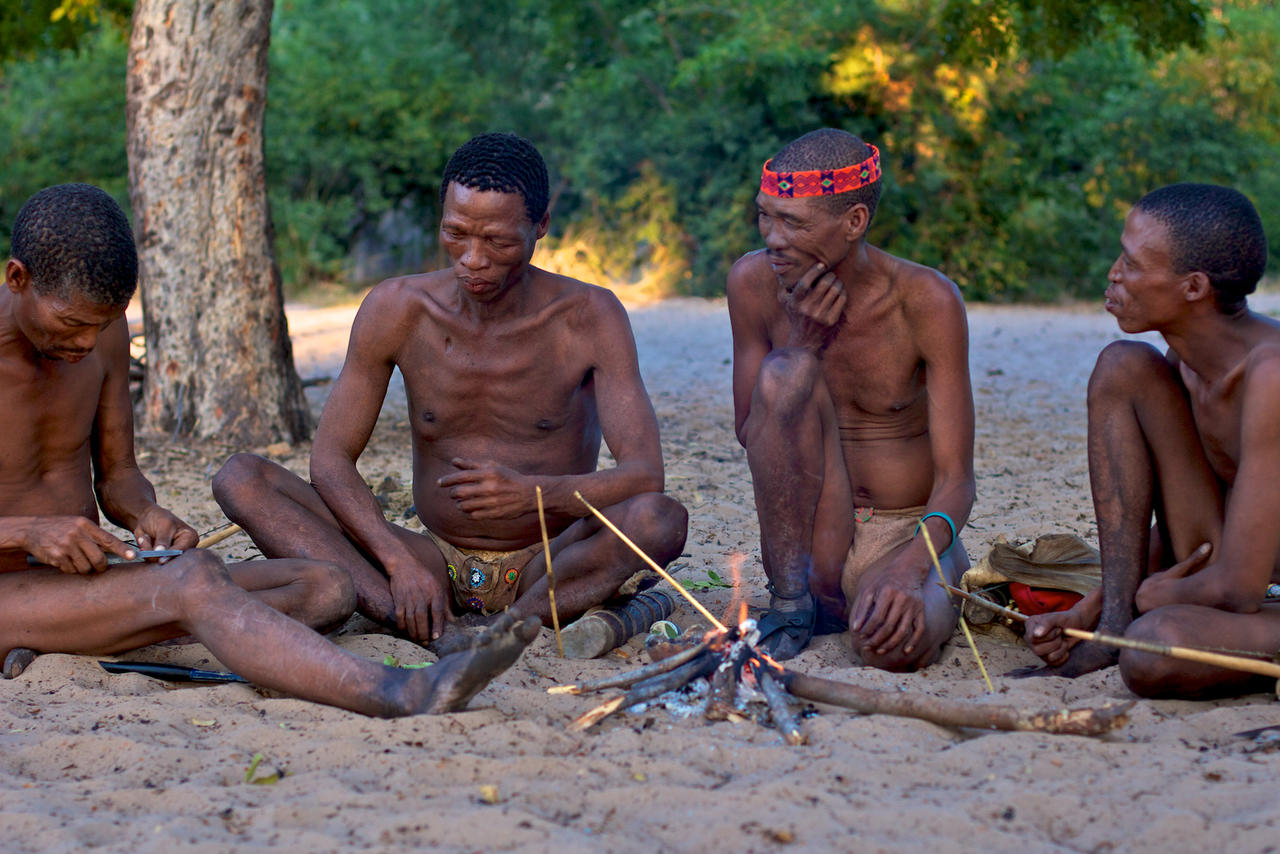
The San peoples of Southern Africa are the last living remnants of a wide group of peoples that pre-existed even the Bantu-speaking nations of Africa, let alone the Europeans. This wide group of peoples were Stone Age hunter-gatherers who inhabited most Africa for thousands of years. The hunter-gatherer way of life which these peoples employed is still in existence today in the remote populations of San peoples.

anthro 4

Image 2: A group of San men in Namibia. Note the arrows (one being prepared) which are used in hunting.

This hunter-gatherer lifestyle encourages a small population size to exist. The nomadic lifestyle is certainly more easily achieved with a smaller group size and, even more importantly, a small population size allows for the ability to “live off of the land” in the gatherer fashion. Conversely, this heavy reliance upon already limited natural resources also acts as a population check, keeping the size of the population fluctuating but small.

Lifestyles such as that of the hunter-gatherer San peoples are easily romanticised. In comparison to overpopulated, stately societies around the world, they appear to conduct a lifestyle much more near a balance with their surroundings. Or at least they appear to have much less of a negative impact upon their environment.

However, many people view the modern way of life in more state-orientated societies as simply better. There are even opinions, similar to those of social Darwinism, that describe a progression over time from more basic nomadic societies to intricate and large state societies. The reality is that small mobile hunter-gatherer groups still exist today, descended from societies that have existed for thousands of years. Is that simple fact perhaps enough proof of a successful, less destructive, way of life? Ultimately, as contemporary state societies face ever-increasing problems from the socio-political and environmental arenas, time will indeed shed more light upon the situation.

Additional sources of information:

The novel Ishmael by Daniel Quinn explores types of societies, their origins, and ultimately compares them in search for a better, more ideal way of life. The book is available from the Vassar College Main Library:

http://vaslib.vassar.edu/search~S1?/aQuinn/aquinn/1%2C150%2C276%2CB/frameset&FF=aquinn+daniel&1%2C%2C3

For more information about the San peoples, their history, lifestyle and archaeology, visit South African History Online:

http://www.sahistory.org.za/people-south-africa/san

Citations:

Renfrew, Colin, and Paul G. Bahn. Archaeology essentials: theories, methods, and practice. 2nd ed. New York, NY: Thames & Hudson, 2010.

South African History Online. “The San.” http://www.sahistory.org.za/people-south-africa/san

Image 1: http://econosystemics.com/wp-content/uploads/2009/05/world-population-chart.jpg

Image 2: https://wetu.com/ImageHandler/1280×1280/24445/Nhoma-Safari-Camp-Tented-Lodge-Resdest-Namibia-Tsumkwe-Bushmenland-BushManLife3.jpg

Link to original post in Reall Archaeology

OUR Story, not HIStory: Taking Everyone into Account

Whenever I visualize what a typical archaeologist looks like, what comes to mind is a nerdy, white male, shovel in hand, wearing a sunhat and those pants that zip off at the knee. Although this image may be specific to me, I’m sure that many people’s visual representations of an archaeologist would share one aspect in common with mine: the male gender. Women have only fairly recently been admitted into the field of archaeology, yet, this imbalance in the field isn’t the only way in which women have been overlooked- ancient women themselves have been unfairly overlooked in archaeology, therefore being left behind in the archaeological record.

In the 1960s emerged feminist archaeology, which seeks the gendered experiences of the past through three objectives: first, to expose and correct the male bias in archaeology; second, to balance the imbalance of women’s professional participation in archaeology; and third, to spotlight the roles of women in the past. An archaeological site in Israel serves as a perfect example that incorporates these three objectives into its excavation.

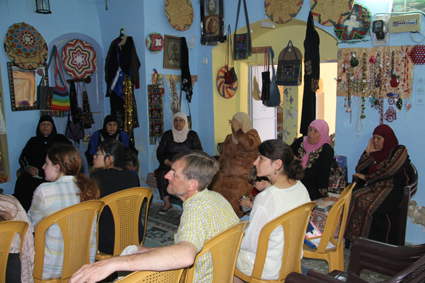
Excavation at Tel Abel Beth Maacah began because it was referenced in the Bible and holds the potential to inform us about northern Israel during the Bronze and Iron Ages. In 2014, Dr. Naama Yahalom-Mack, Dr. Nava Panitz-Cohen, and Prof. Lauren Monroe (all female archaeologists) implemented the “Gender Agenda” program at the site. The “Gender Agenda” served to excavate with the sole purpose of identifying engendered activities such as locating cooking and grinding areas, ovens, pottery, etc. Students a part of the “Gender Agenda” program learned how to collect samples for micro-archaeological analysis that can be used for understanding diet, modes of economic production and how activities were carried out within the home sphere, and other aspects of daily life. Students also conducted an ethnographic study by visiting and interacting with local Arab women at the Center for Women’s Traditional Crafts in a nearby village. By explicitly searching for the physical remains of women’s day-to-day lives, the archaeologists behind the “Gender Agenda” validate the often-marginalized history of women in antiquity. Women’s history was often overlooked because their activities weren’t believed to have contributed anything important to the society since they served as rulers of the private, home sphere. The archaeologists at Tel Beth Abel Maacah recognize the contributions that women add to society through their search for engendered activities.

Students at Center for Women's Traditional Crafts in Arab village.

Students at Center for Women’s Traditional Crafts in Arab village.

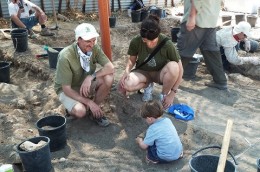
“Gender Agenda” co-director Lauren Monroe with husband and son on site.

Why is a focus on gender so important? Some argue that since gender assignments are untestable to a certain extent, then therefore gender is irrelevant in the archaeological record. This is not true. By analyzing and interpreting the gender roles established by a society we can get an overview of the social organization and structure of the society. Most importantly, we are acknowledging every person, rather than overlooking a group of people, and looking to understand their individual function within the society.


Additional Links:

http://anthrojournal.com/issue/october-2011/article/gender-in-mesoamerica-interpreting-gender-roles-in-classic-maya-society

http://www.biblicalarchaeology.org/daily/digs-2014/gender-in-archaeology-at-abel-beth-maacah/

Sources Used:

http://www.abel-beth-maacah.org/index.php/12-seasons/2013-season/78-gender-agenda

Renfrew, Colin, and Paul G. Bahn. Archaeology Essentials: Theories, Methods, and Practice. New York, NY: Thames & Hudson, 2010. Print.

Photos:

http://www.biblicalarchaeology.org/daily/digs-2014/gender-in-archaeology-at-abel-beth-maacah/

http://www.abel-beth-maacah.org


Link to original post in Reall Archaeology