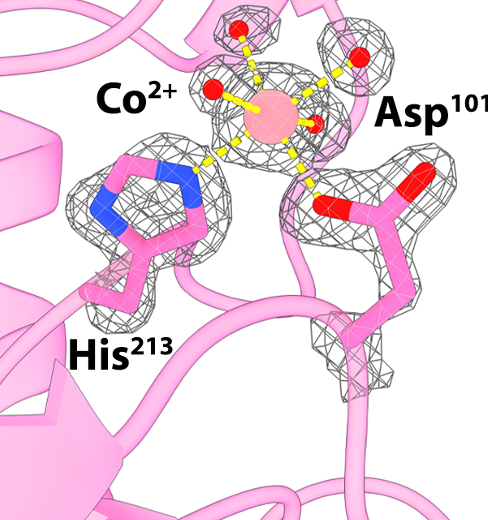
Antibiotic resistant bacterial strains pose a major threat to human health. Bacteria are capable of transferring DNA directly from one cell to another through the process of conjugation. The primary route for acquisition of antibiotic resistance is receipt of plasmids via conjugation, also known as conjugative plasmid transfer.
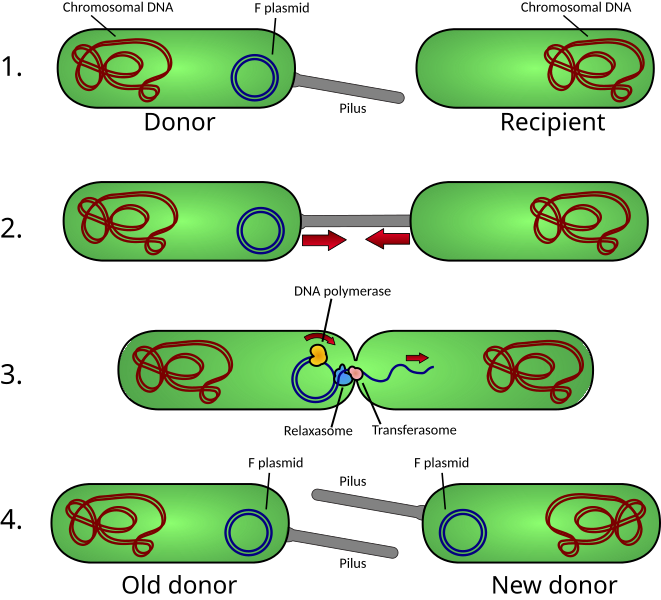
Plasmids are small, circular, extrachromosomal DNA which replicate autonomously and many carry antibiotic resistant genes, as well as other genes for virulence. Conjugative, or self-transmissible, plasmids also encode transfer (Tra) genes, which are required for conjugation.
In conjugation, after the double-stranded DNA plasmid is separated, one single strand is transferred from the donor bacterium into the recipient bacterium through a pore in the connection that develops between the two bacteria. Cell machineries regenerate the double-stranded DNA using each single strand as a template for replication. Upon completion of conjugation both the donor and recipient (now, new donor) harbor the conjugative plasmid, able to propagate resistance genes to other cells.
Conjugative plasmid transfer is mediated by an essential complex of proteins called the relaxosome. This research aims to understand the molecular basis of plasmid propagation, centered on understanding the relaxosome.
Our research we hope will lead to new ways to reduce the prevalence and spread of antibiotic resistance. We study relaxosomes from two different plasmids, one found in Salmonella enterica sevoar Typhimurium and the other in Staphylococcus aureus.
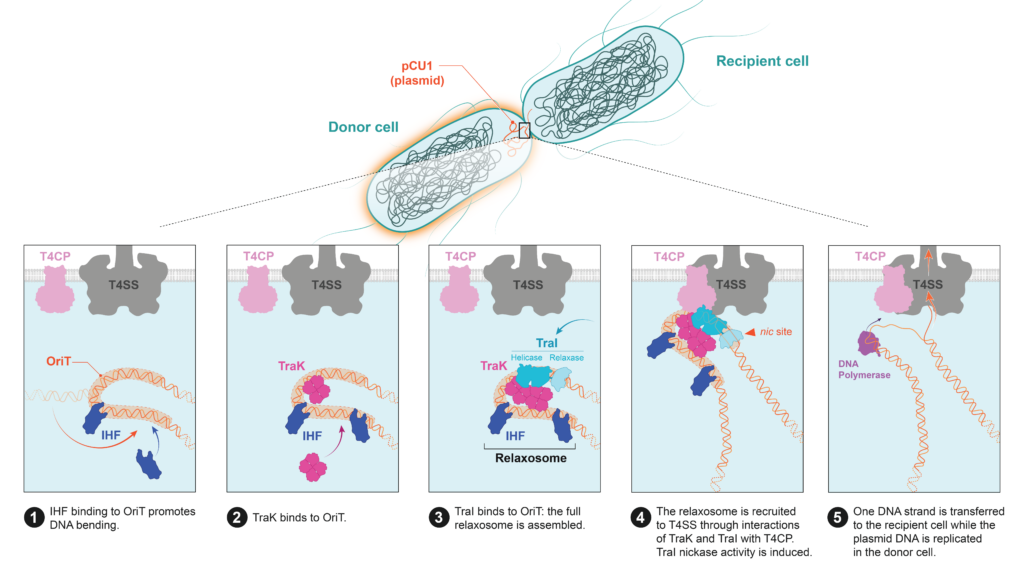
Below shows the proposed Salmonella pCU1 relaxosome assembly with the Tra proteins, however no experimentally determined structures of any of these complexes are currently available:
Project Milestones:
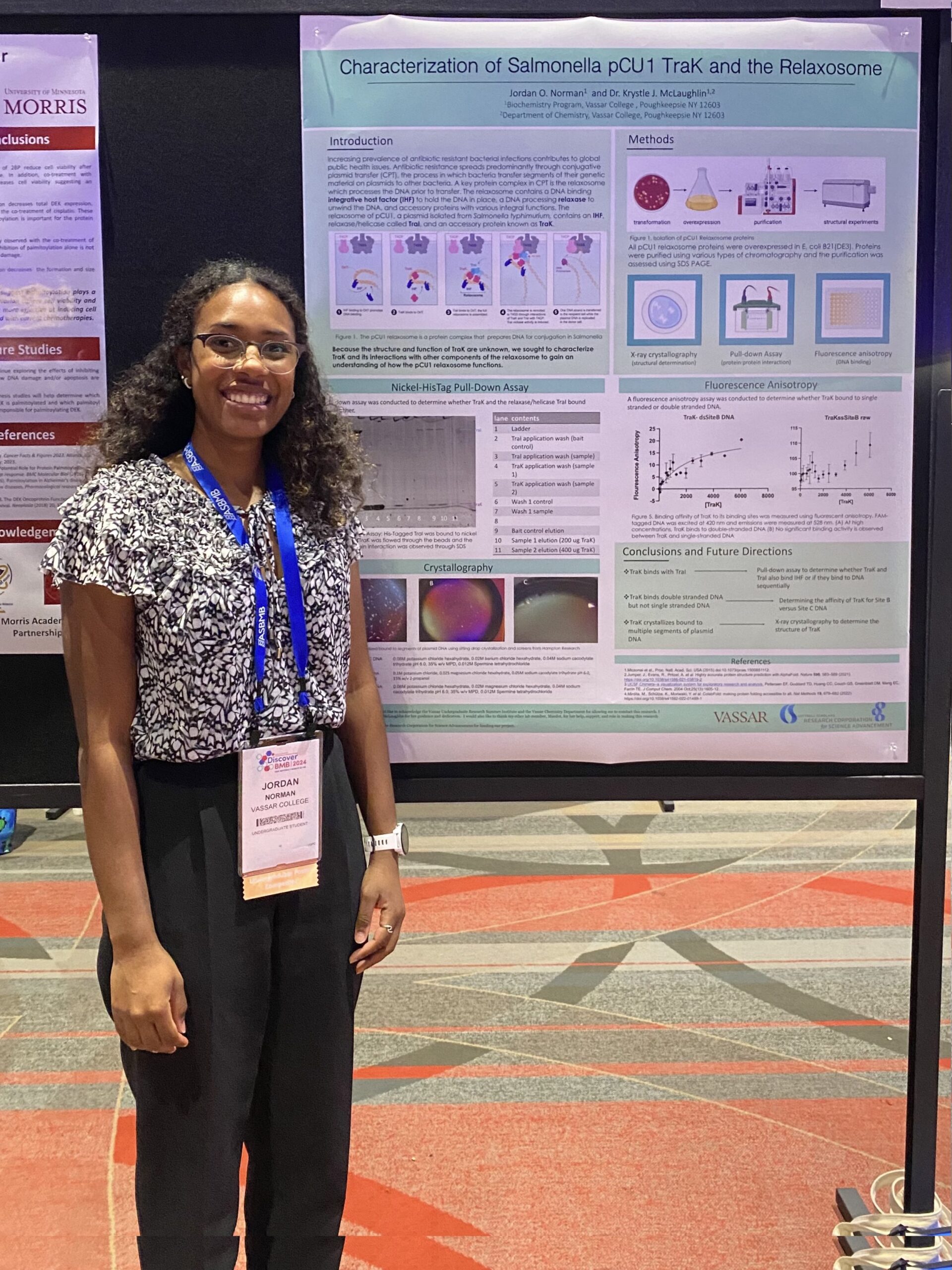
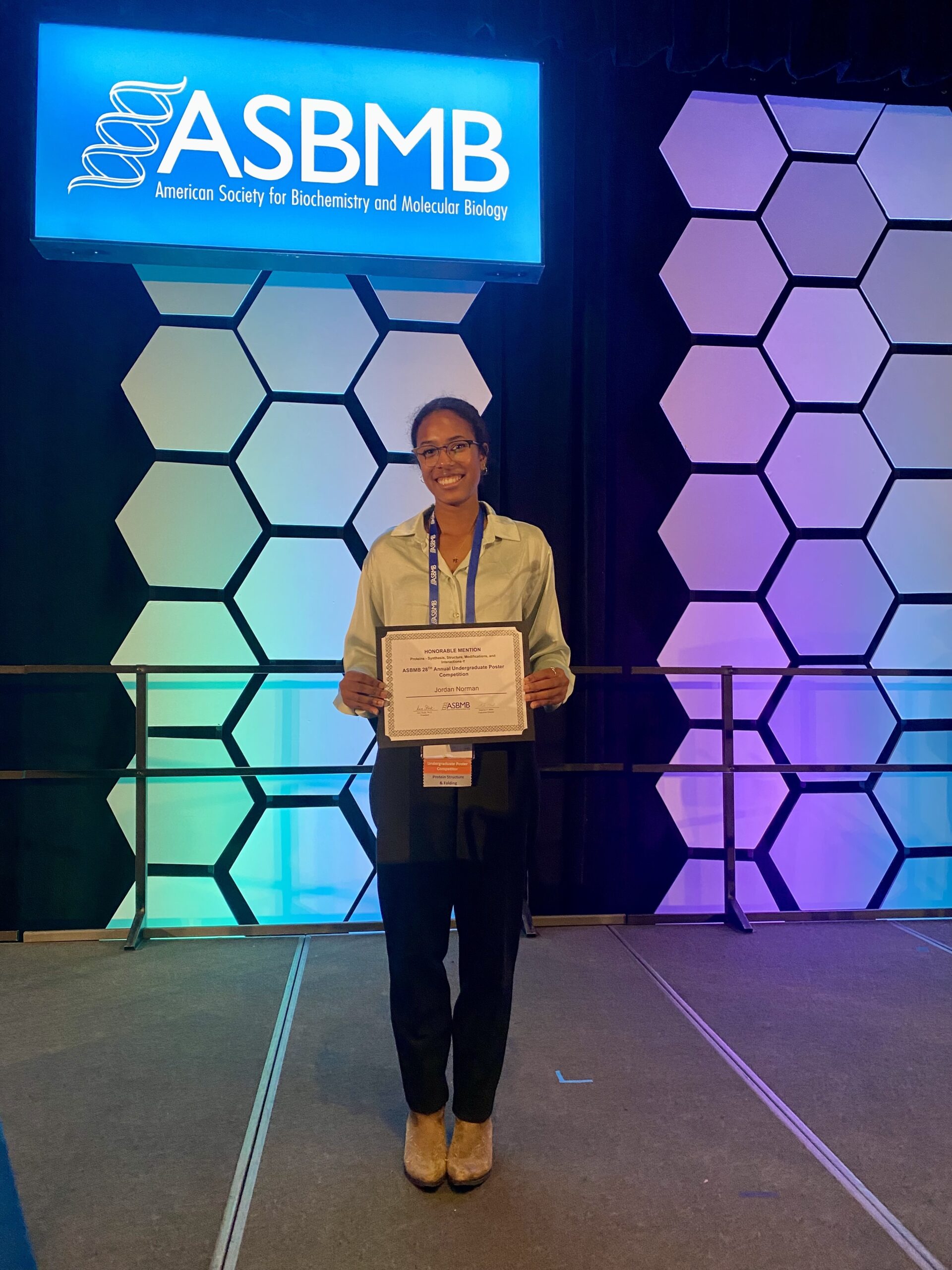
- April 2024: Jordan Norman’ 24 was awarded an Honorable Mention poster prize for her poster on characterizing S. Typhimurium pCU1 TraK at the 2024 ASBMB meeting! [Post-Vassar update: Jordan is now in the MD/PhD program at UCSF, hoping to study infectious diseases!]
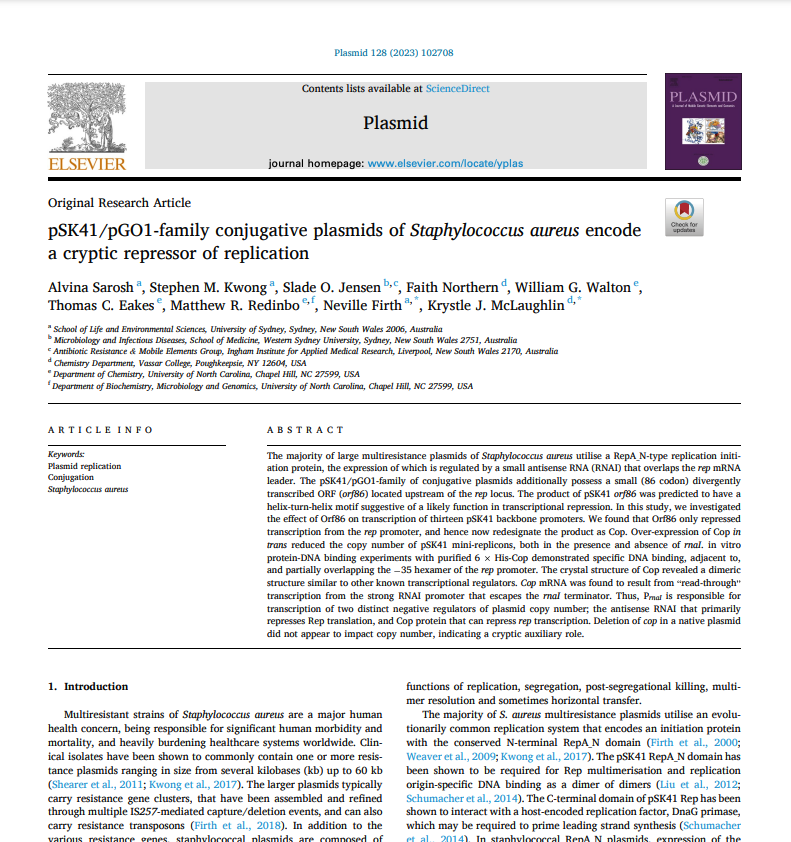
- November 2023: Paper on Staphylococcus aureus pSK41 Cop published! https://authors.elsevier.com/a/1i8n2,3Mq7BJX8
Project Citations (* denotes Vassar College Undergraduate):
- Sarosh A, Kwong SM, Jensen SO, Northern F*, Walton WG, Eakes TC, Redinbo MR, Firth N, McLaughlin KJ. pSK41/pGO1-family conjugative plasmids of Staphylococcus aureus encode a cryptic repressor of replication. Plasmid. 2023 Sep-Nov;128:102708. doi: 10.1016/j.plasmid.2023.102708. Epub 2023 Nov 13. PMID: 37967733.
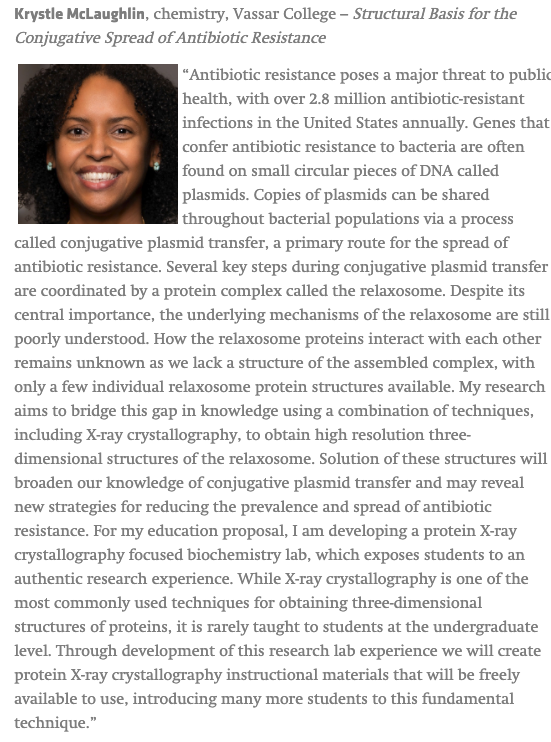
- Feb 2022: We won a $100,000 Cottrell Scholar Award to fund this research on antibiotic resistance! Read more: https://rescorp.org/news/2022/02/rcsa-welcomes-2022-class-of-cottrell-scholars; https://rescorp.org/cottrell-scholars/2022-cottrell-scholars
.