Collective Leadership and Intra-Elite Dynamics in China: A Case Study of Provincial Leaders in Chongqing China

Economic growth in China is always a political issue. During the past decades, China’s GDP increased immensely and so did the standard of living of the Chinese people. Mega cities, subway webs, high-tech industries, real estate weaved together a picture of miracle economic development. Explanations of such growth focus mainly on the role of free market, liberalization, privatization and various economic factors. My Ford project with Professor Fubing Su, however, attends to the political mechanism behind China’s economic performance. We hope to discern the role of and the dynamics in China’s unique dual leadership system—collective leadership of the party secretary and the governor, and pay special attention to how do the everyday activities of the provincial leaders affect China’s economic achievement.

Our project is also an effort to challenge and improve the “Tournament Thesis.” The Thesis argues that the Chinese government is a merit-based hierarchical system in which local officials are promoted based on their competence. An official will orient his/hers career accordingly to the central’s expectation which includes economic development. The officials thus enter a tournament where they compete to develop the local economy and thus propel a national-wide economic growth. The Thesis, however, oversimplifies the political mechanism. Other factors, for instance loyalty and personality, will also affect political promotion. If competency is not the only influential factor, how do officials actually react to the central’s requirement? Under the dual leadership system, is the relationship between the two provincial officials competitive, collaborative, or even more complex and how do their relationship affect the local economy?

With these questions in mind, we start from Chongqing, one of China’s municipalities. Chongqing is a mega city with 30,000,000 population and also a striking site of economic development. We browsed the official website of the Chongqing government for reports on events which Chongqing’s party secretary and mayor attended in 2016 and 2017. To review the massive amount of information, we created two sets of codes: Authority and Issue. Authority codes signify power relationship in an event; Issue codes generally categorizes what an event is about.
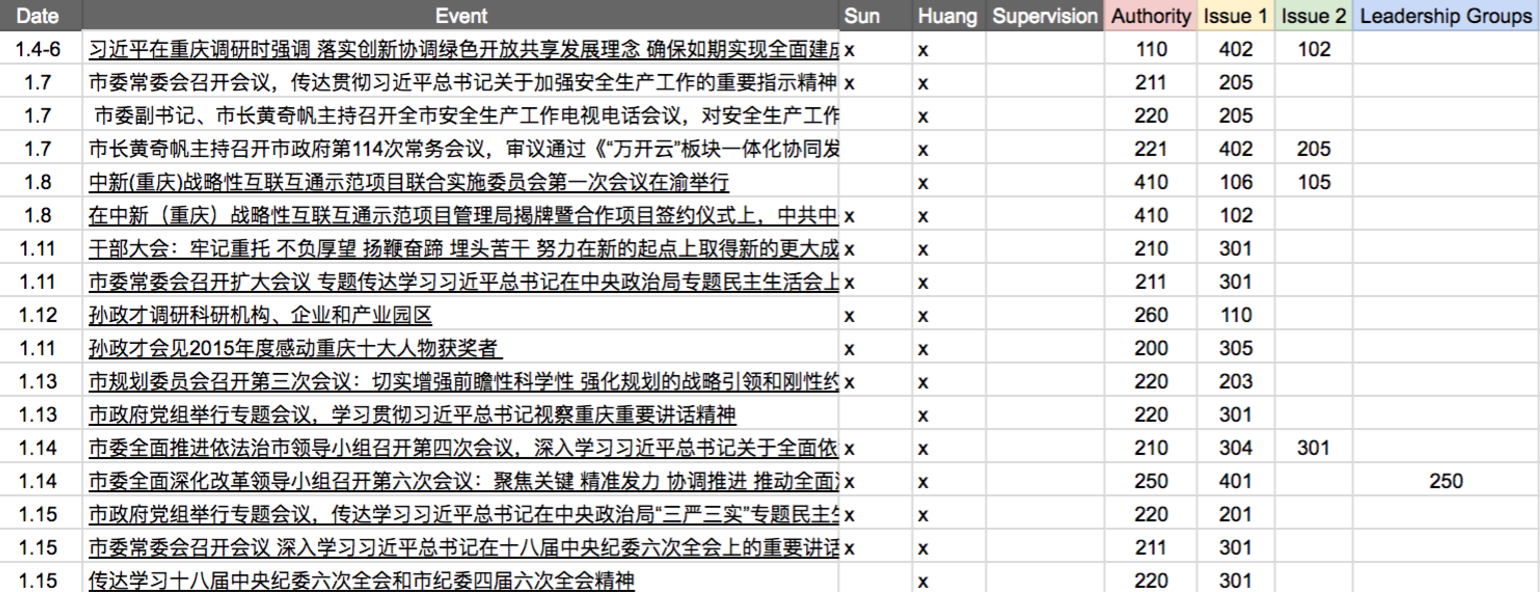
Example of our raw data: 1st Half of Jan, 2016 for Party Secretary Sun and Mayor Huang

After coding all the reported events during 2016 and 2017, we briefly analyzed the raw materials and created two sets of data. One shows a general time distribution of the officials on each type of events (economic, social, political and comprehensive); while the other one indicates the level of interactions between the officials and different governmental and social sectors.

Example of our raw data analysis

These data and observations have various possible applications. They can support a cross-temporal analysis of Chongqing to help understand how does the focus of the provincial government change over time and what does such shift mean. For instance, we found that the percentage of economic events in 2016 greatly exceed that in 2017, with an shifting concentration on political events in 2017. Events such as meetings with foreign companies, economic corporations with local, national and foreign companies and investments were cut by half in 2017 compared to the previous year. Though the central government still emphasized on developing the national economy, actual economic events in Chongqing decreased. Further explanation for this counter-intuitive situation needs more detailed background and knowledge on governmental policies, but our data provide an entry point to make sense of the current big picture.

This Ford Project is only a part of Professor Su’s research which will gather data from all 34 provinces in China across more than 5 year. With more research on different provinces, we could conduct inter-local analysis and see if the change in Chongqing from 2016 to 2017 a national phenomena or a distinct occasion. Other possible research focus can explore the the leadership dynamics in the Chinese government, changing of leadership pairs, State-business relationship and more.

A photo when we visited CCNU’s Institute of Chinese Rural Studies

After completing our research on Chongqing, Prof. Su and I went back to China and visited Central China Normal University. We met with Professors from the Institute of Chinese Rural Studies and learnt about their programs and achievements. I found it crucial to travel back to China and collaborate with local universities in order to have a sense of the current political environment and what is actually happening at the local. Poverty reduction, for instance, the top emphasized social issue in Chongqing in both 2016 and 2017, is a national-wide effort to support the poor. Latest policies and strategies focus on “Targeted Poverty Alleviation” through which the local government support individuals based on their personal needs. Thus poverty reduction is not only operating on a fiscal level. It could be actual supplies, services or even emotional support. CCNU’s graduate students are required to “go down to the rural,” which means staying in different villages in China for months and living with the villagers. We learnt a lot from the students, as they told their stories and findings, especially on poverty reduction.
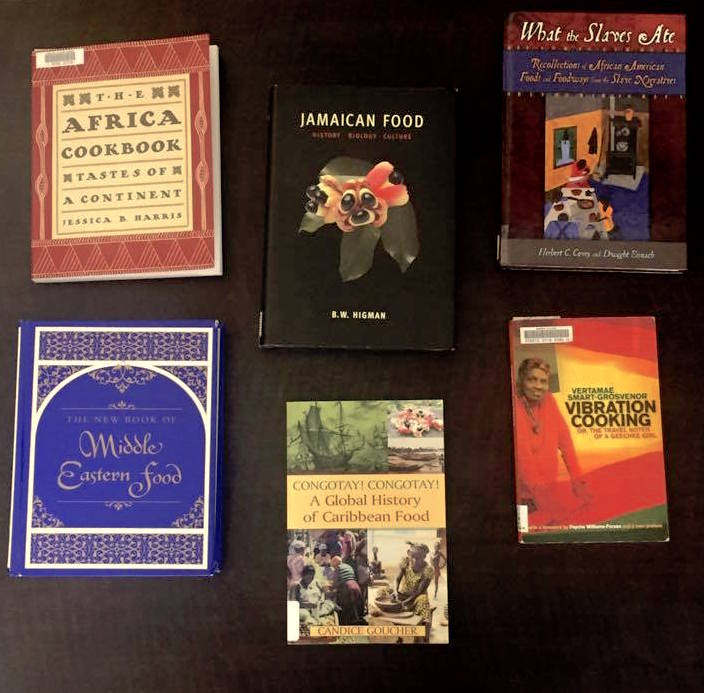
African Diaspora Foodways Online Library and Database

Regional Cookbooks

Diaspora can be defined as the dispersal of any people from their original homeland. Whether violently forced or voluntary, the African Diaspora can be perceived across space and time. Afro-foodways, or the gathering, preparation, and consumption of food within the African diaspora, is a point of entry in which to see the interconnections. It is a way to view how change and continuity have been contested through cultural production, local innovation, and globalization. In other words, we can see how culture is re-inscribed into different temporalities and spaces through the lens of food.


Medicinal Plant Sources

This field, African Diaspora Foodways, is under-researched, but is important and is in need of more attention. The Ford Scholars project that I worked on with Ms. Rachel Finn, MEd, MSLS, took a multidisciplinary approach in order to create a multi-lingual database consisting of food plants, recipe names, cooking techniques, and botanical names and images. Along side of this, we compiled sources to expand regional bibliographies and included my research on medicinal plant uses in the diaspora as well. This online library and database is a digital resource for those that want to learn more about Afro-foodways, serves as a location for scholars who would like to conduct research in this field, and is also an act of resistance since this is a space where knowledge is learned, shared, and produced predominately by those within the African Diaspora.


Schomburg Center for Research in Black Culture

I also had an independent study project over food sovereignty, which is a transnational peasant movement that started in the Global South that advocates for the right of people to define food and agriculture production and policy for themselves rather than working within the framework of neoliberal agriculture production. This involved going to the Schomburg Center for Research in Black Culture in Harlem as well as using the resources here at the Thompson Memorial Library. This independent project was framed in the locations of Mali and the United States, discussed the differences between food security and sovereignty, and essentially questions the discourse of development.


Making Early Middle English

During the months of June and July of this year, I explored the realm of Middle English Literature with Professor Dorothy Kim. Working with Professor Kim, I studied medieval manuscripts and analyzed one in particular, Laud 108, to produce a topics map. The topics map is essentially a list of all of the scholarly work that has been written about Laud 108 in the past 100 years. Our goal in creating this map is to make articles, books, and papers more readily available to medievalists hoping to study Laud 108. With an easy to read, organized list of sources, complete with author, year, date, publication, and key words, scholars will be able to streamline and simplify their own research.

As Professor Kim’s research assistant, I also helped her to plan an upcoming conference, “Making Early Middle English”. This is a conference that Professor Kim and her research partner, Professor Williams Boyarin of the University of Victoria, have been organizing and will host together this September at the University of Victoria in British Columbia. My duties relating to the conference have involved setting up and managing social media accounts, communicating with scholars to arrange travel, and finally, writing a paper of my own to present at the conference. Tying in with my topics map research, I have written a paper about one of the texts in Laud 108, Havelok the Dane. During the Making EME conference, I will present my paper as img_1831a part of a panel of scholars.

My conference paper focuses specifically on gender and vulnerability in the Havelok narrative. Using my topics map, I analyzed modern scholarly work about gender and Medieval Literature to interpret this over 600 year old manuscript. While Havelok the Dane is one of the oldest English Romances, I wanted to examine it through a modern lens. Through my own reinterpretation and that of current Havelok scholars, I found that Havelok is a character that combines masculinity and femininity and challenges our perception of the standard “Medieval hero”.

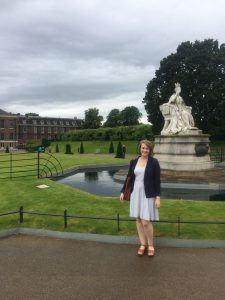
This summer experience has been one I will treasure long after I graduate from Vassar. Not only did I gain invaluable research skills, but my particular Ford experience brought me to London in July, where Professor Kim and I researched at the British Library. Having never traveled to England before, I relished in the experience of studying and living in London for four weeks. Being surrounded by thimg_5597e rich literary history of London and working in the remarkable environment of the British Library massively enhanced my Ford experience. I am so grateful Professor Kim and the Ford Scholars program for this wonderful summer. Additionally, I am appreciative of the continued support of Vassar in sending me to present at the Making EME conference.
Creating Performance Scores – Sarah Rodeo’ 16 and Lecturer Drew Minter

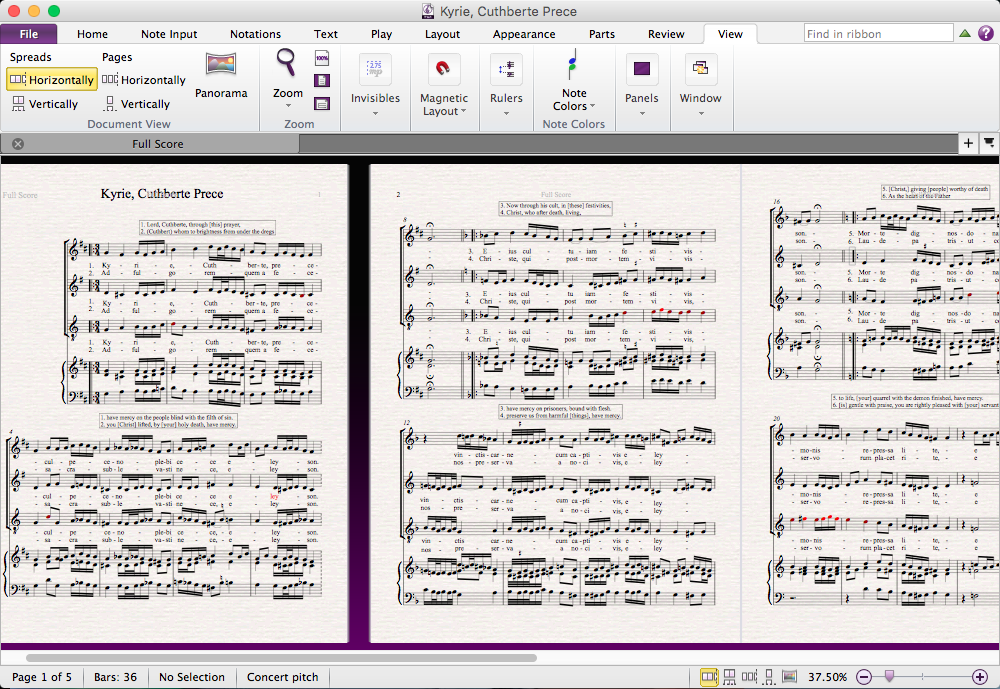
My Ford Scholar project consisted of my taking scholarly editions of music from the Middle Ages up through the late Renaissance and using the music notation software Sibelius to turn them into performance scores that could be used by ensembles.

In completing this project, I gained exposure to an incredible amount of early repertoire to which I would not have otherwise been exposed. In addition to giving me music with which to work, my Ford Scholar mentor, lecturer Drew Minter, encouraged me to spend time browsing the parts of the Music Library where all the reserve, anthology editions of early music are kept. Drew pointed out to me that before the Internet made music-browsing incredibly simple from one’s desk, the way that generations upon generations of people discovered and became familiar with musical literature was by searching through libraries. I learned that being able to quickly and easily navigate a music library is itself a skill that I would like to cultivate.

In completing this project, I learned the countless aspects of a piece of music that make the score easily readable and accessible for a musician – facets that I had never considered before. These qualities include but are not limited to spacing, alignment, and size of: lyrics, note-heads, note stems, bar lines, staves, systems (sets of staves), clefs, time signatures and key signatures. As someone who struggles with visual processing issues, being able to create visually clear scores was extremely satisfying for me.

full-score-pic

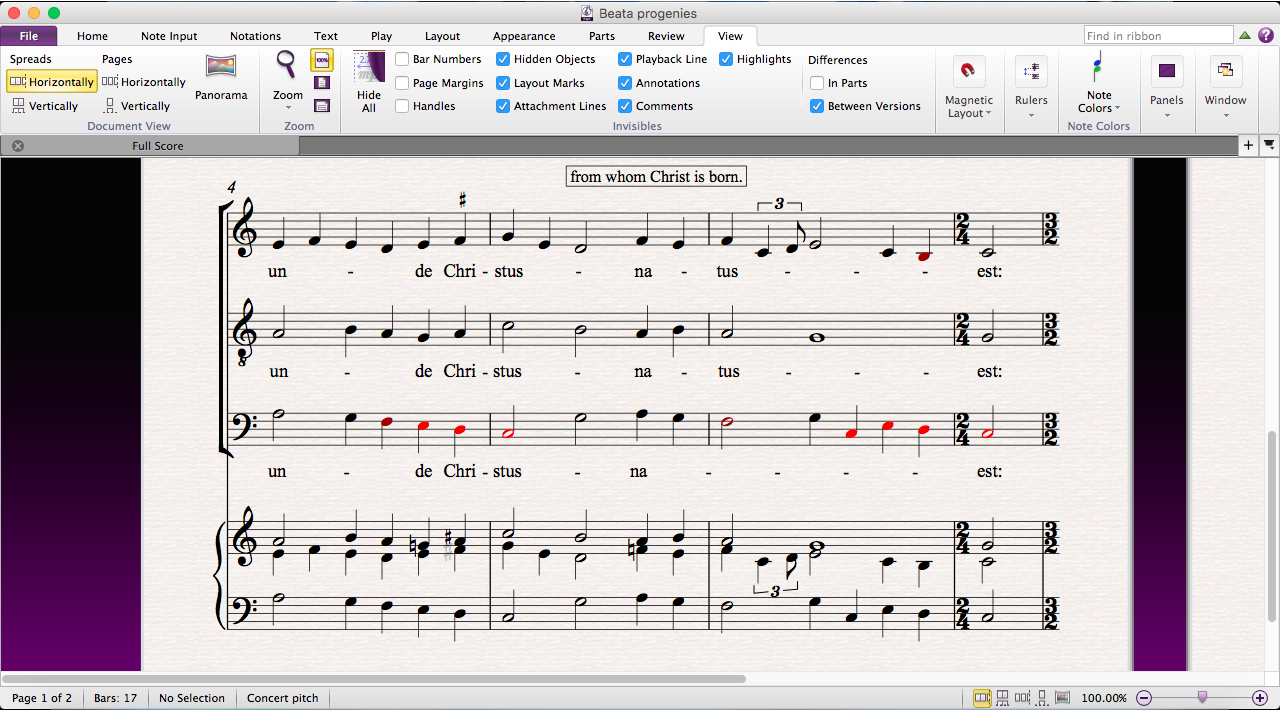
I had the experience of translating a great deal of Latin, in addition to Spanish. I decided that the clearest way to insert these translations into the scores was to put them right next to the original Latin or Spanish lyrics, a feature that most performance scores do not have.

translations-pic

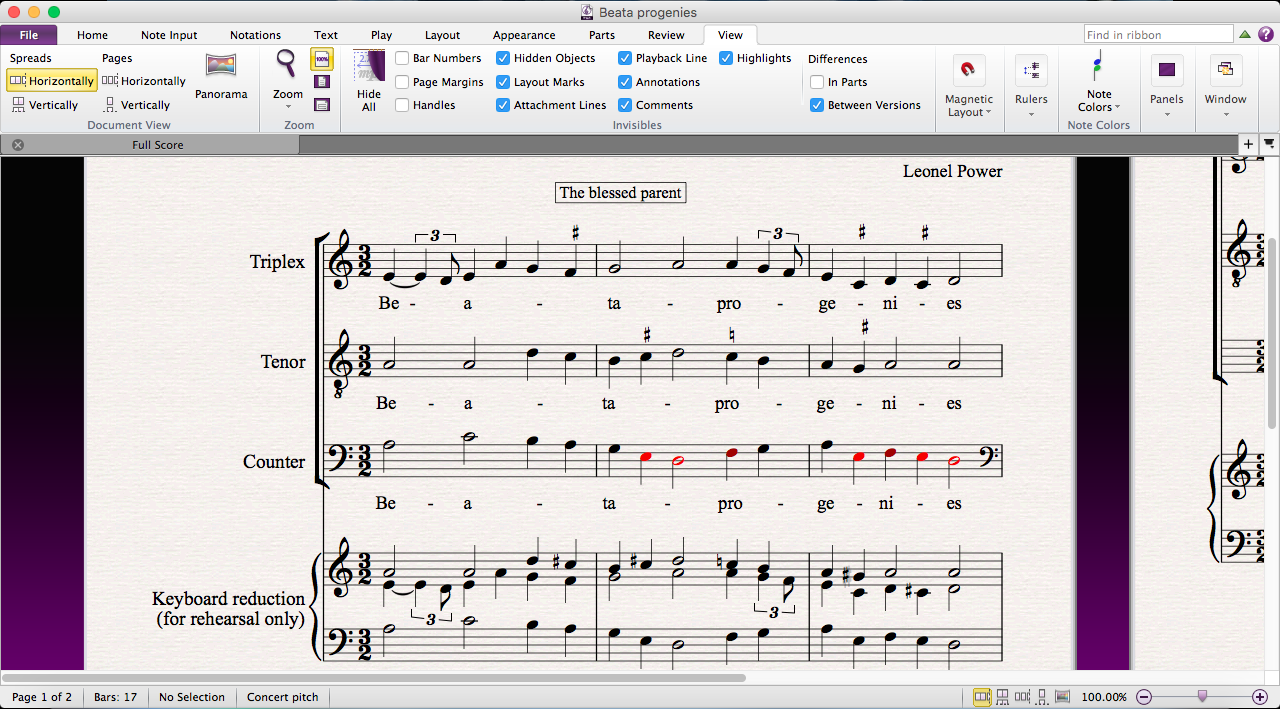
I was also tasked with creating clear keyboard reductions of all the vocal parts. My experience in playing keyboards gave me many good ideas on how to make those keyboard parts as neat and clear as possible.

reductions-pic

I am pleased that I was able to acquire solid proficiency with Sibelius this summer. I realized that this is a skill set that I will absolutely need at some point, since I would like to pursue a career that focuses on sacred music, and therefore much early music. I look forward to incorporating score creation into my career trajectory.

The Evolution of Chinese Characters and Their Phonological Presentations

Qufu Interview

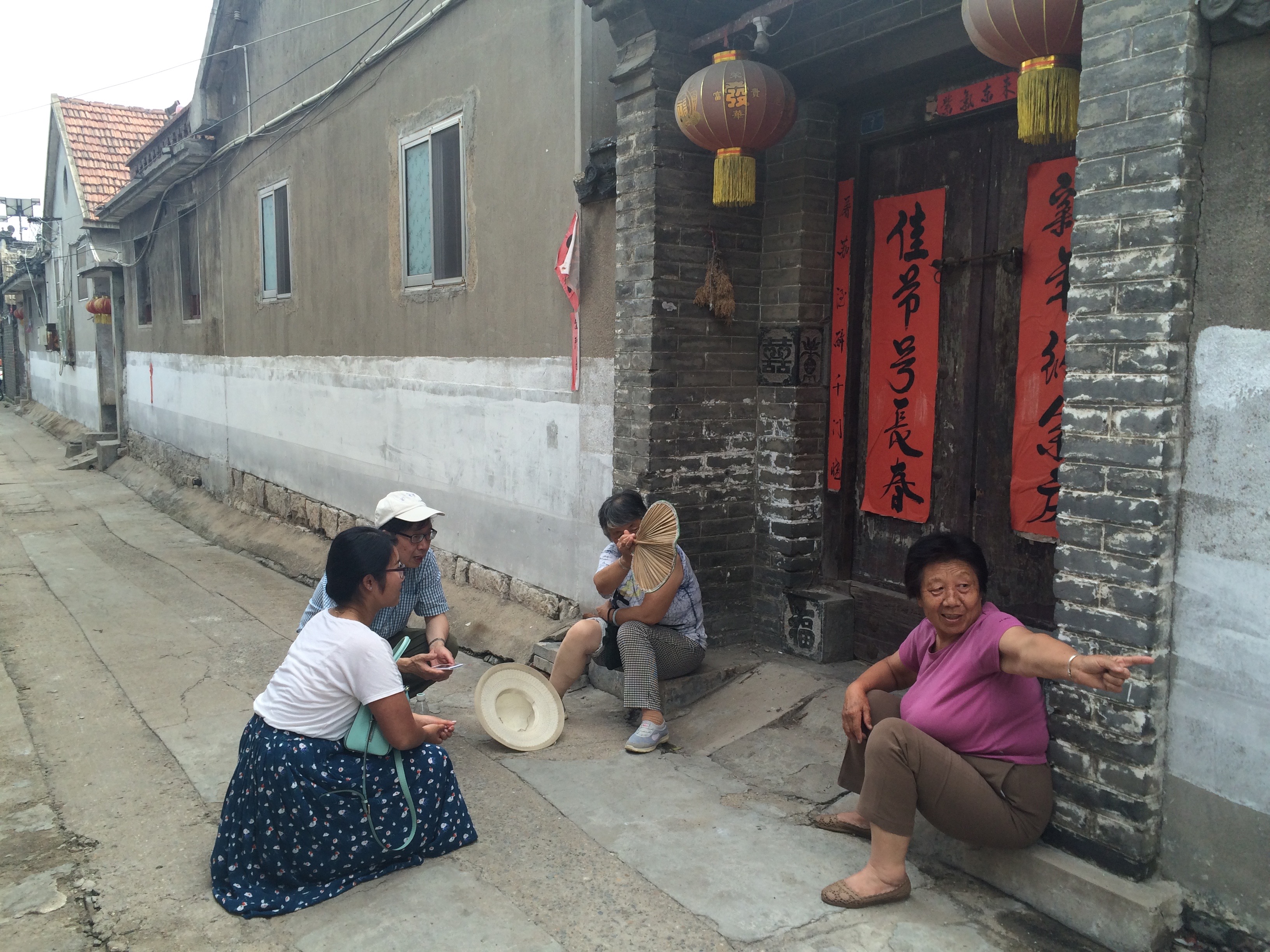
Professor Du and I interviewing Qufu residents


This summer Professor Wenwei Du and I travelled to Shandong Province, China, to examine the evolution of Chinese characters and the various phonological presentations of the same characters. Residing mainly in Qingdao, we also travelled to Qufu (Confucius’ hometown) and Tai’an.

Over the course of the eight weeks abroad, we consulted linguists at Qingdao University and Ocean University of China. We also interviewed the local people who spoke various Shandong dialects. I recorded and translated these interactions as well as created a manuscript of the recordings. From these interviews, we hope to track the historical phonological changes of Chinese.

Confucius' descendant

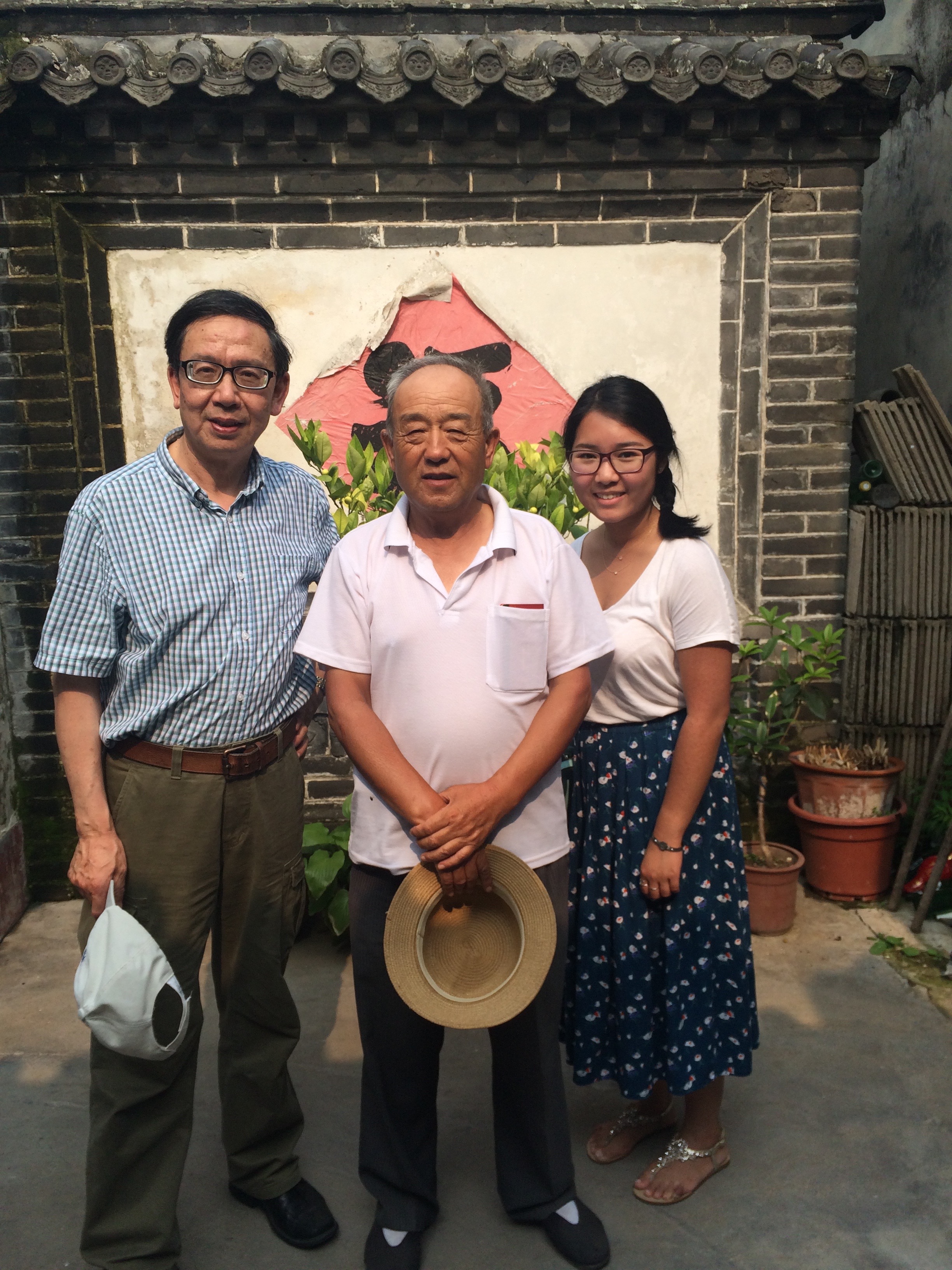
Professor Du and I with one of Confucius’ many descendants


We also explored how character composition impacts sound and meaning. As there are over 50,000 characters in the Chinese language, we chose the 1000 most frequently used characters as the basis of our research. I examined the list for phono-semantic compound characters 形声字. Phono-semantic compound characters are made up of a semantic classifier (形) and phonetic indicator (声). The semantic classifier refers to the meaning of the character while the phonetic indicator contributes to the pronunciation/sound. I analyzed the characters, defining components that influenced sound and meaning. I combed through primary and secondary sources regarding the history of Chinese characters and their evolution to assist with our research. According to our findings, approximately 51% of the 1000 characters are phonograms in the simplified form, traditional form, or both.

Next, I organized the 1000 most frequently used characters into several lists: by simplified form, by traditional form, by radical, by semantic classifier, and by phonetic indicator. I analyzed these lists, looking for a connection between character composition and its sound and meaning. We then invited our interviewees who spoke various Shandong dialects to read aloud the list of characters that were arranged by phonetic indicator in order to pinpoint the evolution of phonological representations of characters as well as the relation between contemporary Mandarin and local dialects.


This research opportunity has allowed me to experience and appreciate the beauty of the Chinese language through its many facets. I plan to continue and further my Chinese studies and I hope to translate the skills and knowledge I’ve learned during this summer to fellow Chinese learners at Vassar and to help shed new light on teaching and learning Chinese characters and their pronunciations.


Henry Kissinger and the Paris Peace Negotiations

Screen Shot 2016-08-04 at 12.21.45 AM“History presents unambiguous alternatives only in the rarest of circumstances,” writes Henry Kissinger in his memoir, Ending the Vietnam War. “Most of the time, statesmen must strike a balance between their values and their necessities or, to put it another way, they are obliged to approach their goals not in one leap but in stages, each by definition imperfect by absolute standards.”

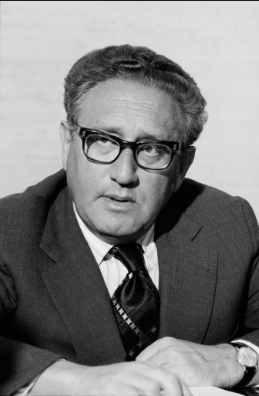
Henry Kissinger, President Nixon’s National Security Advisor, was the chief negotiator for the United States in its effort to end—or at least, extricate itself from—the Vietnam War. Between 1969 and 1973, Kissinger met several times with North Vietnam’s Foreign Minister Xuan Thuy and Special Advisor Le Duc Tho in Paris in order to negotiate a peace agreement. Kissinger himself, and several scholars since, have portrayed this process as a careful balancing of “values and necessities,” resulting in an agreement that, though “imperfect by absolute standards,” was the best possibly attainable. In 1973, soon after the agreement was signed, Kissinger was awarded the Nobel Peace Prize for his efforts.

Yet the agreement was not only imperfect by “absolute standards;” it was imperfect by the only standard that matters: it didn’t work. The only thing it effectively ensured was the United States’ troop withdrawal. The war in Vietnam continued for another two years, and the Government of South Vietnam—after more than a decade of direct U.S. involvement, hundreds of billions of dollars, and over 200,000 U.S. casualties alone—eventually fell.

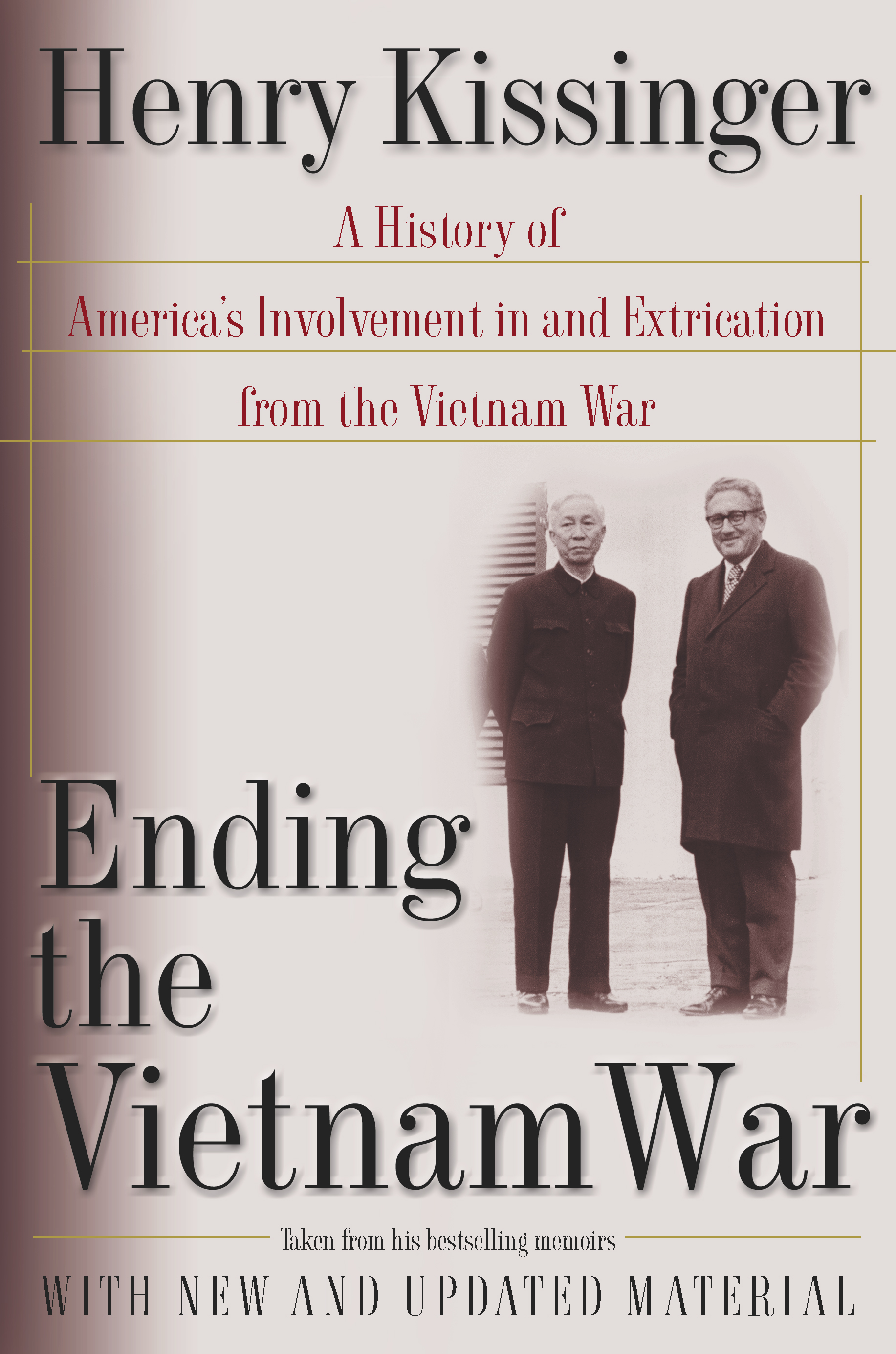
cvr9780743215329_9780743215329_hr

Working with Professor Robert K. Brigham, the aim of my Ford project this summer was to study the Vietnam peace negotiations (and Kissinger, their leading character) in order to develop a more complete understanding of the defining motives, methods, and mistakes.

I began the summer by reviewing the existing literature: Kissinger’s own memoir (as aforementioned), as well as the Vietnamese account by Luu Van Loi and Nguyen Anh Vu, Le Duc Tho-Kissinger Negotiations in Paris. I also read secondary texts such as Pierre Asselin’s A Bitter Peace; Larry Berman’s No Peace, No Honor; and Jeffrey Kimball’s Nixon’s Vietnam War. Using these sources, I constructed a timeline of the negotiations and discovered several inconsistencies between Kissinger’s account and the others—suggesting that Kissinger has attempted to rewrite and revise the history, thereby casting himself in a more positive light.

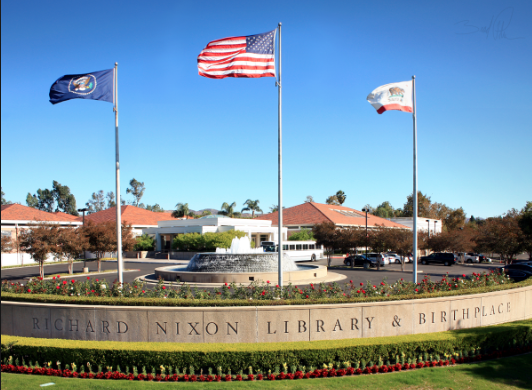
Screen Shot 2016-08-04 at 12.20.41 AM

At the end of June, Professor Brigham and I travelled to Yorba Linda, California, in order to research at the Nixon Library. In our week there, we found more material than we could’ve imagined—ranging from the State Department’s Vietnam subject files, to National Security Council policy briefs and memoranda, to direct transcripts of the  Kissinger/Tho conversations and years’ worth of transcripts from Kissinger’s telephone calls—much of it recently declassified.

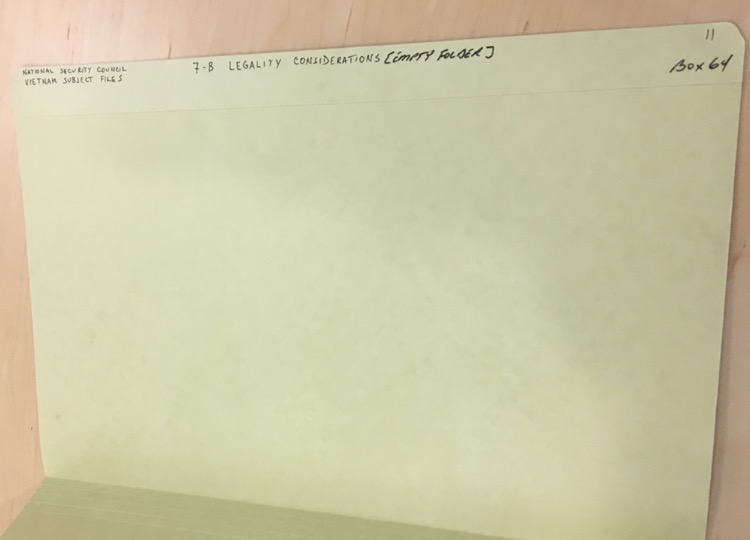
We’re still sorting through all the documents we collected—but sometimes, it is just as important to recognize what isn’t there. My personal favorite research discovery was when I found a group of folders that outlined a plan of military escalation against North Vietnam (with the goal of forcing Hanoi to make concessions at the negotiating table). In between two folders that were overflowing with the details of the bombing campaign was a folder titled “Legality Considerations.” The folder was empty.

FullSizeRender-2

As we continue to read and analyze all this evidence, one thing is abundantly clear: Nixon and Kissinger were both more concerned with politics and public opinion than negotiating a rapid, legal, and truly reliable peace. In his memoir, Kissinger predicts future criticisms of his negotiating efforts, writing: “It is always possible to invoke that imperfection as an excuse to recoil before responsibilities or as a pretext to indict one’s own society.” In the wake of the Vietnam war, there exists a “credibility gap” between U.S. policy makers and the public—“That gap,” Kissinger insists, “can be closed only by faith in America’s purposes.”

Kissinger asks us to ignore the result of the peace process, and simply trust that the Nixon Administration’s intentions, at least, were pure. My work this summer has only affirmed that (particularly when examining international relations) one should never be so naive—and, more likely than not, the person making such a suggestion is the one with the most to hide.

Political Selection in China

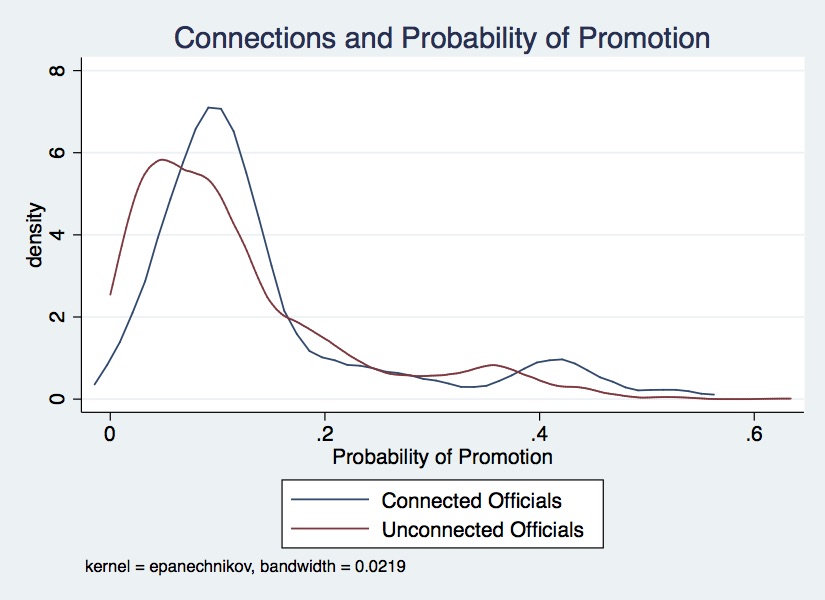
One of the projects I worked during the summer with professor Ho was the role of connections and performance in China’s political selection. More specifically, we wanted to understand which of these traits dominates the other under different conditions.

To do this, we had to first develop a formal model to derive specific hypotheses. Our model was a relatively simple two period decision game where a senior official decides to promote from a pool of junior officials. We specified the senior official’s utility as the rent she obtains in both periods. However, we assumed that the rent she obtains in her second period is conditional on her surviving onto the next period. Here, we said that rent is a function of the junior official’s ability and the probability of survival is a function of the junior official’s connection status. Taken from a standard career concerns model in the industrial organization literature, we believed that ability is unobservable, but that the senior official can predict the true value of ability using the junior official’s performance. With this, we were able to derive the senior official’s expected utility given the junior official’s performance and connection status.

From this model, we obtained various propositions. The first was the both performance and connections matter, and an increase in either one would increase the junior official’s probability of promotion. The next propositions suggested that when the senior official has a larger external (exogenous) threat, an inaccurate performance signal, and a shorter time horizon, the value of connections would outweigh the value of performance.

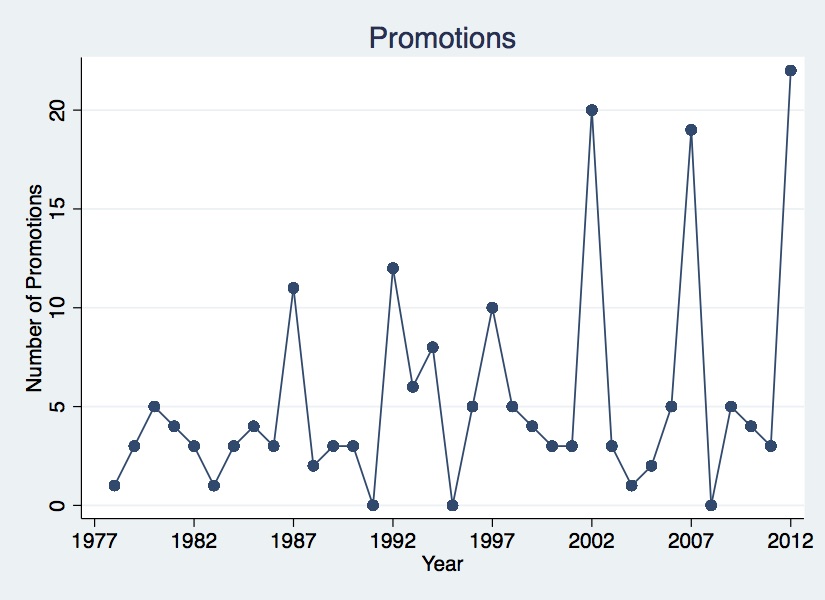
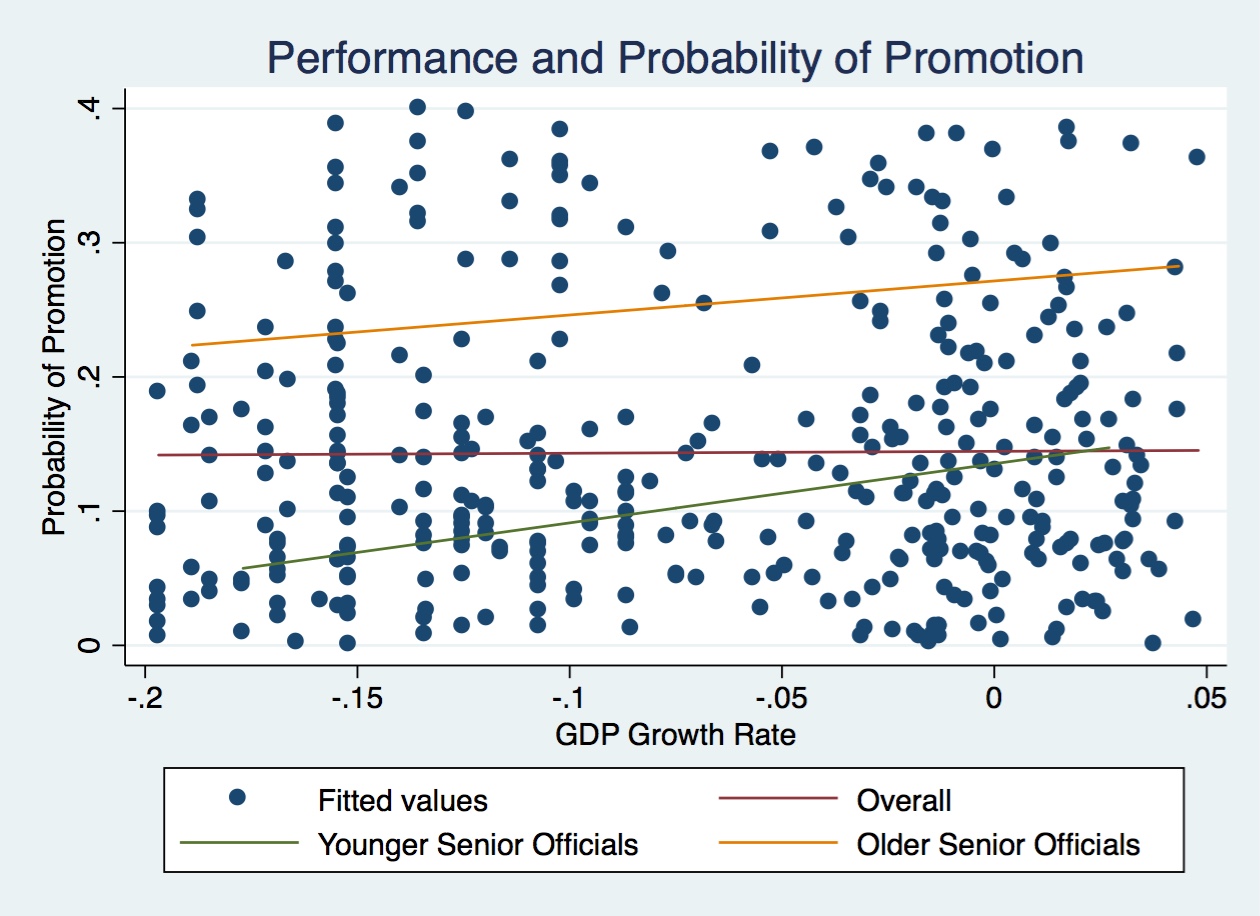
To support the propositions derived from the model, we used a dataset from 1978-2012 that had all of China’s provincial (junior) officials as well as their connection status, performance, and promotion status. The dataset also included other characteristics that we used for controls as well as information on the senior officials. Using the dataset and various econometric strategies, we found that most of our hypotheses were supported. First, we found that connections (sons/son-in-laws) seemed to be positively correlated with the probability of promotion. However, performance (GDP growth rate of the junior official in his province) does not seem to impact the probability of promotion.  Additionally, we found strong evidence that as the senior official becomes younger (and has a longer time horizon) or as the senior official receives an inaccurate measure of ability (high variance in performance) of the junior official, the value of connections for the junior official increases.

Promotions

Connections

Graph


Assessing the Distributional Effects of Alternative Health Insurance Programs

This summer I worked with Professor Rebelein in the economics department on his project called “Assessing the Distributional Effects of Alternative Health Insurance Programs”, continuing the work we started this past academic year. The goal of this research is to create a mathematical model of health care choices so that the potential welfare impacts of different health care policies can be analyzed, especially how welfare varies for different income groups. Given the upcoming election, health care policy issues are at the forefront of public consciousness, so I was very excited to be working on this project.

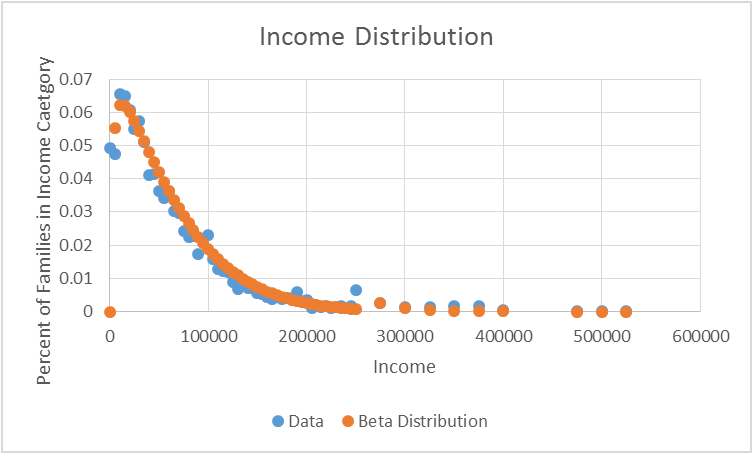
The first thing we did was find income and medical expenditure distributions from Medical Expenditure Panel Survey data to get parameters for the mathematical model. This image shows our beta distribution fitted to the actual distribution of income taken from the data.

Picture1

Most of the summer was spent reviewing the current literature on health care simulation models. Many other researchers, most notably Jonathan Gruber from MIT, and organizations like the Urban Institute have created their own models of health care and insurance demand, and I spent a lot of time looking at how these models worked and the math behind them. Professor Rebelein wanted to have health status, which is how healthy someone is, included as a factor into consumers’ decision making. Because none of the major models have included health status as a factor, I also spent time reading about utility models that include health status. After reviewing the current research we were able to finalize a model of consumer utility incorporating health state.

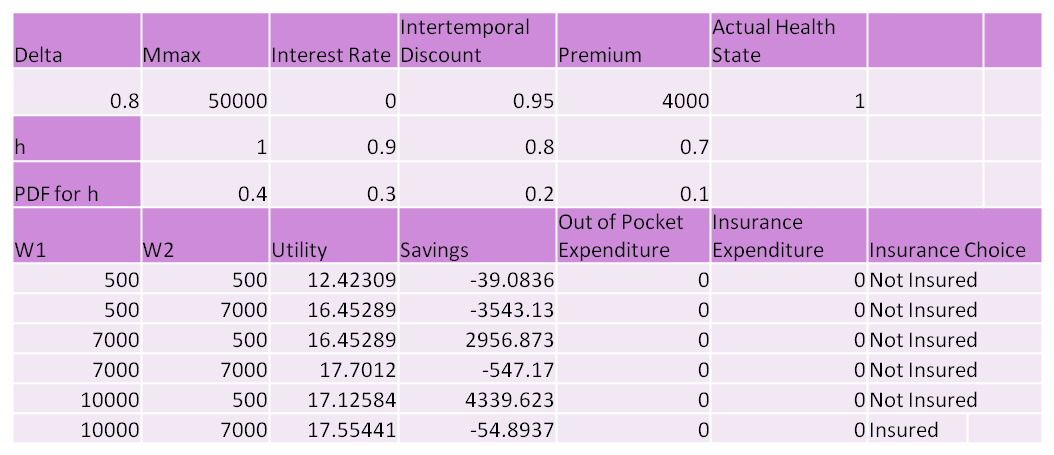
I spent the rest of the time writing a function in the R programming language that would solve our model for different parameters like income and insurance premiums. It was a challenge because the model has to predict consumers’ insurance and health care spending choices for a number of different scenarios. Each case has to be written separately into the function. The model is a two period model. Given a certain income in each time period, consumers must choose how much to save or borrow and whether or not to buy health insurance given their expected well being. In the second time period people must choose whether or not to pay their medical bills, which are determined by their health state, based on whether they can afford them or whether they will be better off staying sick but having more money. This image shows what the output of this function looks like in an Excel format.

Picture2

I’m very thankful for the opportunity to do summer research through the Ford program, and I’ve learned a lot through the process.

Building Racial Literacy: The Joyce D. Bickerstaff Black Girls’ Lives Matter Collection and the Bechtel Lecture Series

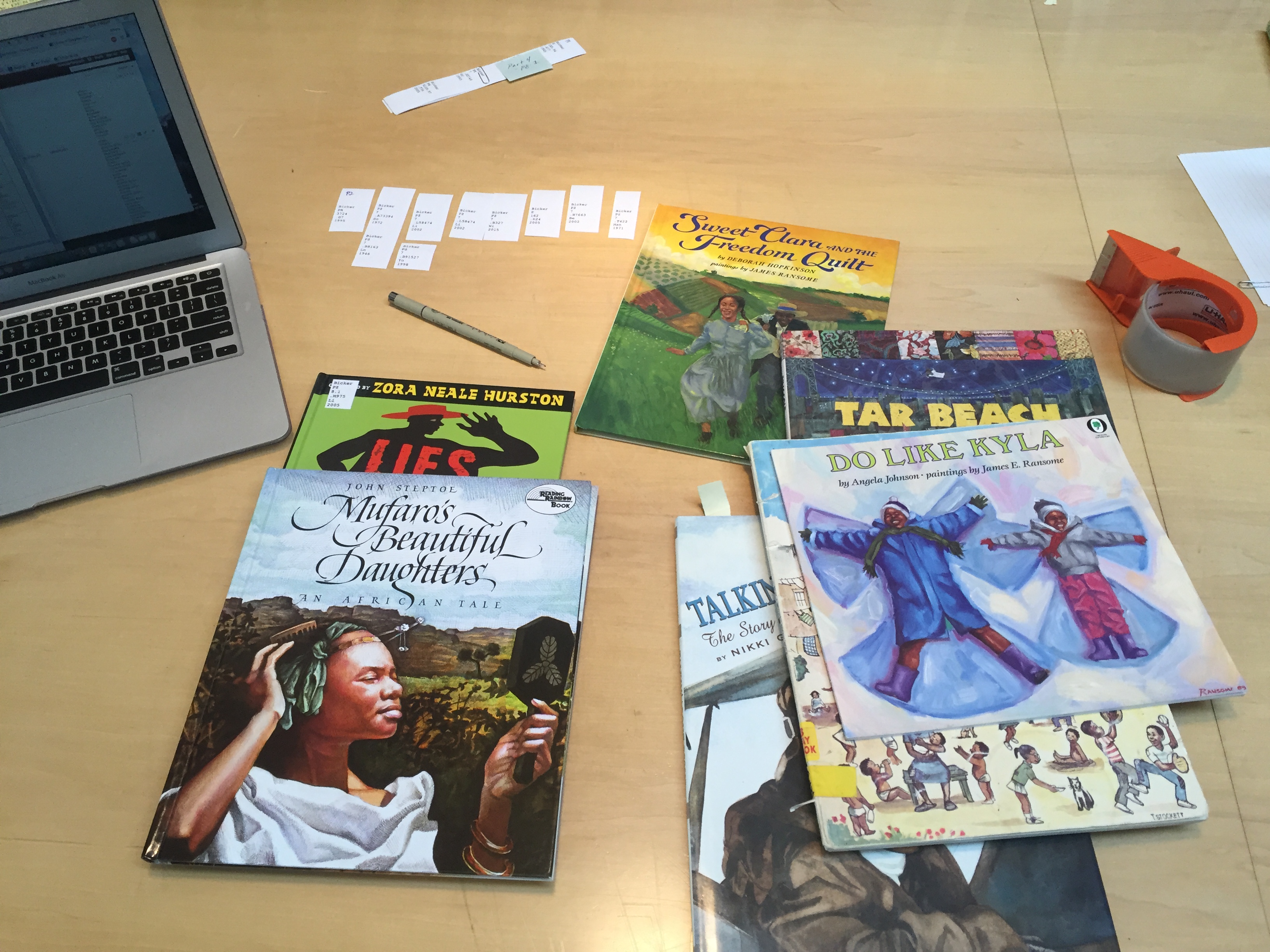
This summer I assisted Professor Colette Cann with the expansion of the Education Department’s children’s book library, taking on the distinct task of enlarging and enriching the department’s collection of literature for and about youth of color. For our project, Professor Cann and I focused in particular on collecting literature about Black girls and young women. With the assistance of professor emerita Joyce Bickerstaff, I also helped plan the next installment of Vassar’s Bechtel Lecture Series, to be given this fall by celebrated children’s book author Andrea Davis Pinkney. In honor of her continued commitment to the study of children’s literature at Vassar and beyond, we decided to name the new book collection—the opening of which will be officially announced at the time of the Bechtel Lecture—the Joyce D. Bickerstaff Black Girls’ Lives Matter Collection.

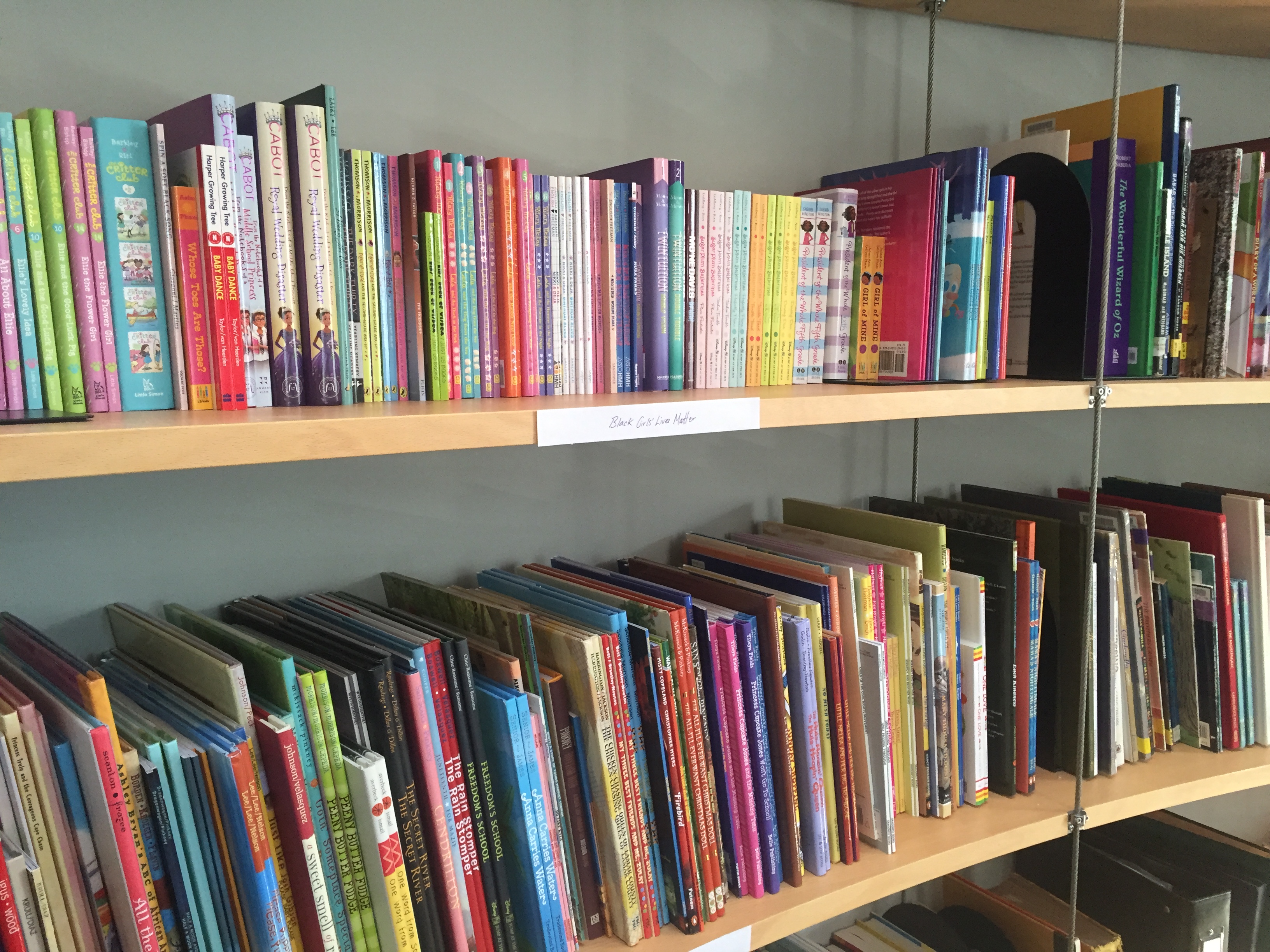
Much of my time this summer was spent researching and cataloging a list of books that center on, celebrate, or complicate narratives about Black girls and young women to be adopted into the library. I also assisted Professor Bickerstaff with the retrieval of several hundred books from storage which now form a significant portion of the library’s overall collection; many of these books have been incorporated into the Black Girls’ Lives Matter Collection as well. With the help of the staff at Poughkeepsie’s Three Arts Bookstore, even more books were purchased for the Black Girls’ Lives Matter Collection, which now totals at nearly 400 titles.

Beginning in November, the Black Girls’ Lives Matter Collection will serve as the booklist for the inaugural season of the department’s new Pop-Up Library Program. Subdivided into groupings of 30 books organized around different themes, it will visit and live with participating Poughkeepsie elementary school classrooms for month-long periods at a time, to be used by teachers and students as they wish. Through this program, we hope the collection—and all future collections adopted as Pop-Up Library booklists—will function as an exciting and readily accessible resource for the development of literacy skills and racial awareness in local youth.


The Dome Room in the Maria Mitchell Observatory has been completely reorganized to make way for the growing collection, and all the titles that make up the newly expanded library will be easily searchable through an online catalog that will launch this fall—along with the opening of the library and the commencement of the Pop-Up Library Program—to coincide with Andrea Davis Pinkney’s delivery of the Bechtel Lecture on November 3rd. The Bechtel Lecture Series, which was established in 1990 to honor prominent figures in the field of children’s literature, is open to the entire Vassar community and the larger Poughkeepsie community of which we are a part. We hope you will all attend!

Along with Professor Cann and Professor Bickerstaff, the work I completed this summer would not have been possible without the guidance and assistance of Gretchen Lieb, Heidy Berthoud, Dayle Rebelein, Julie Riess, Andrea Davis Pinkney, Scottie Bowditch, and Walter Effron. Thank you!

Education Policy and Students in Special Education: An Institutional Ethnography

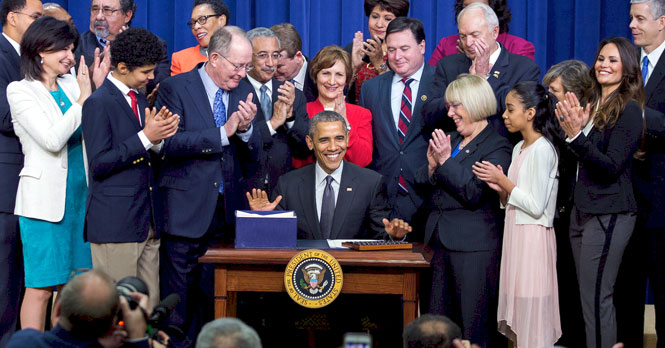
A major change is coming to public education in the USA. President Obama and Congress finally replaced the No Child Left Behind Act (NCLB). NCLB, which has been shaping national education policy for over 15 years, is often regarded as a major failure. Many parents, students, and teachers across the country are unhappy with the increased standardization and intensive testing regime that it brought about. NCLB failed to actually live up to its name. As the extensive test results NCLB has accumulated prove, millions of students in the United States are let down by our schools yearly. Students, especially racial minorities and those facing disabilities, are often left to flounder. And since NCLB and its successor are both inherently Civil Rights laws, this failure feels especially poignant.

The signing of ESSA in December, 2015.

Professor Erin McCloskey and I began research following the implementation of NCLB’s successor, the Every Student Succeeds Act (ESSA). This new bill returns most of the control over education to the individual states, and disempowers the Department of Education for the first time since 1965. Little is known about how the bill will be implemented due to its recency, but major change is coming. Thus, now is the perfect moment to begin gathering data. Our longterm goal is to follow the implementation of ESSA to uncover how the law impacts special education teachers and students with disability classifications. Will every student, including those with disabilities, truly achieve, as the law’s name claims?

Because the law has not yet been implemented, our research has thus far mostly been preparatory—reviewing literature, news, and preliminary interviews with teachers. I spent the summer coding, transcribing, and writing an extensive literature review. My work should provide a foundation upon which Professor McCloskey can build her research as she continues her work.