Category Archives: Ford 2025

Designing an Introductory Course for the Greek and Roman Studies Department

This summer, I worked with Professor Dozier and three other research assistants to design an introductory course for the Greek and Roman Studies Department. This introductory class will make students feel more comfortable taking higher level classes in the department by providing them with basic knowledge of Greek and Roman civilization. I felt particularly drawn to this project because I have had many people tell me that they want to take a GRST class, but don’t know where to begin. Many people feel like they would be overwhelmed in a higher level class. So, the ultimate goal of this project is to make the Greek and Roman Studies Department and its courses more accessible.

Creating this introductory class was a significant undertaking, since we hoped to give students a comprehensive overview of both Greek and Roman civilization in one semester. Professor Dozier chose to divide the class sessions into chronological history, social history, language, literature, and material culture. Our first step was to look through Greek and Roman civilization textbooks and decide which specific topics to cover during those class sessions.

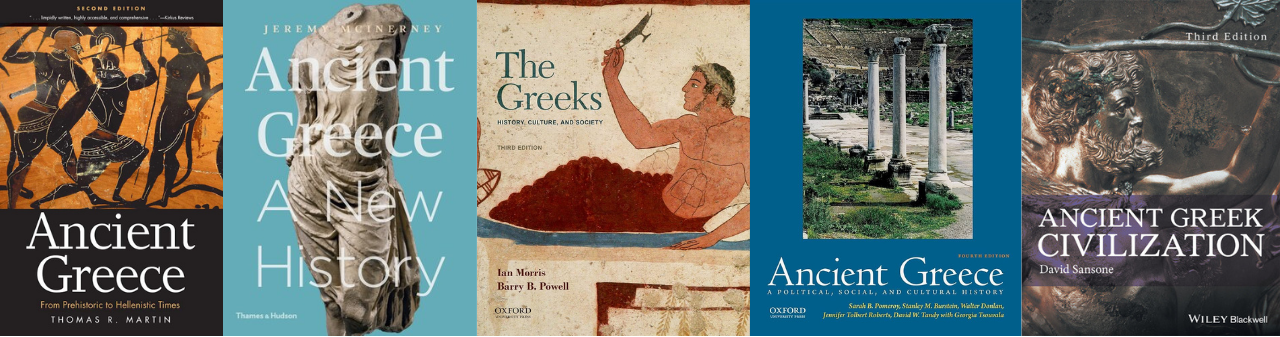
We used Ancient Greece: From Prehistoric to Hellenistic Times by Thomas Martin, Ancient Greece: A New History by Jeremy McInerney, The Greeks: History, Culture, and Society by Ian Morris and Barry Powell, Ancient Greece: A Political, Social, and Cultural History by Sarah Pomeroy, and Ancient Greek Civilization by David Sansone.
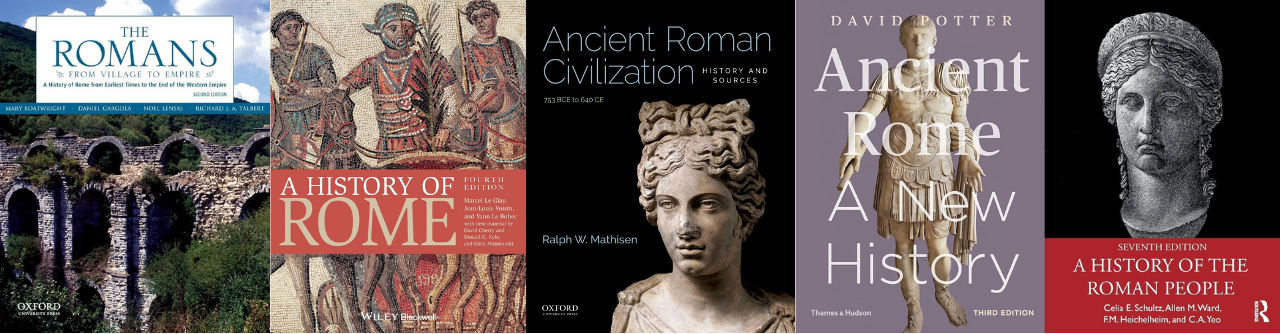
We used The Romans: From Village to Empire by Mary Boatwright, A History of Rome by Marcel Le Glay, Ancient Roman Civilization: History and Sources by Ralph Mathisen, Ancient Rome: A New History by David Potter, and A History of the Roman People by Celia Schultz and Allen Ward.
Once we had decided which topics to cover, Professor Dozier tasked us with creating an outline for each of the social history classes. Social history is a field of history that explores people’s lived reality, rather than strict political and economic history. So, our social history classes covered topics such as enslavement, religion, and leisure. We organized these outlines into questions, content, and takeaways. The questions frame the structure of each class session. The takeaways indicate what we want students to remember from the class session. The content supports the takeaways. Brainstorming and developing the questions, content, and takeaways was a very collaborative process. The other research assistants and I broke into pairs to develop them, then each pair presented their outline to the other pair and incorporated their feedback.

Once we had created outlines for each class session, we began going through the textbooks and highlighting sections that corresponded with the content we wanted to teach. At this point, Professor Dozier wanted to deliver a test lecture to determine if our process was effective. He used the outline and textbook sections we designated to develop a lecture for our first Greek chronological history day. After watching and discussing his test lecture, we realized that we needed to be more involved in the lecture-making process. 

So, we began creating lecture slides and slide narratives for Professor Dozier to develop his lectures from. These lecture slides and narratives followed the same outline of questions, content, and takeaways. We synthesized information from the textbooks to create the slides and the slide narratives. The slide narratives were the most important part, because they became the basis for Professor Dozier’s lectures. We made sure to indicate where in the textbooks we got the information in the slide narratives, so that Professor Dozier could always go learn more about the material. Once we finished our slide narratives, Professor Dozier went through and left comments where he needed more clarification or more information. He also commented when he disagreed with the information, or thought we needed to go a different direction. These slide narratives and comments made the process more collaborative and ensured that we were on the same page as Professor Dozier. After Professor Dozier left these comments, we went through and incorporated his feedback to complete the slides and slide narratives.
This project had a very positive impact on me personally. First of all, it taught me how to work with and lead a team of research assistants. The four of us met over Zoom almost everyday, sometimes multiple times a day. I led these daily meetings and assigned each of us tasks in order to meet the goals Professor Dozier set for us. Leading and working with a team is a valuable skill that I will take with me far beyond this project. Designing this introductory class also gave me a better idea of what being a professor would be like and affirmed my instinct to pursue an academic career. I found the process to be challenging, but fulfilling. The most challenging part was choosing which topics to cover and narrowing down which information to include. The most fulfilling part was thinking about how to communicate the information to students in the most effective way. I am really looking forward to hearing students’ feedback in the spring!

Assessing Risk to Children’s Rights in Arms Export

This summer, Professor Holland and I have reconceptualised and given a new life to the project that has been in the works for about a year: the study of arms manufacturers’ responsibility towards the protection of children’s rights.

We started with reviewing the various international, regional, and national legal frameworks regulating and restricting arms trade, to analysing the key international agreements, reports, guidelines, and scholarly works on Children’s Rights and protection of children in Armed Conflict. Having gained a robust understanding of the legally binding and non-binding frameworks surrounding arms trade and protection of children’s rights, we have constructed an argument that arms manufacturers not only are able and could benefit from, but also must conduct human rights due diligence independently of the state issuing an export license for an arms transfer. Moreover, we suggest that incorporating child-centric risk assessment policies is crucial to align the risk assessment practices within the arms trade industry with the international legal standard. This argument gained even more strength as we assessed the disproportionate vulnerability of children to illicit dispersion, diversion, and misuse of arms, as well as the increased risks that lack of consideration of children’s safety in arms design, export, and use carries.

Image 1: Presentation Slide about the danger of Explosive Weapons in Populated Areas
Image 2: Presentation Slide about Weapons of special concern and highest risk to children

Then, we conducted a literature review and a secondary in-depth analysis of the corporate policies of 5 of the largest 30 arms manufacturers, with 2 based in the USA, 2 based in China, and 1 based in Norway, which, according to our preliminary analysis, represented different levels of commitment to protection of human rights, transparency, and diligence in risk assessment. The review of corporate policies, supported by findings from the literature review, revealed increasing awareness and willingness of the arms manufacturers to respond to the demands of civil society, pressure of shareholders, and to comply with domestic legislation and demands of clients, to avoid legal repercussions, decrease financial losses, and preserve reputation. Our initial findings revealed that although the arms manufacturers largely fail to reference the rights and protection of children in any context but the prevention of child labor in the supply chain, arms manufacturers have responded to global action and outrage regarding conflict minerals, child labor, human trafficking, and even sustainability, by seeking innovative solutions and adopting more robust policies and risk assessment practies.

Image 3: Presentation Slide exemplifying the preliminary analysis and evaluation of the Human Rights Due Diligence Statements of the largest arms manufacturers.

To gain more insight into the inner workings of the arms trade, risk assessment, and protection of children in conflict, we conducted informational interviews with four experts: Patrick Wilcken, an expert in Arms Control, Security & Human Rights at Amnesty International and Forum on the Arms Trade; Saudamini Siegrist, a Senior Advisor on Child Protection in Emergencies at UNICEF; Hugues Laurenge, UNICEF Child Protection Specialist developing and leading the work of the office on mine action and explosive weapons; and Alec Wargo, ex-Senior Child Protection Adviser and member of the human security team at NATO. These conversations have tremendously enriched our understanding of the complexities of arms trade and human rights risk assessment, but have also reassured us of the meaningfulness and importance of our work. The interviews and advice we received supported us in laying the foundation for the development of a tool for child-specific risk assessment as a part of the due diligence process required before arms transfer.

We are currently completing two papers and are carrying the work forward into the semester, hoping to expand and strengthen the project as we continue to refine and test the child-centered risk assessment tool for human rights due diligence processes in arms transfers.

This project has made me grow as a scholar, researcher, interviewer, writer, and critical thinker more than I could have imagined. I have learned of the immense complexities, potential, but also the many limitations and loopholes of the international legal system when it comes to regulating arms trade and human rights, and gained crucial experience in critical analysis of corporate policies. Most importantly, I had a chance to directly engage with an issue that is very close to my heart, and by continuing our work on the project, I hope to contribute to the international effort of protecting children in armed conflict.

Visual Representation of the Long-Run Impact of the Measles Vaccine in Mexico

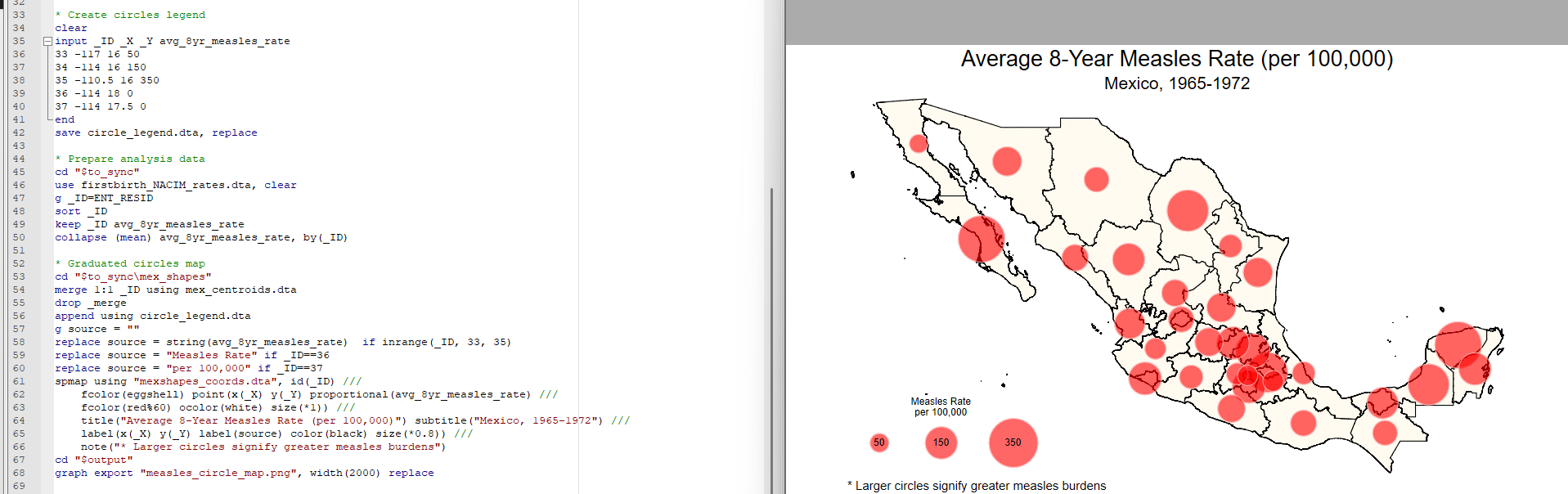
This summer, I worked with Professor Alicia Atwood to study the long-run impacts of the measles vaccine in Mexico and explore the best ways to accessibly communicate health and economic data to broad audiences. Prior economic research has linked the measles vaccine to positive effects on schooling, employment, and income. As measles threatens its return across North America, this project presents a timely reminder of the importance of vaccination against measles. Our time was split between researching and modeling the effects of measles in Mexico and researching and implementing evidence-based approaches to data visualization.

The first half of our work began with reviewing relevant economic and health literature. From these sources and further historical documentation, we collected information to gain a clearer understanding of measles in Mexico, both before and after the introduction of the vaccine. We used these pivotal steps to inform our decisions regarding data and modeling. With strong justification, we carefully cleaned and prepared our 50 million observation dataset. Although these steps were time-consuming, they were fruitful. Once we were able to apply our model, we found significant effects on education, employment, and relationship status, all of which were consistent with previous literature.

With a strong set of results established, we asked a difficult question: how can visuals help synthesize dense information into a digestible message for a broad audience? We began by revisiting previous economic and health publications to look for particularly effective and creative visuals. Then, we explored across psychology, sociology, and other sciences for visualization best practices–what graphs are most effective, which colors best tell our story, and what’s the right amount of detail for a chart. Afterwards, I spent a lot of time learning new and complex coding techniques and applying our new visualization toolkit to our data.

My time working on this project was incredibly rewarding. In an increasingly vaccine-hesitant world, I had the opportunity to contribute to the struggle against vaccine misinformation, all while improving as a researcher under Professor Atwood’s guidance. I learned so much while studying how to effectively communicate our work through visuals. Our project forced me to draw a connection between our work in an academic setting and the valuable information it has to offer the general public. For me, this unique experience drove home the crucial humanistic aspect of social science research.

Loss & Damage Climate Litigation Research

This summer, under the guidance of Professor Arpitha Kodiveri, Sahaj Sharma, and I worked to develop a legal framework and synthesis report to assist climate lawyers in quantifying climate-induced loss and damage, with a focus on Indigenous communities in the Global South. This topic is tremendously important and under-researched in the space of climate law, and is becoming one of the most impactful legal concepts in all of climate litigation. Specifically for Indigenous communities who feel the brunt of the increasingly dire effects of climate change, loss and damage litigation could be one of the most useful ways for individuals/communities to get compensated for both economic and non-economic (cultural erosions, loss of traditional ways of life, e.g.) damages.

To begin our research, we started by reading and analyzing almost every climate-related case that has been brought to a court in legal jurisdictions across the entire world, and found around 21 that involved loss and damage compensation/reparation claims. After going through all 21 in detail, we decided on 10 that would be relevant and meaningful to our research within jurisdictions such as Ecuador, Uganda, Indonesia, Switzerland (transnational), etc. Then, we began the long and intellectually stimulating process of developing an expansive literature review that encompassed all aspects of loss and damage research, with a specific focus on the non-economic aspects of L&D (NELD). This research helped us fully contextualize this complex issue and provided us with the necessary tools to find real solutions that would be impactful for litigators in the space.

After refining our literature review, we began reaching out to and interviewing experts in the field, aiming to gain further insight into how these frameworks and methodologies are actually applied in legal argumentation. Some of our most notable interviewees include Johanna Gusman, a Senior Attorney at the Center for International Environmental Law; Sara Seck, a Professor of Law at the Schulich School of Law; and Robin Gregory, a Senior Scientist and Professor at the Institute for Resources, Environment and Sustainability, University of British Columbia. These conversations provided us with invaluable insight into what challenges litigators have faced within differing court jurisdictions, and both their optimism and pessimism towards the current global climate legal regime.


Although this project will be extended into the upcoming academic year, the research and effort invested in building the foundation for the report this summer have been incredibly rewarding. Additionally, along with the report, Professor Kodivieri, Sahaj, and I are in the process of publishing a three-part paper discussing tort law, insurance mechanisms, and the recent International Court of Justice Advisory Opinion in relation to L&D litigation. Altogether, we are all hopeful our work will have an immense impact in developing L&D cases all over the globe.

The Oviedo Translation Project: Summer 2025

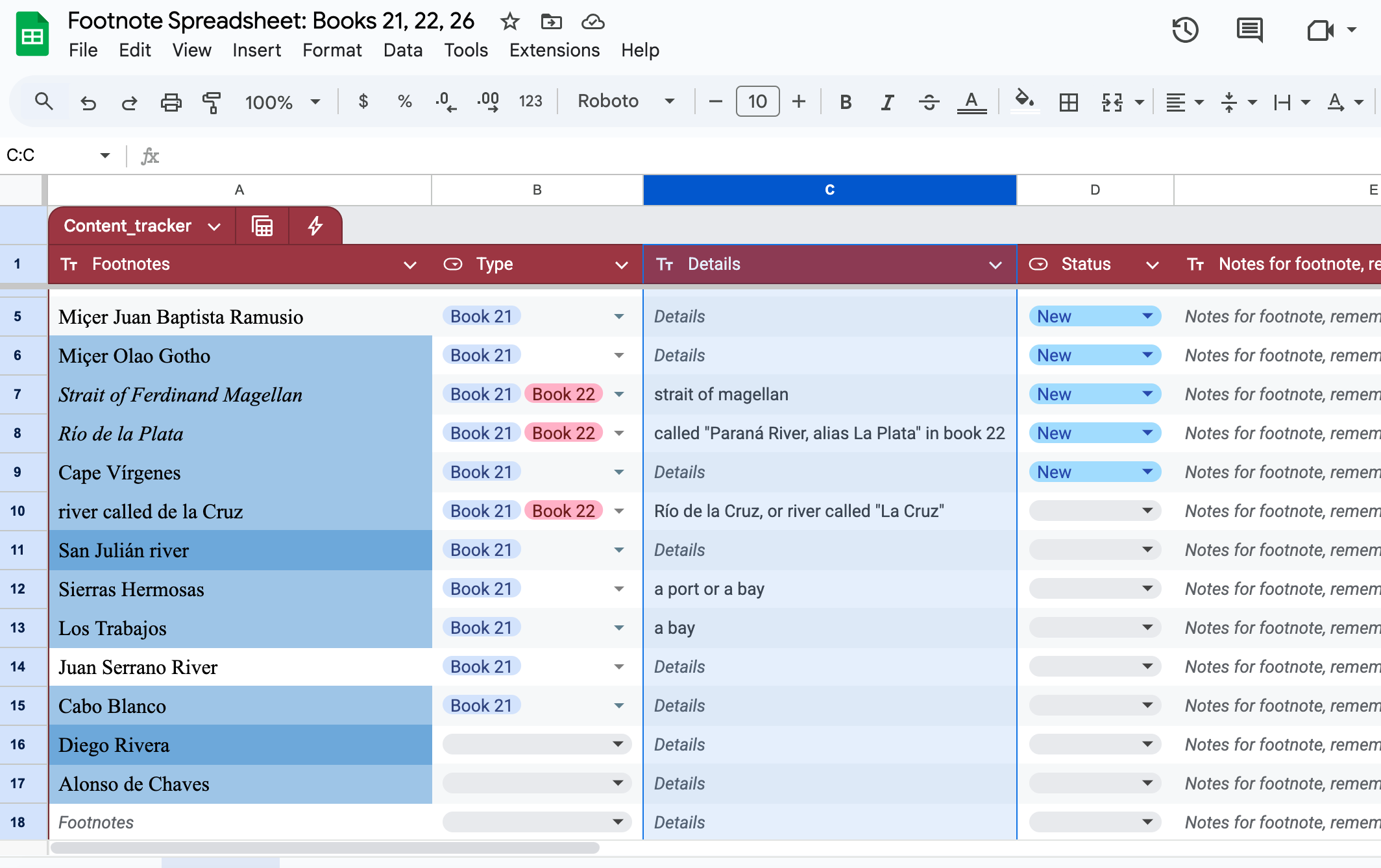
This summer, I worked with Professor Paravisini-Gerbert and Professor Aronna on the first and second volumes of Historia General y Natural de las Indias (General and Natural History of the Indies) by Gonzalo Fernández de Oviedo. This was an extremely exciting time to be working with The Oviedo Translation Project because I came in during the final editing and wrapping up stage(s) of pre-publication and publication of Volume I.

I began my summer editing the annotations of Volume I of the Oviedo project. I read all the footnotes in the 19 Books to ensure the new annotations were cited as English Edition [EE] and fixed grammar/typos to ensure that the footnotes read well. Additionally, I worked on other small tasks: fixing formatting, erasing class years from student translators’ names, and checking that certain dates were listed as BC and AD (in place of BCE and CE).

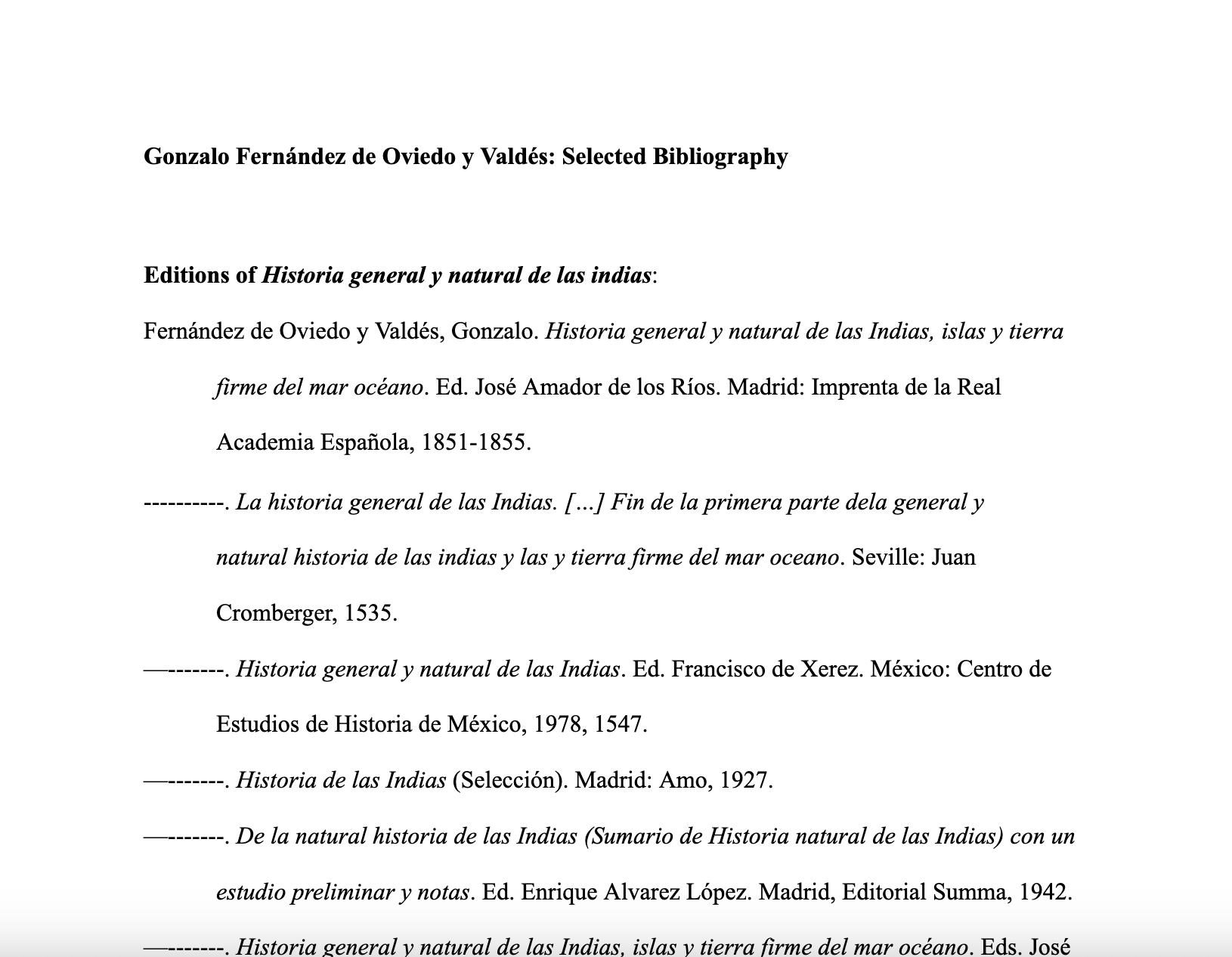
I was also tasked with combining all of the previous bibliographies into a final collective bibliography. Additionally, I searched Vassar’s database for any additional publications that had been missed in past years when researching Oviedo’s work and for any recent publications that could be added.

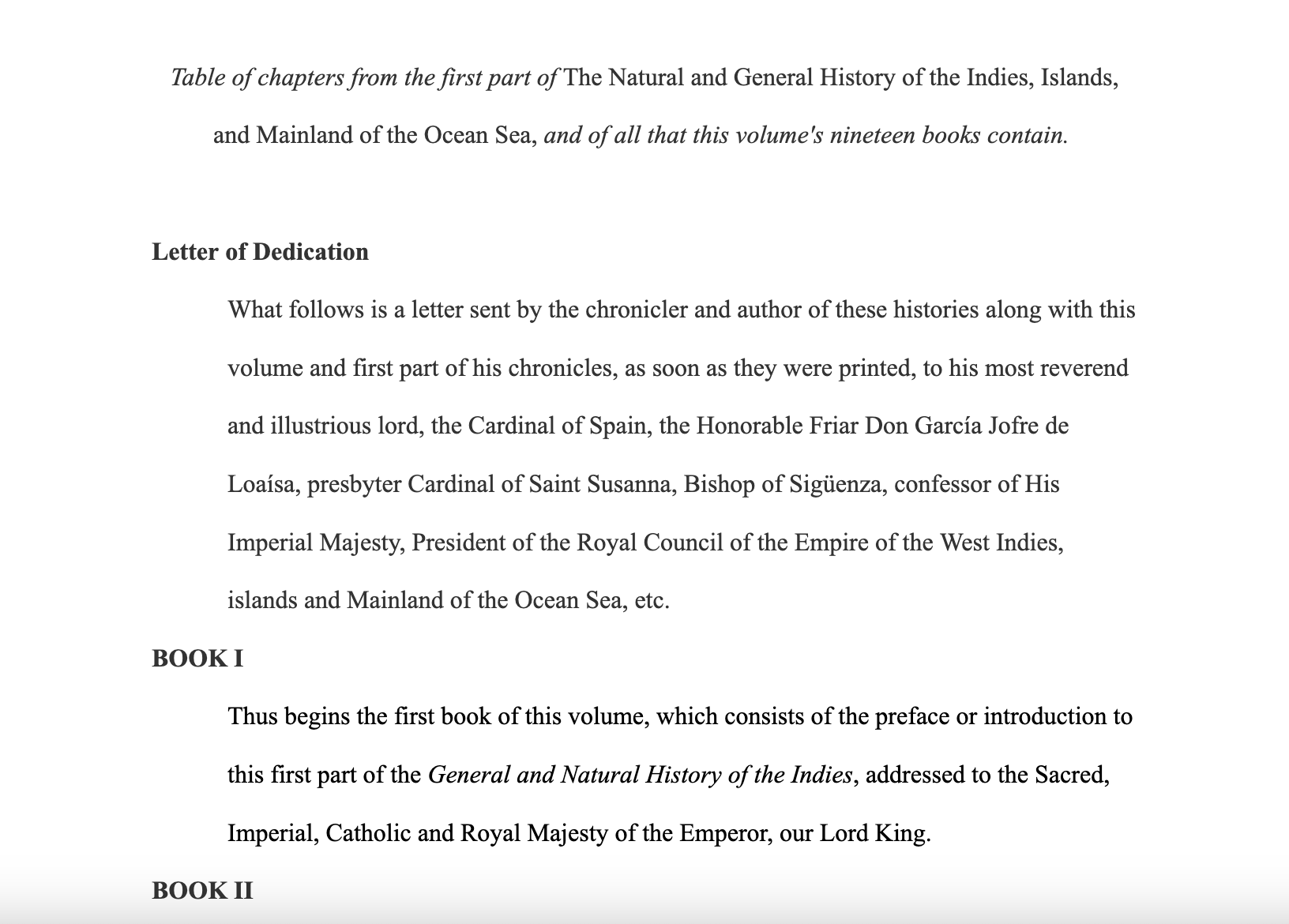
In addition to editing the bibliography, I helped fix and complete the Table of Contents. A table of contents had been started but didn’t include many of the later books, and there had been edits to the prefaces and chapter headings that had not been corrected in the contents. After corrections, I began the methodical job of copying over the book and chapter numbers along with their descriptions. Through this process, I edited any awkward phrasing and identified the discrepancies in spelling or references.

After editing, completing notes from the copyeditor, and finalizing the bibliography and table of contents, Volume I was officially sent to Brill Publishers! To have Volume I published, we needed to send publication contracts to all the student translators in the volume. While this initially seemed straightforward, getting in contact with all of the previous students ended up being one of the hardest tasks. I began by collecting the names of the student translators from the manuscript and the Oviedo Project’s website, then researching each former student: gathering personal, public, or work emails, LinkedIn contacts, or social media tags. Then Professor Paravisini-Gerbert and I reached out to the translators through email, LinkedIn, text, and social media so they could send us their contact information for the publishers. We ended up with a long list of contacts of 49 translators. Unfortunately, we were never able to contact one translator, so Professor Paravisini-Gerbert is re-translating their work.

In my last week and a half, I began work on Volume II. I identified words, places, and people mentioned in three books of the second Volume. I also created a spreadsheet to organize all of the words identified for annotation and began researching and writing the footnotes.

Professor Paravisini-Gerbert is an incredible force, and it has been a pleasure to work with her and Professor Aronna on a project that they are both passionate about and that they bring their heart and soul into. I would love to continue contributing to the Oviedo project in the future and see the progression of publications! Congratulations on the first publication!

The Validity of Water Salinity Estimations

Over the summer, I worked with Professor Jimi on estimating water salinity in the floodplains of Bangladesh and calculating its accuracy compared to actual groundwater salinity. High levels of water salinity have been associated with abnormal child health outcomes and poor agricultural productivity, so water salinity data collection is an increasingly important subject with the rise of climate change. Due to the costs of actual groundwater data collection, many studies have been turning to satellite data and other such modeling approaches. My project aims to test whether this growing alternative could act as a good proxy or not.

The first few weeks were spent on extracting and navigating the ocean salinity dataset taken from Copernicus Marine Service. During which I experimented with different parameters and how to load it into a Python script. I also spent a significant amount of time on literature review to get me acquainted with the work already done in this field.

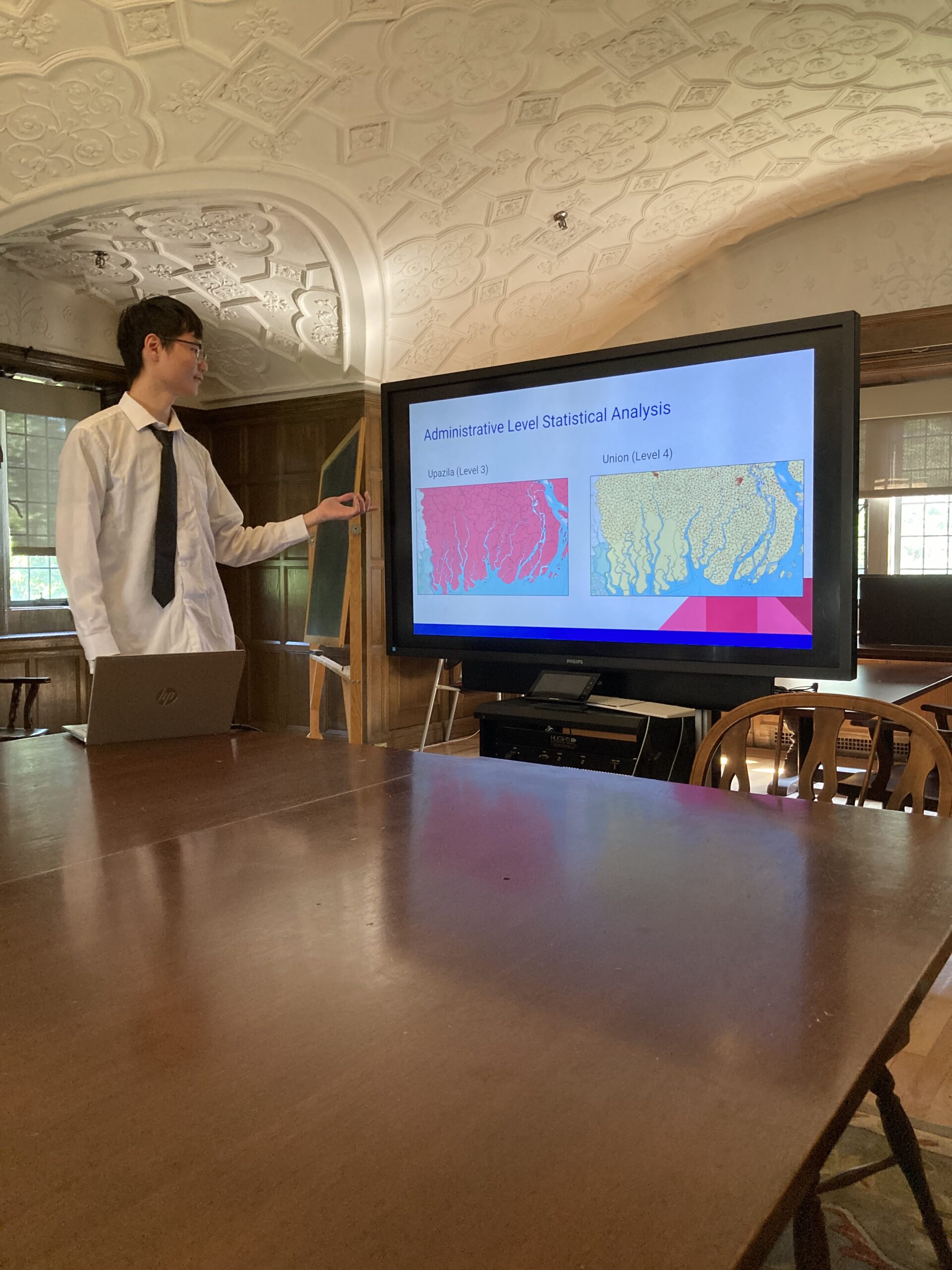
The next few weeks saw the completion of the Python script with parameters based on existing studies. I then ran the ESPA dataset through the script to produce the estimated salinity for every household listed in that dataset. Afterwards, I conducted various statistical tests and made conclusions based on them. I then fine-tuned the parameters and started testing whether administrative levels or distances would impact the results.

Overall, our results show the folly in trusting something at face value. At the same time, we recognized that it can still be a useful tool if some of its downfalls can be rectified. Alongside our conclusions, we also made a detailed list of what follow-up steps need to be taken and some of our ideas for how to improve the results.