
Veronica Schnee, Class of 2027
This Summer, I worked alongside Professor Amanda Culp in the translation of Polish director Jerzy Grotowski’s Siakuntala from Polish to English. A pioneer in Polish theatre, Grotowski sought to incorporate experimental approaches that eclipsed the boundaries between audience member and actor, or, in his eyes, initiate and priest/brahman. Through a style he termed “Poor theatre,” he transmuted “oriental” theatre through the imagination of Europeans. In the early 1960s, Siakuntala was created.
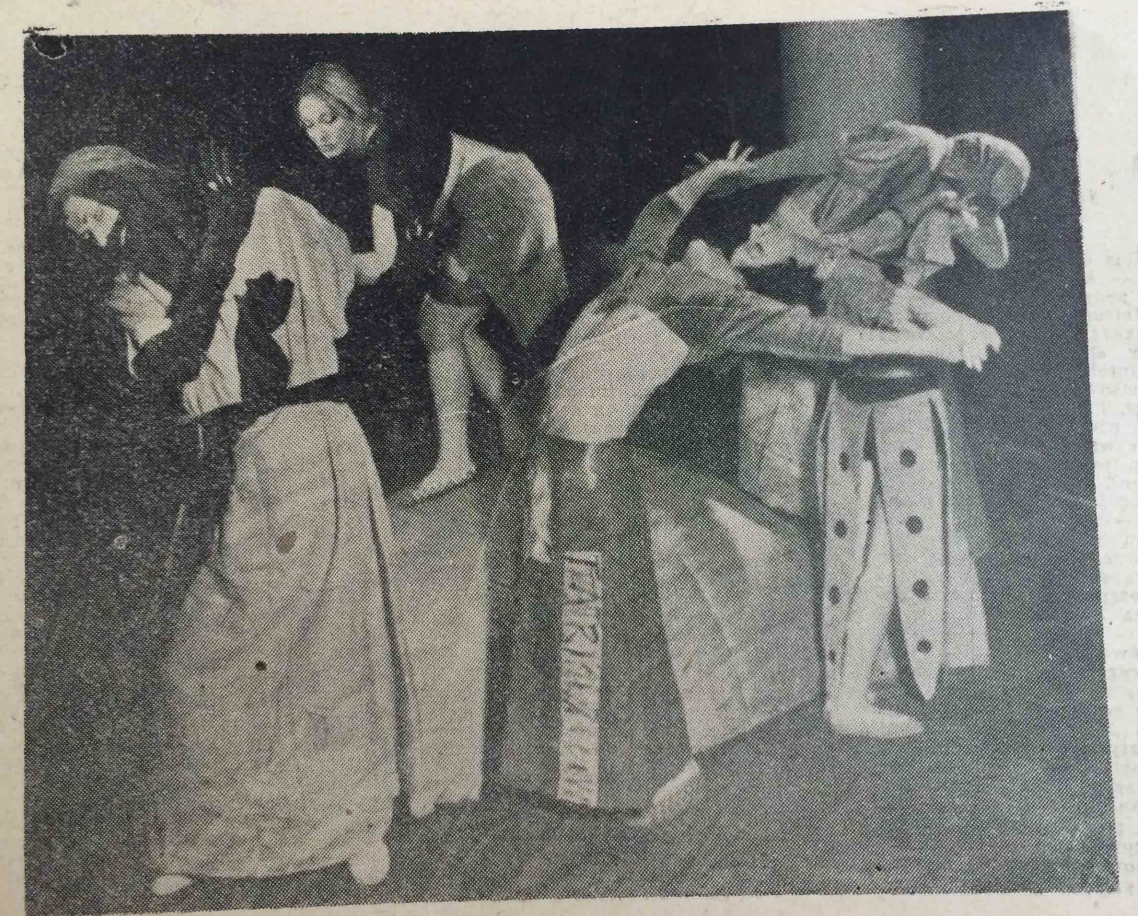
In his re-imagining of Kalidasa’s Shakuntala, Grotowski intentionally transcended traditionality. Throughout the translation, Dr. Culp and I were brought on a wild ride of countless diversions from Schayer’s original base translation: complete eliminations, replacements, and most curiously, inclusions of passages from Sanskrit sources such as the Law of Manu, the Kama Sutra, and the Mahabharata. He conveyed the topics of feminism, righteousness, religious duty, love, sex, and eroticism in a way that challenged his Polish audience and forced them to confront their unease. Grotowski clearly wanted to transcend the base plot and transmit his own moral, philosophical, and spiritual teachings to his audiences… but what exactly was he trying to convey?
To understand this, we probed his consistent emphasis on Shiva by translating the postscript Gra w Sziewie. Here, Grotowski makes it clear that he yearned to encapsulate the infinite, cosmic, transcendent, and inherently non-dualistic qualities of Shiva through dance, motion, and “trance.” Through embodying Shiva in performance, his theatre became a ritualistic, “therapeutic” practice that forced the viewer to confront the nature of existence; the contemplation of “…human fate, of the condition of man, of multifacetedness.”

Perhaps Grotowski desired his performance to be the physical manifestation of what the Mahabharata represents: an exploration of duty, morality, and cosmic order, and an encyclopedia of human emotion. This play was certainly the precursor to his future performances (i.e., rituals), and I am very grateful to have had the opportunity to offer it to the English-speaking audience.