
This summer, I worked alongside research assistant Kelsey Wang ‘28 to rebuild and improve GRST105: Introduction to Greek and Roman Civilizations for Professor Curtis Dozier. Our main goal for the class is to provide a worthwhile learning experience for students who have never interacted with Classics before. This means exposing them to a range of fields within the GRST department: Greek and Roman history, literatures, archaeology, and languages, all to get a meaningful understanding of how ancient Mediterranean peoples lived. We wanted to improve the class by reworking the material, and the presentation of material, to better align with this goal.
At the beginning of the project, I decided to interview 16 of the students who took the first iteration of the class in the spring semester. This helped me understand why people choose to take an introductory GRST class like this: general interest in Greek mythology, room in their schedule for a 100-level class, recommendations from their GRST friends, etc. Also importantly, students helped me understand what was already working for them in the class. The ‘deeper dive’ assignments allowed for students to participate in their own learning with a topic that interested them. Students also appreciated the lack of weekly readings in this class, because it meant that attending lectures was low-pressure. The students gave helpful feedback about areas of content they struggled with the most (e.g. Roman history), and what they most enjoyed (e.g. lives of Greek women) which helped me understand which areas we needed to focus on in our revision. It was clear that the way content was organized in the previous iteration, with ‘history’ being separated from ‘social history’ themes such as literature, language, politics, and material culture, hindered students from appreciating themes in their context while also making the history lectures dense and confusing. So, from the onset of this project we were aware of a needed integration of so-called ‘history’ and ‘culture’. After all, how could you seperate them when learning about any civilization?
In its previous iteration, the class was split in half between Greece and Rome. In the first week of the project, Professor Dozier gave us the lectures on Greek history so that we could see the existing content and what needed to be rearranged, removed, and/or added. It was clear that there was enough information on Greek history to fill many more days than the class had given space for. Then, Kelsey and I attempted to restructure the Greek half of the class. I reorganized content from the entire Greek class to fit a chronological order of themes, with politics, literature, and other themes integrated into the time period of history they were in. As shown in Figure 1, the original content was widely scattered into many locations, which needed to be put in a different order. Later in the summer, Kelsey and I also brainstormed the Roman half of the class and reorganised existing content to fit into a chronological story of Roman society.
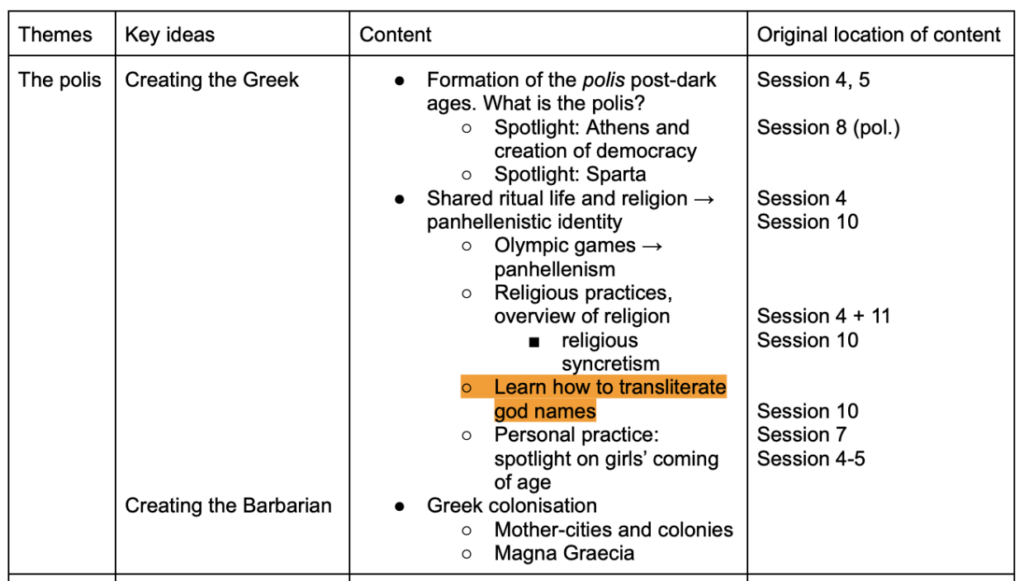
Fig. 1: A sample of my proposed layout of archaic Greek history.
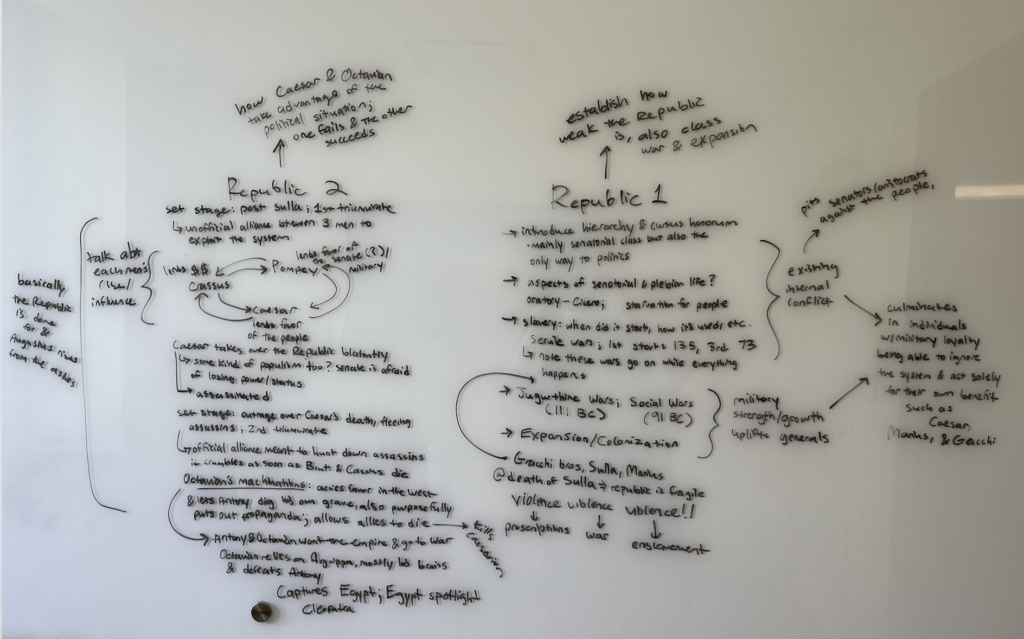
Fig. 2: Brainstorm Kelsey and I did in the library on how to teach the Roman Republic period.
Once the layout was refined, we created new presentation slides which were mostly based on pre-existing material, but we also needed to fill in some gaps. Here is one example of how I tackled this: before, there was a ‘language’ session and an ‘early Greek history’ session. Since we were now telling the story of the Greek language chronologically as the class progressed through time, there was now space to explicitly talk about the advent of Greek writing in the 8th century BCE. One important facet of this story is the iterations of writing styles during the invention of the Greek alphabet that were used for hundreds of years before the Greeks enforced a standard. I created the lecture slide (Fig. 3) which shows an example of the early Greek alphabet being written right-to-left, rather than our expected left-to-right. The slide also includes a skill that students interested in Classics should be aware of: when you are translating a language like Ancient Greek, there are extra steps that you wouldn’t have to deal with with a language like Latin which uses the same alphabet that we do. Transcription and transliteration are important concepts to be aware of for those interested in Greek, and are helpful to know before you join GRST125: Introduction to Ancient Greek. This example shows the method I took towards course design, where I focused not only on declarative knowledge (knowing ‘what’) but also procedural knowledge (knowing ‘how’).
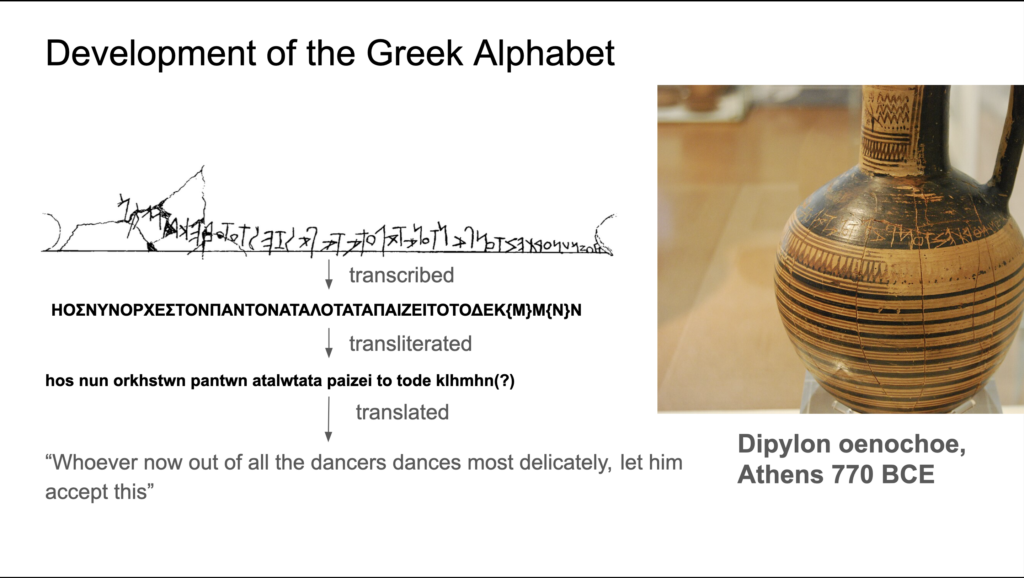
Fig. 3: a sample lecture slide taken from the Greek half of the class.
The college-level textbooks used last summer to create the course, while often thought-provoking and detailed, had several issues, including never having rigorous citations, and telling imperialist stories uncritically. We wanted to tell critical stories backed up by evidence that challenged stereotypes about ‘barbarians’, enslaved people, and other marginalized groups. This meant we had to re-research topics using other sources that were more up-to-date than the textbooks. Online reference databases, the Oxford Classical Dictionary and Brill’s New Pauly: Encyclopaedia for the Ancient World, were a good first step in grounding myself in relatively up-to-date information about a topic. The next batch of sources that we drew from were several Cambridge Companions to specific topics such as Ancient Slavery and the Aegean Bronze Age. Kelsey and I also went to the Art Library to look at the Lexicon Iconographicum Mythologiae Classicae (LIMC), a multivolume encyclopaedia which catologues mythological representations in Classical art. The L’Annee Philologique online database was helpful if we were exploring a niche topic, such as the cult of Athena in Sparta, and needed to actually read specialized articles and books.
Working on this project alongside Professor Dozier has been an invaluable experience. As I go into my final year at Vassar I’m contemplating whether or not I want to explore teaching in my future, and this collaborative project on course design showed me a glimpse into professorial teaching and planning. For one, I learned that absolute perfection is unreachable when it comes to planning for a lecture, because there will always be more to learn about a topic, and every model or layout will have its strengths and weaknesses. Even if perfection is unattainable, it’s still important to be intentional about from where information and research is obtained, and record everything you come across. That is a skill which I can apply to other research projects. Conversely, I learned through attempting to teach a model lecture myself to Professor Dozier and Kelsey that there is a higher level of preparation needed than I expected. Preparing for teaching wasn’t like preparing to talk about a reading in class– even if the content itself is for a beginner-level class, there is so much more that goes into an instructor’s understanding behind the scenes. I am grateful for the opportunity I was given to learn these lessons while at the same time delving into Greco-Roman culture with the goal of making other students as excited about the GRST department as I am.