Analyzing the Social Experiences of Immigrant Afro-Caribbean Women Teachers

During my time as a Ford Scholar, I worked alongside Professor Kimberly Williams-Brown on a project to document the social experiences of international Afro-Caribbean women teachers. Literature on the recruitment and lives of these teachers is sparse. As a result, addressing the continued gap in research related to understanding Afro-Caribbean teachers is long overdue. This summer, I divided my time between analyzing data and assisting Professor Williams-Brown with her publications.

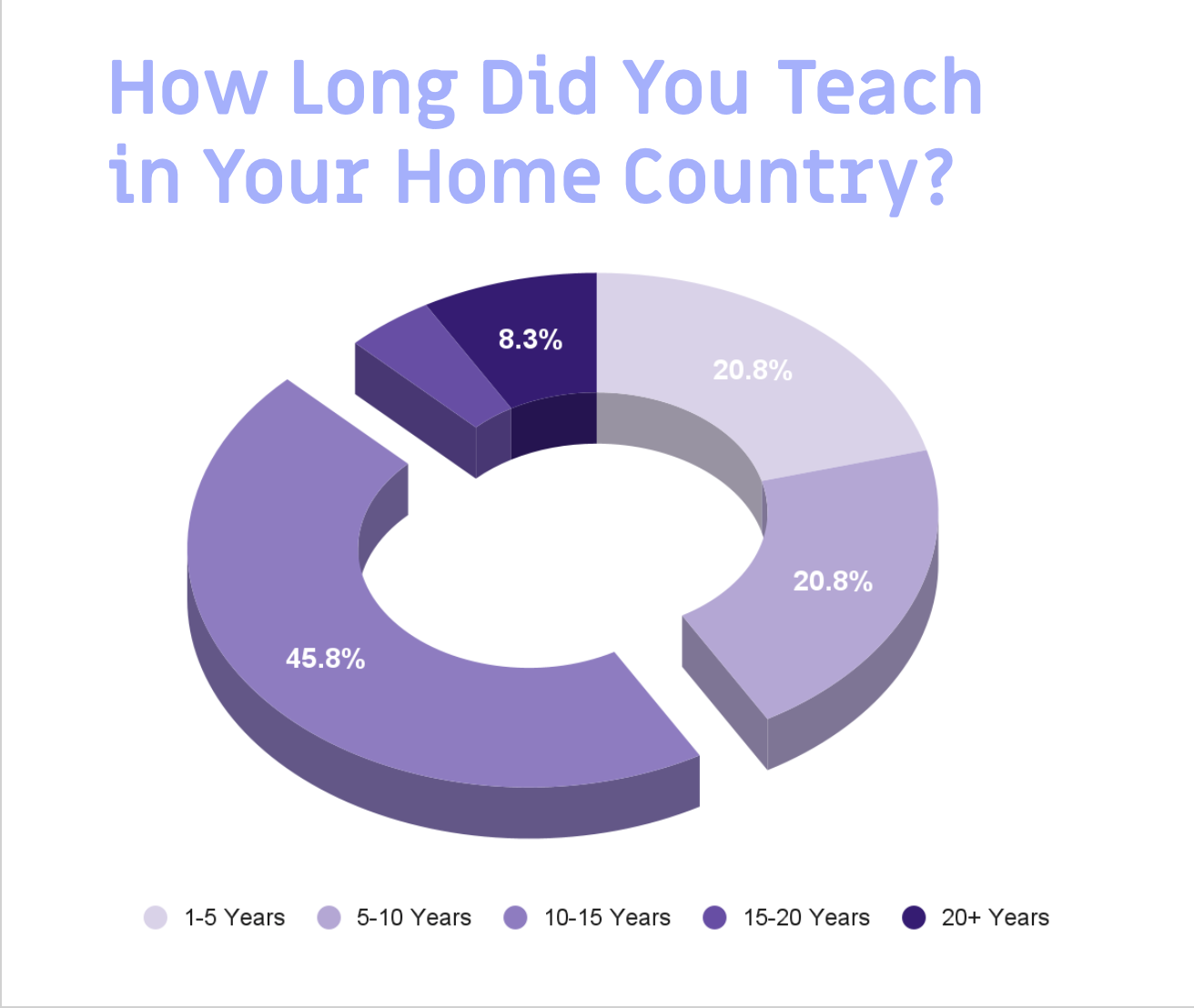
Figure 1. Pie graph of respondents time spent teaching in their home countries.

I analyzed data curated from a qualitative methods approach consisting of a 24-question survey, semi-structured interviews, life histories, and focus groups. Altogether, this data allowed us to begin understanding who these Afro-Caribbean teachers are, and how they make sense of their lives teaching. To date, we have 24 responses with participants residing in New York, Georgia, and the Carolinas.

This project has provided new avenues for me to pursue. As I move forward with my research for my thesis, Professor Williams-Brown has provided me with new epistemologies and frameworks. As I look to study the current state of education in the Caribbean, getting a test run of these epistemologies with real data has shown me what connections are possible.

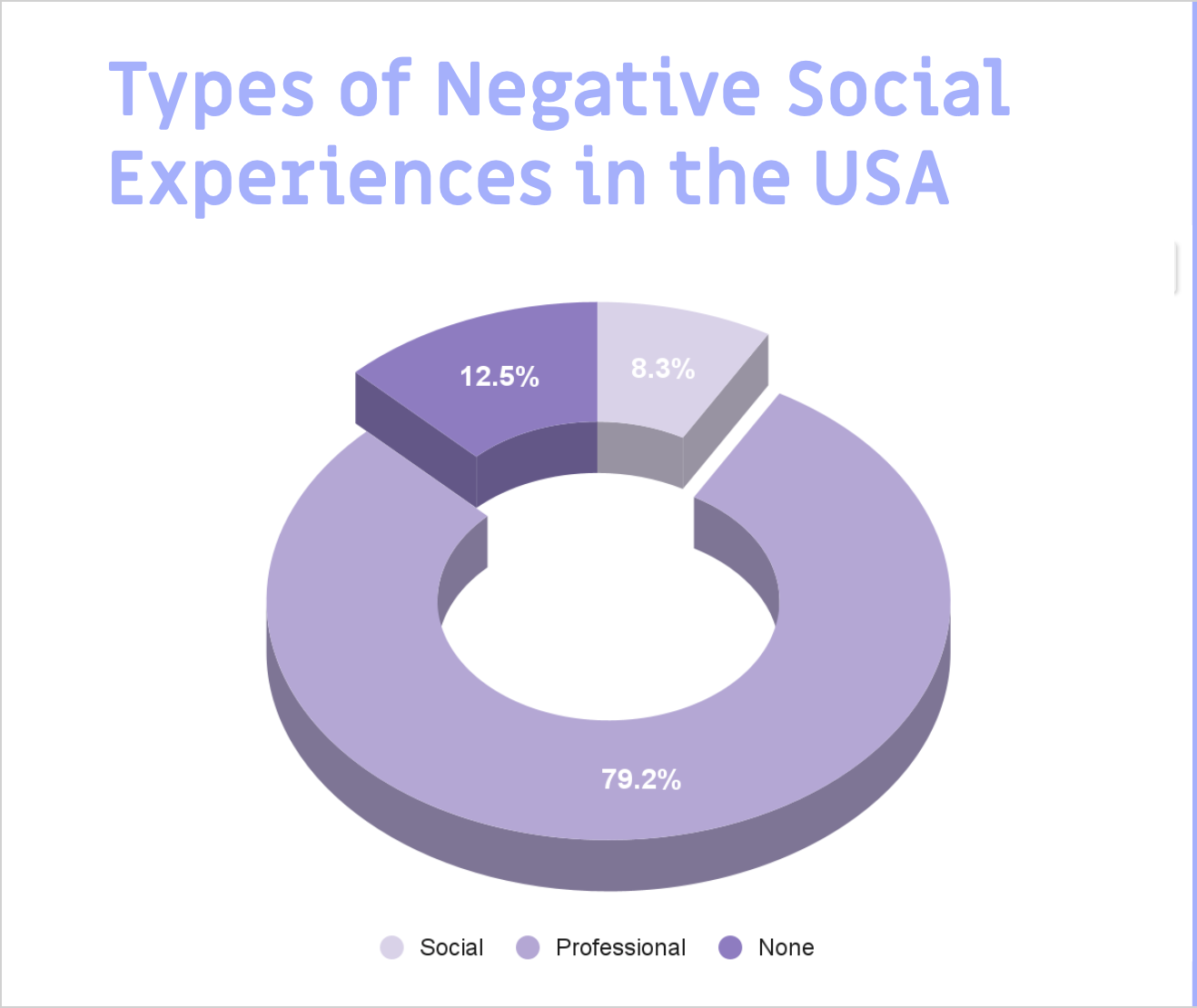
Figure 2. Pie graph of the types of negative social interactions immigrant teachers documented.

In the future, I hope to continue aiding Professor Williams-Brown as she recognizes the plights of those shouldering the burden of the American educational system. My experience with the project has illuminated the marginalized experience of educated immigrants present in the USA. With this, the research we conduct constitutes a key part to understanding how little we study the racialization and experiences of immigrant teachers in educational studies and what the experiences of a subset of foreign, Black teachers may tell us about race, schooling, and the possibilities of resistance, educational development, and social justice.


Measles Vaccination in Childhood: The Impact on Human Capital Development and Health Status

Over the course of Summer 2021, I worked with Professor Atwood and Zoe Tolbert on a project dealing with the long-run economic impacts of the measles vaccine. In her paper published earlier this year, Professor Atwood conducted this research in the context of the  United States. She found that exposure to the measles vaccine was associated with a 1.1% increase in annual income, which can be attributed to the increased productivity that results from a healthier childhood. Our goal for the summer was to replicate this analysis in other countries. I researched the measles vaccine in Italy, while Zoe focused on England & Wales.

The summer began with research into the measles virus itself. Before the advent of the vaccine, measles was a universal disease, and nearly every child contracted measles before the age of sixteen. There is substantial evidence that infection by the measles virus has a prolonged suppressive effect on the immune system by causing an “immune memory loss” that lasts years and leaves children more vulnerable to other infections, which can potentially lead to severe, long-term complications. Vaccinated children therefore avoid not just measles, but the years-long weakened immune system resulting from it.

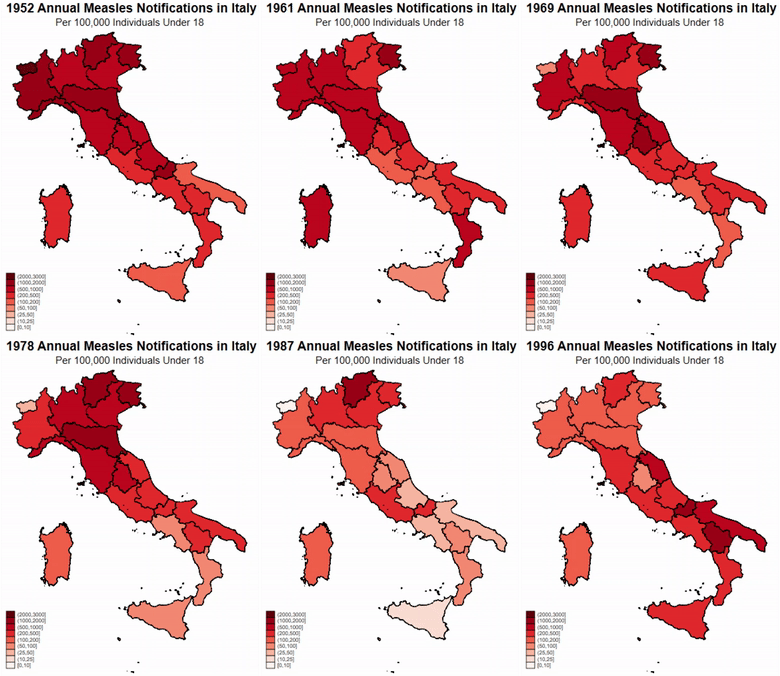
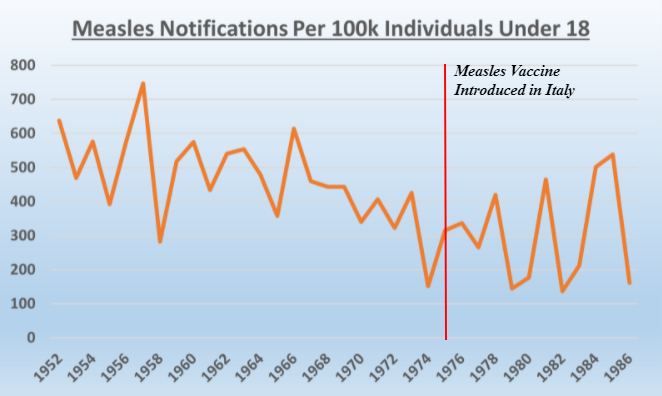
Measles Rates Over Time (Click to view in separate tab)

As the summer progressed, I shifted my focus towards Italy. The measles vaccine was licensed in Italy in 1976, but due to a cost disincentive, uptake of the vaccine was slow and regionally heterogeneous. This response was further compounded by the lack of a centrally coordinated national vaccination effort. In addition, a substantial portion of the Italian population is considered vaccine-hesitant, which can primarily be traced to a thoroughly disproven and since-retracted 1998 study drawing a causal link between Measles-Mumps-Rubella vaccination and autism. Vaccine hesitancy is relatively widespread in Italy and has prevented the country from maintaining herd immunity from measles in recent years.

My experience this summer with the Ford Scholars program has been invaluable. With the help of Professor Atwood and the advice of several other professors, I have significantly developed my research skills and my understanding of data analysis. The research subject itself has been intellectually engaging, comprehensive, and thought-provoking — I learned much about epidemiology, biology, the social impacts of vaccines, and the relationship between vaccinations, health, and productivity. This research is especially meaningful to me in the context of the COVID-19 pandemic, during which public confidence in the benefits of vaccines – not just with regard to health, but also economic well-being – has been more important than ever before. 

Immigration and Economics: The Labor Market Effects of ‘Secure Communities’

Alongside Professor Pearlman and Professor Cynthia Bansak (of St. Lawrence University), I spent the summer researching US immigration policy and its economic effects. The Secure Communities program, the focus of our study, ran from 2008-2014 and contributed to a significant rise in deportations by sharing fingerprint data taken upon an individual’s arrest with U.S.’s Immigration and Customs Enforcement (ICE). As most of the deportations were men, we were interested in the rippling effects of the policy on immigrant networks that remain in the US—namely, the labor market patterns of foreign-born women. 

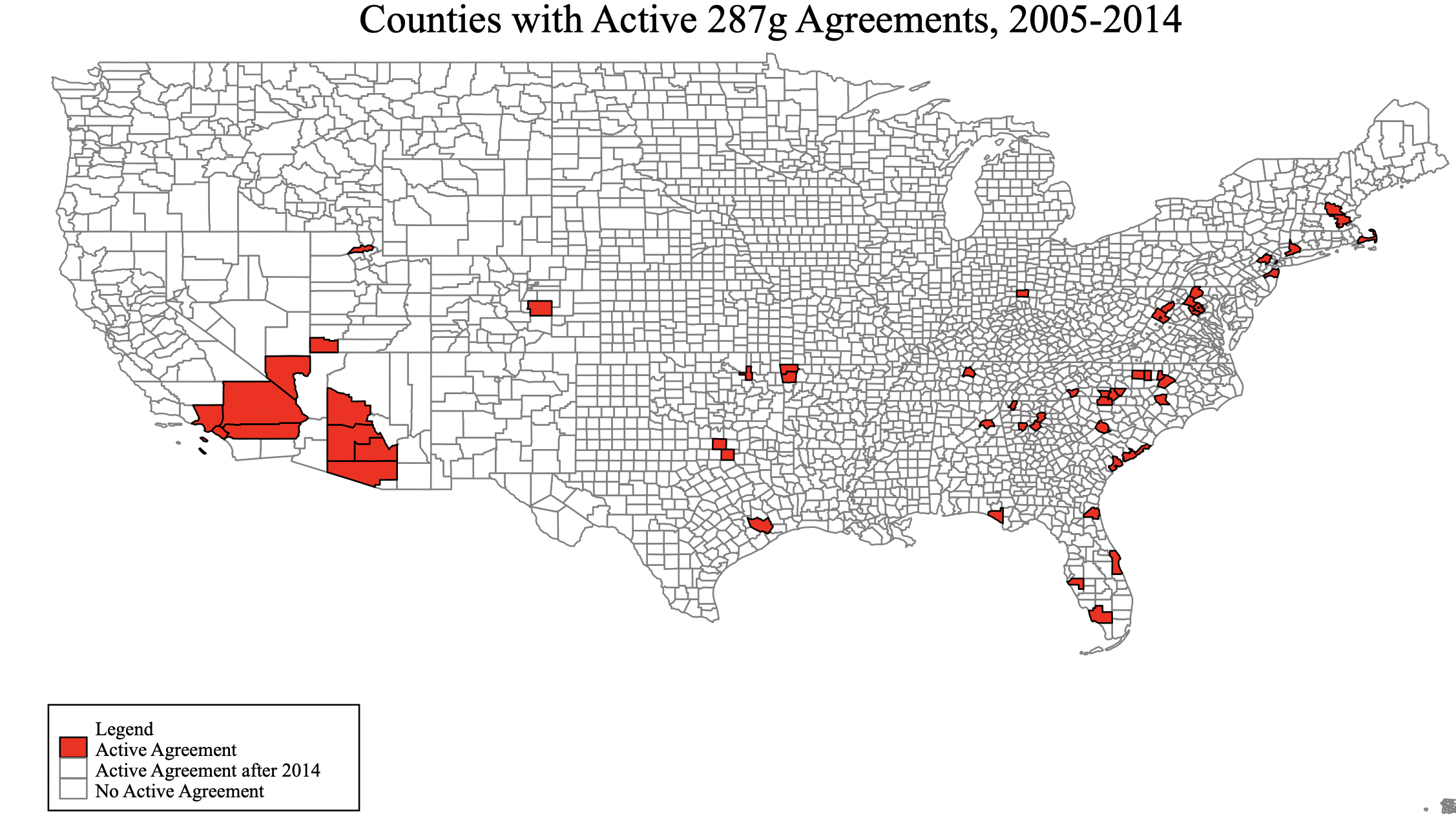
In order to fully understand the scope of the topic, I conducted a literature review of the policy, learning about its history, roll out, and economic and social implications. In the process, I became aware of other immigration policies, such as 287(g) Agreements, that preceded the Secure Communities program. I analyzed a range of literature, from legal documents to ethnographic surveys, to understand these programs’ similarities, differences, and potential correlation. To visualize the extent of these policies, I created maps that documented the geographic dispersions of the policies at the US county level. 


Counties with Active 287g Agreements at any point from 2005-2014. Data retrieved from Madeline Zavodny’s research.


Aggregate Number of Removals under Secure Communities. Data retrieved from TRAC Syracuse.


In addition, we analyzed data on the labor market patterns of foreign-born women from 2005-2016, aiming to understand if there were any observable changes before estimating how much of this change could be attributed to the Secure Communities program. 

Working with Professor Pearlman has given me a greater sense of and appreciation for the research process. We closely observed the disproportionate ways immigration policies affect individuals from different countries of origin, as well as residing in different US locations. The combination of qualitative and quantitative research involved in this process provided a multifaceted understanding of our topic, as immigration policy plays out on social, economic, and personal dimensions. 

Gender Profit Gaps Analysis

Dhriti Swarup ’23 and Professor Gisella Kagy

This summer I worked with Professor Kagy to better understand gender profit gaps with a focus on low income countries by synthesizing existing research in entrepreneurship and enterprise performance. We wanted to understand the factors affecting differences in firm outcomes (profits, sales etc.) by gender of the firm owner. The goal of this 3 year long project is to explore the gender profitability gap in all countries, improve understanding of the global business and policy environment for women-owned enterprises, and increase knowledge of facts, trends, and predictors of gender profit gap at the country and global level.

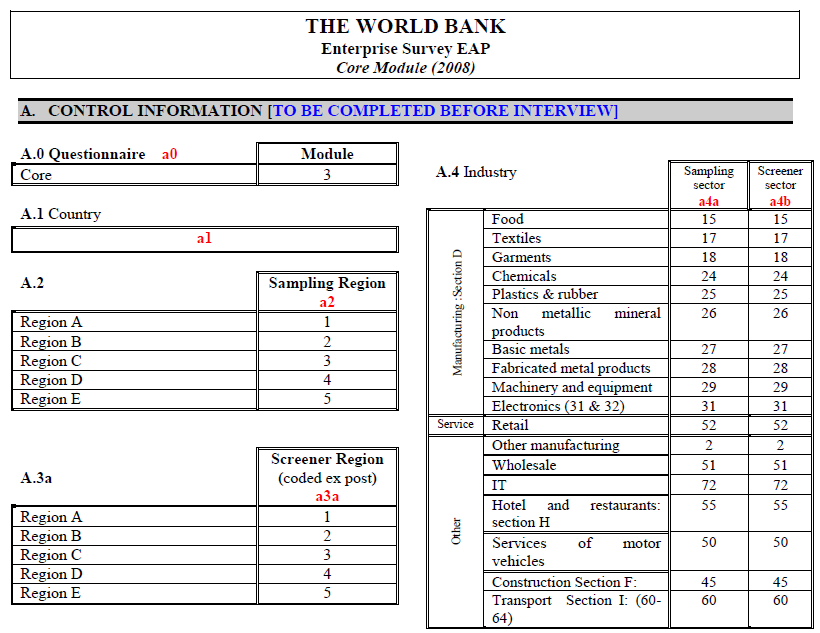
I was working with a team of Research Assistants and Postdocs to conduct country level analysis in Stata using publicly available datasets such as the World Bank Enterprise Survey (WBES), the Living Standards Measurement Study (LSMS), and the Demographic and Health Surveys (DHS). I began by looking at the WBES for India across 2002, 2005, 2006, 2009 and 2014. The process involved finding the datasets and questionnaires used by the World Bank, keeping and dropping variables as per requirement in the cleaned datasets, and finally creating new variables to prepare the dataset, making it ready for analysis. The same was done for Vietnam across 2009 and 2015. The prepared datasets gave information about characteristics such as firm size, industry sector, legal status, firm ownership, and obstacles faced by the firms.

Vietnam WBES Questionnaire 2009

Professor Kagy and Professor Hardy (from NYU) will use this data along with that of other countries to draw conclusions and present a hypothesis. The end goal is to direct new enquiries productively towards key potential barriers for Women Owned Enterprises and find ways to close the information gap along with the gender profit gaps.

Judicial Diversity: Interviewing and Engaging with 21st Century State Court Judges

In 2018, Professor Means received a grant from the National Science Foundation’s Law and Social Sciences program to collect data on political representation in state courts. A substantial body of literature has examined the importance of racial, gender, and class diversity among legislators, police officers, attorneys, doctors, and even jurors. Yet very little scholarship has focused on the level and importance of diversity among state court judges. Our study aims to advance our understanding of the lives and identities of state court judges, as well as their views on topics related to judging, justice, and court administration (more information can be found on our website). We expect our findings to yield a more comprehensive, nuanced understanding of representation in state courts that will enable a clearer articulation of the pathways judges take to the bench, as well as the extent to which the courts are being transformed by efforts to diversify. Our project strives to highlight the diversity already found on state courts, and suggest how and why that diversity is critical to fulfilling the democratic project. While most studies of the judicial system focus on the federal court, we wanted to specifically focus on the state courts as they have a tremendous impact in our society. For a majority of people, if they go to court they will be appearing before one of our nation’s approximately 30,000 state court judges.

We began this summer by continuing our effort to survey judges by sending out approximately 2,000 letters inviting judges to answer our survey. So far, 313 White judges have responded to the survey. We also have roughly 300 Black judges who have completed our survey. We hope to utilize this unique survey data in our analysis of state court judges and present them to classes in the spring.  
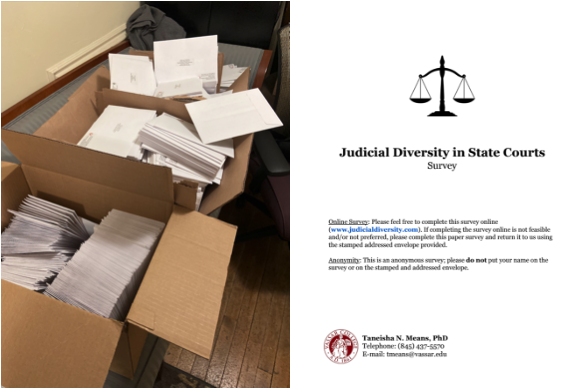
The survey letters we sent out and the survey itself

After we finished sending out surveys we began recruiting judges to interview. This proved challenging as it was difficult to find contact information for judges. We had some contact information from judge’s who had previously expressed interest in being interviewed from our survey but we needed to find more. We then searched through court websites across the country to find more judges to contact. In the end we scheduled over 100 interviews with judges from 33 different states. 
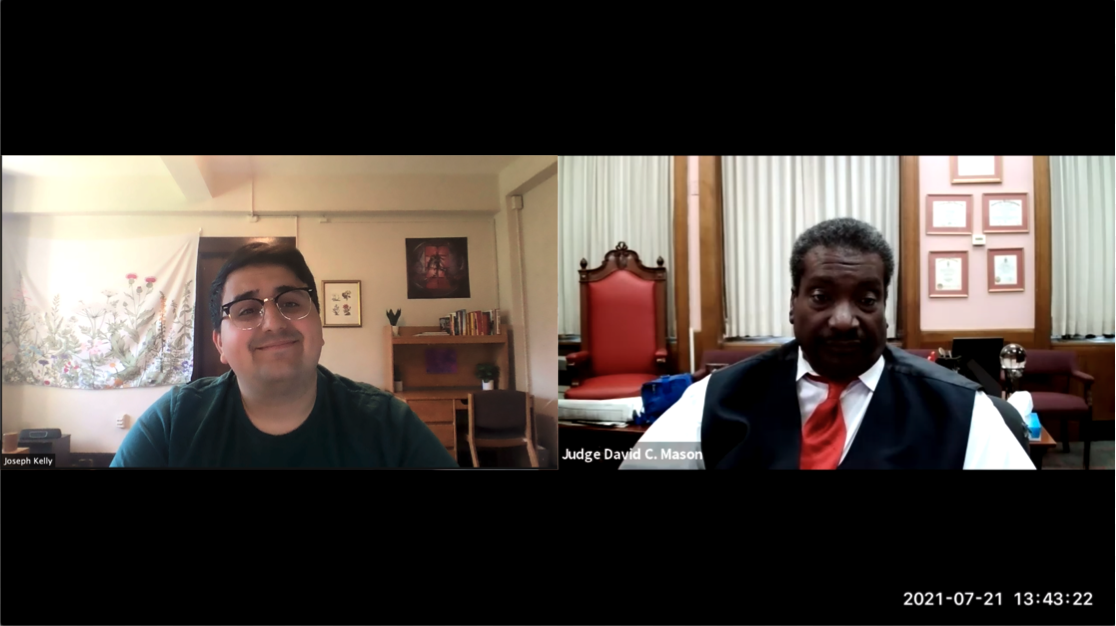
Joseph Kelly interviewing a judge from Missouri

Once we had interviews scheduled we had to write the interview questionnaire. We have previously interviewed judges so we just had to update our previous questionnaire. We asked judges questions about their upbringings, childhood and young adult life experiences, pre-bench lives, identities, judgeships, judicial behavior, perspectives, and opinions.
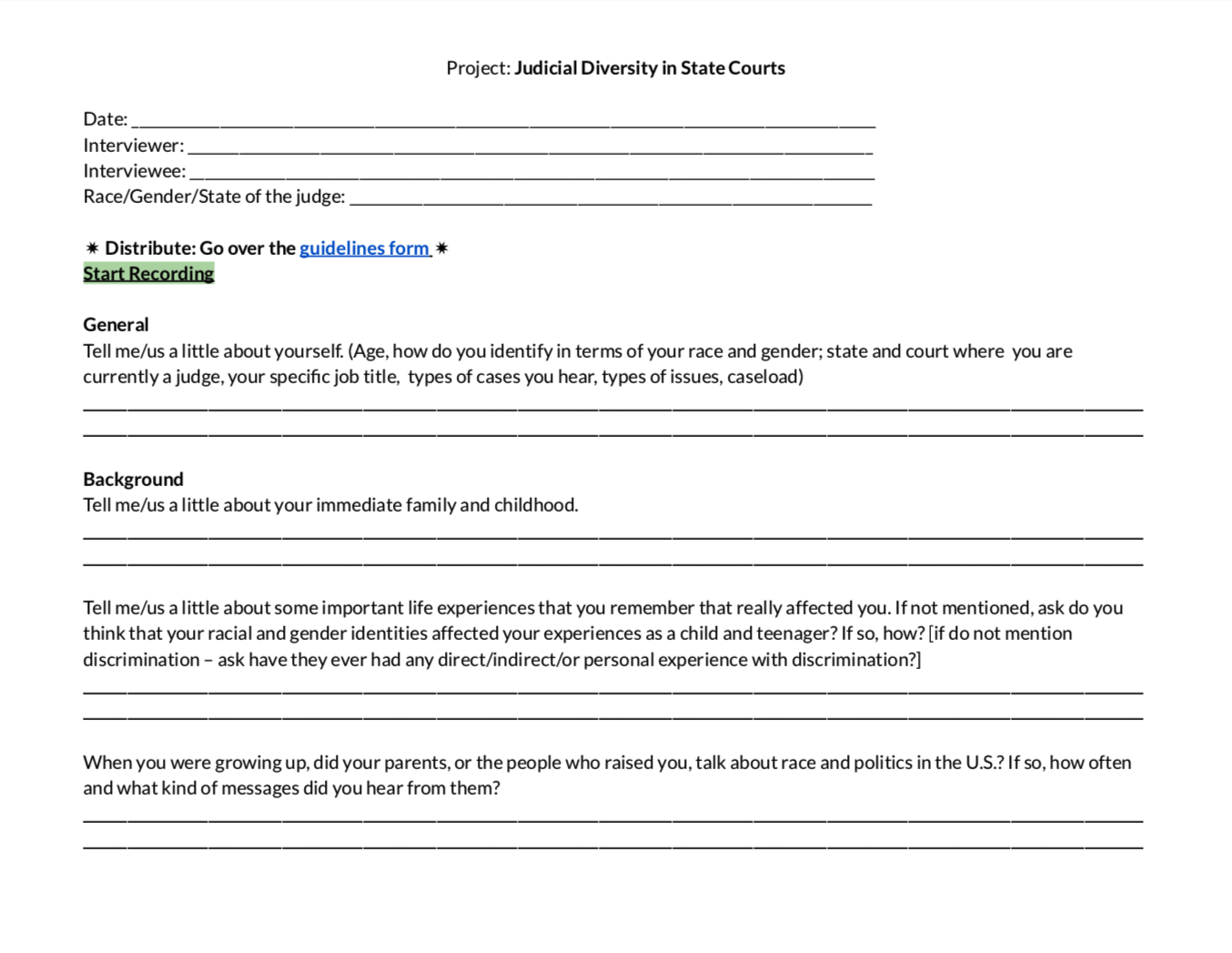
The first page of our interview questionnaire

Our experience with this study has highlighted the importance of diversity in the state court system. A lot of the judges we spoke to talked about how important it is for the demographics of the judiciary to reflect the demographics of the community it is in; people should feel they are represented in the court system. While diversity is important to the court system, it cannot be wholly relied upon to solve all of the problems of the criminal justice system. Judges expressed frustrations with the nature of our prison system, which focuses more on punitive measures rather than rehabilitation, judicial selection methods that are too partisan, and lack of funding to establish diversionary programs. However, a diverse judiciary with diverse experiences will be more able to understand people’s experiences and treat them fairly across the board. These interviews have given us a deeper understanding and a more nuanced view of the state court system. 

Next year we plan on doing a deeper analysis of all the data we’ve collected from our surveys and interviews. We also plan on co authoring several papers drawing upon that data. We will present our data in Professor Means’s “Race and Gender in Judicial Politics” and “Introduction to American Politics” classes and we are planning to attend a political science conference to present on our work as well.

Researching Gender Profit Gaps

Ananya Chaudhuri ’23 and Prof. Gisella Kagy

Over this summer I worked with Prof. Gisella Kagy in the Economics department, studying Gender Profit Gaps- trying to understand the reasons why women-owned firms have smaller outcomes. While the Ford project is part of a larger, global effort to understand and synthesize existing information about the gender profit gap, my work was about global data analysis.  

An essential part of the project is understanding what the global business and policy environment is for women-owned enterprises (WOE) to contextualize individual country-level data. I started this process by analyzing and manipulating large global datasets like the World Bank Business and Law (WBL) survey and UCLA Gender Data. The datasets ask questions that assess the constraints that working women face in different countries like if they get maternity leave, if they can breastfeed at work, if they can travel outside the country, and so on. Using the program Stata, I changed the datasets to the desired form- reshaping and merging the datasets, creating and dropping variables, etc. Since the datasets were originally in different formats, having them in a form where they could be combined and analyzed was important.

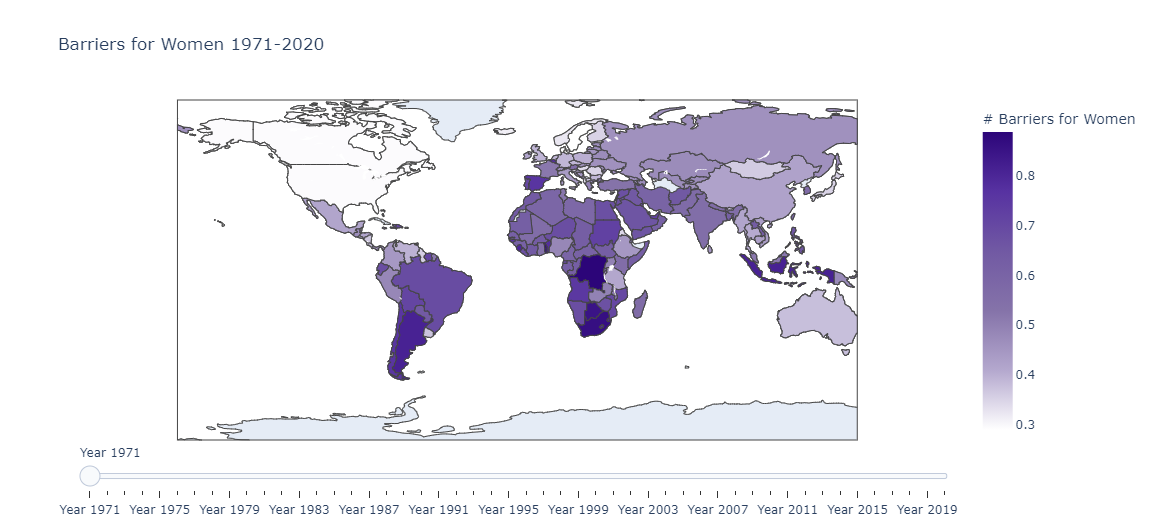
I then converted the data into binaries and did calculations to create indices- numbers that quantified the barriers in a country. Using these values, I was able to create Chloropleth maps through Python. They are color-coded maps (the darker the color the higher the barriers) that show the global policy environment for specific years. The slider map can also show how barriers have changed from 1971 to 2020 if you slide the scale down. This allows us to represent our findings visually and check how trends have changed over time.

I also edited the project website which will, hopefully, become a resource for anyone researching gender profit gaps!


The Oviedo Project

This summer I worked with Professor Lizabeth Paravisini-Gebert and Michael Aronna on the Oviedo Project. Professor Paravisini-Gebert and Aronna founded the project with the goal of translating the complete text of Gonzalo Fernández de Oviedo’s Historia General de las Indias. It is an enormous task and has never been done before! The work consists of four volumes each of which has multiple books which in can have upwards of forty chapters each of varying lengths.

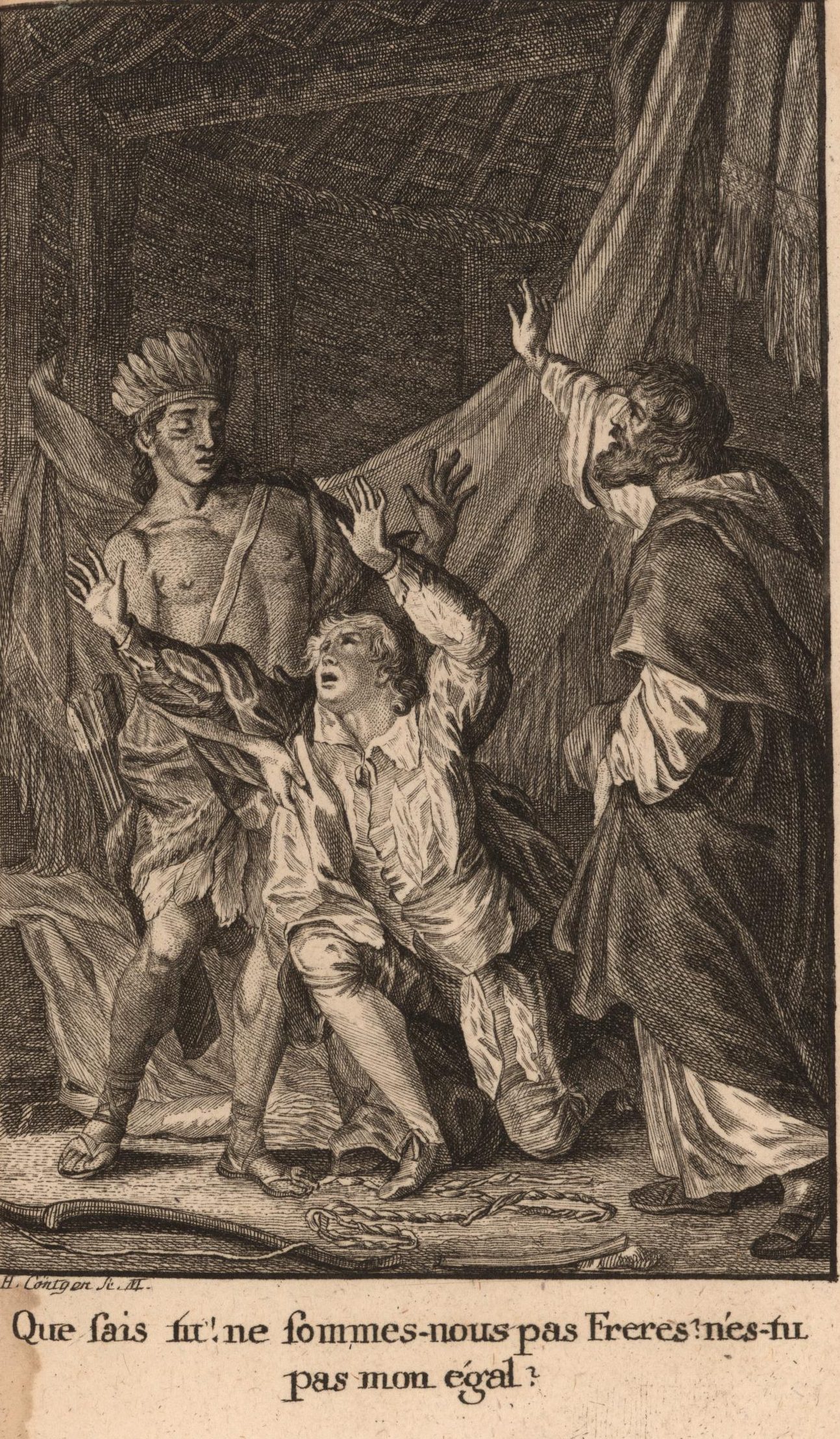
One of my favorite images found at the JCB Library.

My role in the project was to work with another research assistant, Kendal Simmons a senior at Vassar and last years’ Ford Scholar for the Oviedo Project, on posting chapters to the official Oviedo Project website. Posting chapters consisted of multiple steps, of which my favorite was finding images to post along with the chapters. The John Carter Brown Online Luna Library was foreign to me at the beginning of the project but sure enough became my best friend. In order to find the perfect picture for each chapter I would read it through and then go on a hunt through the JCB library for the fitting image. The best part wasn’t finding the right image but rather all of the images I would come by before finding the one I deemed appropriate.

Other than posting chapters I also worked on assuring the uniformity of the manuscript in reference to certain words in Spanish. This was high on the task list because as new exciting opportunities arise for the project the cleanliness and professionalism of the work is increasingly important.

One of my posts.

Overall, I had a wonderful summer working on this project. The entire editing team was a joy to work with. Our meetings were never short on ingenuity, creativity, and laughter.

Co-Creating an Architectural Intensive with an Aspiring Architect in the Ozarks

Arianna Hilliard ’22, and Professor Adédoyin Tęríba

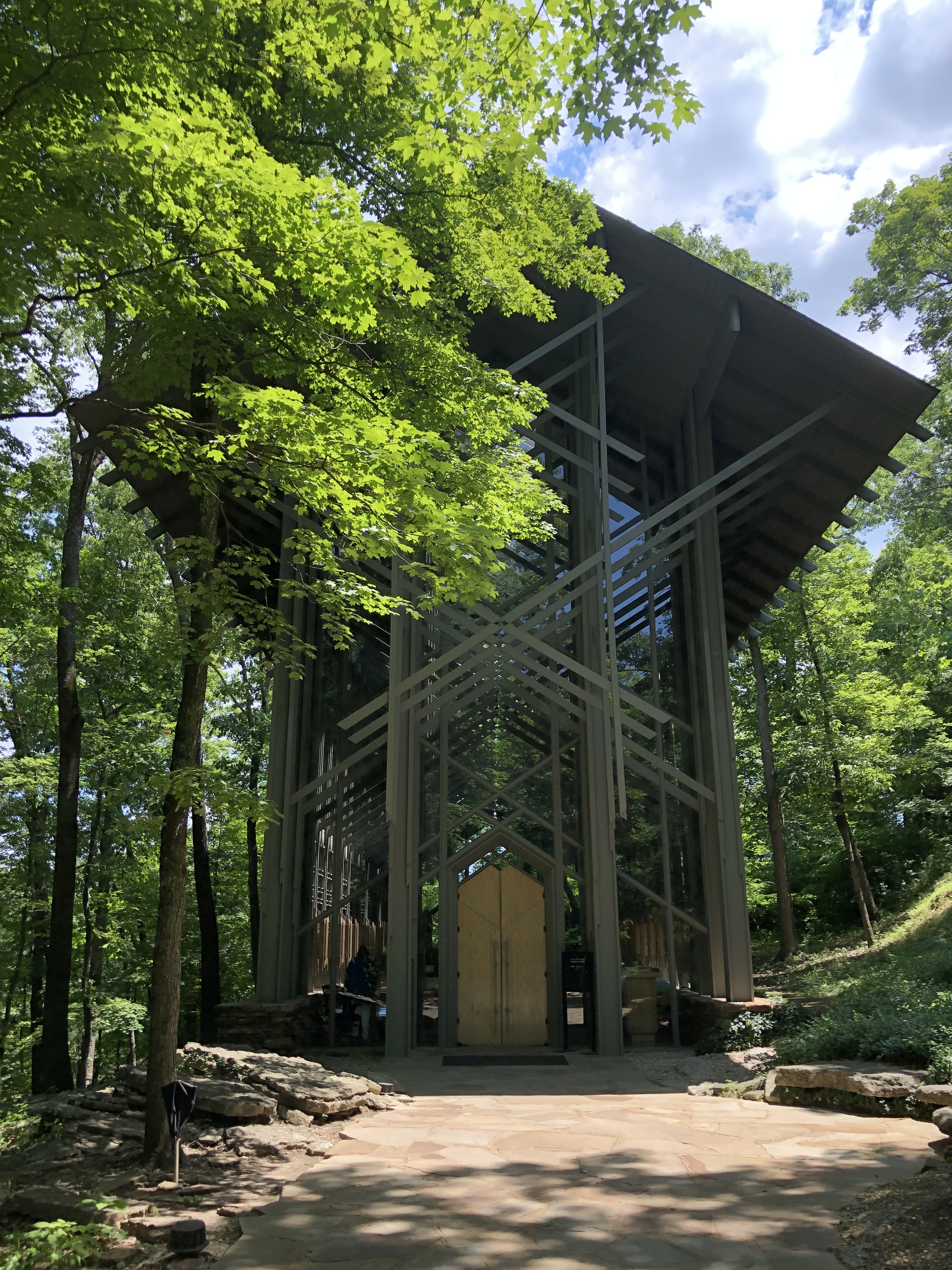
Thorncrown Chapel, Eureka Springs, AR. E. Fay Jones (1988).

This summer, I worked alongside Professor Tęríba to create an Architectural Intensive course for the Spring 2022 semester. The intensive course is named Lines Intertwine: Fay Jones and the Architecture of the Ozarks and will focus on the works of the late architect E. Fay Jones.

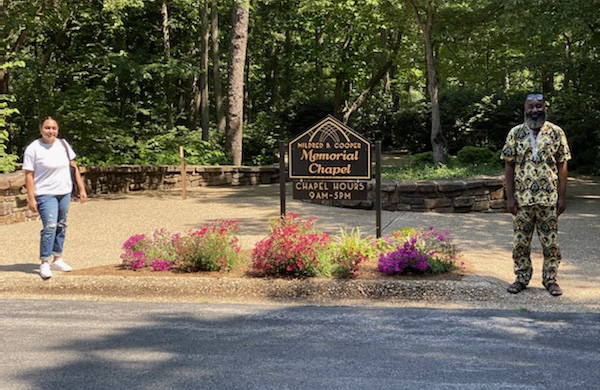
We began this project by traveling to Arkansas to view Jones’ work. We visited the Thorncrown Chapel (1980) located in Eureka Springs, and the Mildred B. Cooper Memorial Chapel (1988) located in Bella Vista. During the trip, we discussed the structures and our findings to begin planning the intensive course. Much of our research was developed during the trip, as we could analyze the structures close up.


Mildred B. Cooper Memorial Chapel, Bella Vista, AR, E. Fay Jones (1988).

After returning, we created a syllabus and itinerary for the intensive course and trip to Arkansas. There were three main components to this process: discussing and analyzing the architecture we viewed on our trip, creating a trip itinerary, and creating a course syllabus that covers key components to studying Jones’ architecture. The trip to Arkansas includes visits to the Thorncrown Chapel, Mildred B. Cooper Memorial Chapel, several sites in the Garvan Woodland Gardens, and the Fay Jones archive at the University of Arkansas. Professor Tęríba and students will stay in Eureka Springs, Arkansas and Hot Springs, Arkansas, two towns full of historic architecture.  The syllabus is meant to introduce four Vassar students to Jones’ work in theory and in-situ i.e. visiting the structures in their settings.


Me and Professor Tęríba at the entrance of the Mildred B. Cooper Memorial Chapel.

This project highlighted the importance of experiencing architecture in its truest and most concrete form and looking through the lens of an architect to analyze their process; my understanding of E. Fay Jones’ architectural work grew immensely. This experience allowed us to create a course that will encourage students to immerse themselves within Jones’ work and begin to understand his process of designing architecture. 


Economic mobility and prosocial behavior

Mihajlo Ivanovic ’22 and professor Benjamin Ho

Over the summer I was working with Professor Benjamin Ho in the economics department  regarding the effects of economic mobility on the prosocial behavior. The goal of the project was to determine if the individual’s ability to move up or down through the social classes changes one’s chance to engage in prosocial behavior such as donating or volunteering.

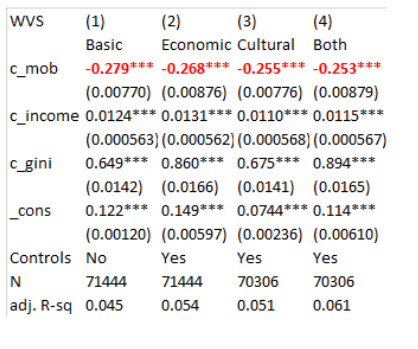
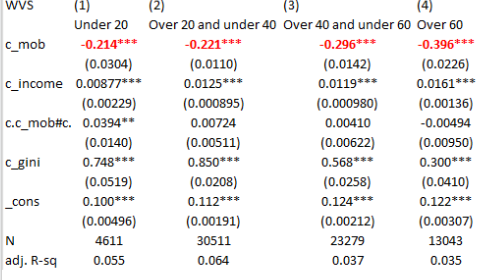
I was working with four data sets, three of them including cross-national data with more than 30 countries and one representative data from the U.S In the beginning of the project I was doing OLS regressions without restrictions in order to determine the coefficients on mobility and to observe the changes in coefficients as we added more independent variables such as GDP growth, education, index on corruption, etc. We used a dependent variable that showed if a person volunteered in the past month/year, depending on the dataset. Since economic mobility is actually lower as the coefficient increases (1 represents the lowest mobility, whereas 0 represents the highest mobility),  our case negative coefficients actually show a positive relationship between economic mobility and prosocial behavior. In the picture below we can see that the coefficients on mobility are large and significant.

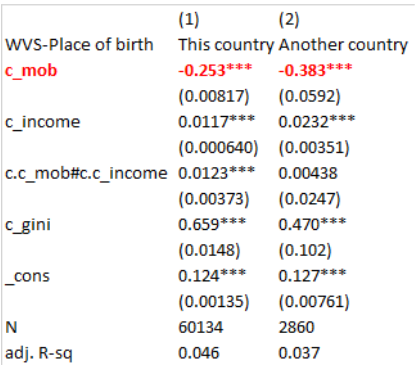
Restrictions that resulted in consistent results were the place of birth restriction (those born outside of the country they reside in have larger coefficient), age restriction (as you get older the coefficient on mobility increases), and trust restriction (those that trust more have larger coefficients).  Furthermore, since our measurements of the mobility are on country-level rather than individual-level, a mixed effects model was used to observe the behavior of the coefficients. After running the melogit and metobit models, we found that economic mobility is still a significant variable and that the restrictions mentioned above, still hold.

Since past researchers have focused mostly on income and inequality as the main independent variables, the effect of economic mobility on prosocial behavior is the undiscovered effect with the potential of large implications on debates regarding social impacts of resource distribution.

Supplementary Materials for Teaching About Slavery in Ancient Rome

Professor Curtis Dozier and Tao Beloney ’23, Greek and Roman Studies Department

This summer I worked with Professor Dozier to study the representations of Ancient Roman slavery in popular high school Latin textbooks and ultimately to create the beginnings of some supplementary materials for teachers covering the subject. This, along with the broader racism in Classics departments and education, is the subject of longstanding activism, and this project exists within that activism.

Dated to he 3rd century CE, this mosaic depicts two slaves carrying wine jugs. Image: Pascal Radigue (Wikimedia Commons)

I began by studying the best practices for teaching American slavery as laid out in the Southern Poverty Law Center’s oft-cited Teaching Hard History report, and proceeded to study the presentation of slavery in three of the most popular high school Latin textbooks, keeping in mind the shortcomings that the SPLC identified in US history textbooks. Considering all this, I studied the up-to-date treatments of ancient Roman slavery, using Peter Hunt’s Ancient Greek and Roman Slavery and volume 1 of the Cambridge World History of Slavery. I then proceeded to sketch the beginnings of some supplementary materials that teachers might use when discussing slavery in Ancient Rome, modelled off of pedagogical priorities outlined in the SPLC’s Hard History framework.

We chose to create supplementary materials because most high school teachers, particularly in public schools, do not choose their textbooks and do not have budgets or time for more materials. Though some reformers support the wholesale rejection of the current textbooks, and some books are perhaps incurably awful, better textbooks will take time and investment from publishers while supplementary materials that can be added to existing materials allow teachers to make changes to their treatments of the subject now. Thus free materials that can be added on top of mandatory subject matter are ideal.

The materials are organized roughly by topic, for example manumission (the practice of freeing slaves) or the slave trade, and are designed to be inserted into lessons or lectures whenever teachers arrive at them. For example, teachers could add to textbook’s treatment of manumission by pointing out how the practice served the interests of enslavers: the possibility of manumission was a method of social control designed to pit enslaved people against each other by encouraging them to compete for their freedom, thus preventing the development of group identity. These resources are a proof of concept that might be expanded upon by others in the future, perhaps to cover Roman slavery more comprehensively or to address other topics like imperialism or gender politics.