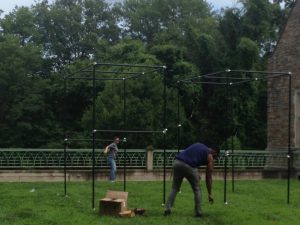
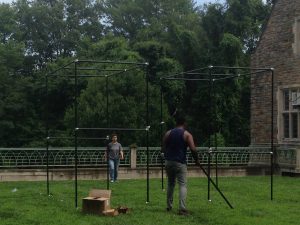
PRESENTATION REFLECTIONS/MOVING FORWARD
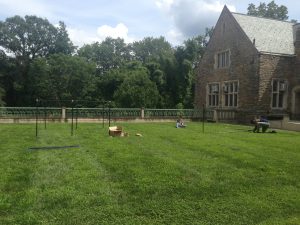
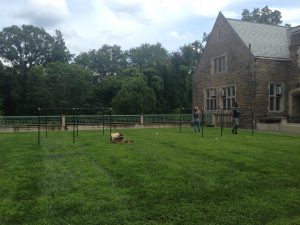
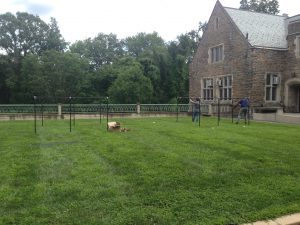
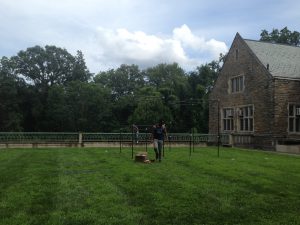
we presented 2 weeks ago today. I’m writing this reflection using my notes/journal entries from the day of, photos my mom took of OLB, and memory.
-the presentation was a success. people showed interest in each of our 3 projects. we need better representation of the chair in the palmer.
-lisa suggested a place for people to write “I LIKE/I WISH/WHAT IF” statements to help consolidate feedback. we should include something like this in the palmer.
-we need illustrations to help explain each facet of experimental classroom
overall, I want to work on really effectively communicating our ideas using prototypes, illustrations, and some kind of small experiment for gallery visitors to engage in.
FOR FAMILIES WEEKEND
Tom and I discussed the feasibility of rendering a scale model, but I don’t think this is a realistic expectation. instead, in the palmer, we will display:
-a 3D model of the chair next to a piece of doll furniture that best resembles a courting chair
-an actual courting chair for people to sit in
-some prompts to facilitate discussion in the courting chair
-illustrations to help explain the goal of the crit chair
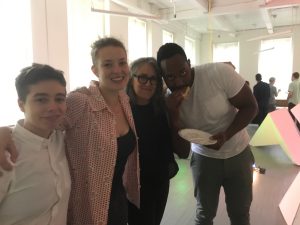
yay team!
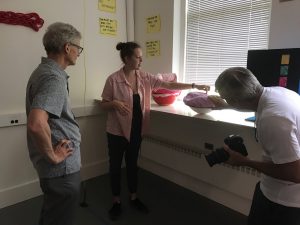
explaining my the most refined prototype of the chair
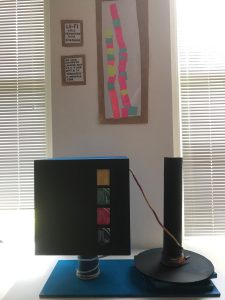
POSTER- this is the data from our first data visualization experiment. each voice in the conversation is represented by a color. each post-it represents 15 seconds of speaking time. layered post-its indicate an interjection or interaction between multiple speakers lasting less than 15 seconds
MODEL-this is the higher resolution model of our data visualizer. rope passes through the ink jet chamber at a rate of 1 inch/5 seconds. as the rope passes under the ink jet, it is dyed the color corresponding to the speaker (assigned upon entry into the classroom analysis voice recognition system). the dyed rope coils onto the spool as it dries. the rope can now be unrolled and “analyzed” as a document produced during conversation. additionally, the rope is meant to be crocheted onto the model classroom
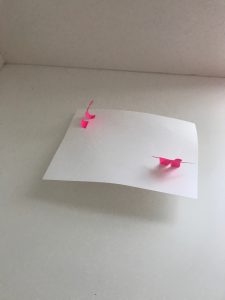
the very first prototype of the crit co-chair. designed by Lisa using a sandwich container, a piece of paper, scissors, tape and post its
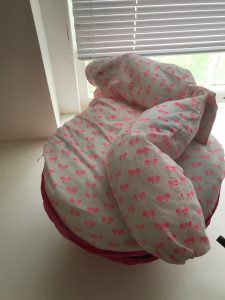
the second prototype
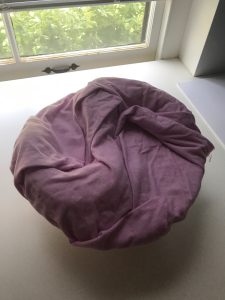
the third prototype
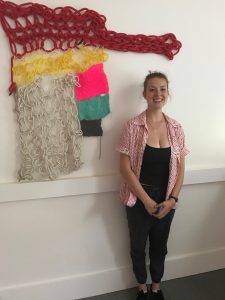
me with the patchwork practice quilt lol
Posted in Uncategorized
Comments closed
JULY 10- crit//experiential chair prototype
all our crit room brainstorming culminated in several ideas for different kinds of seating to disrupt the status quo of critique.
bobbie made this genetically modified donkey seat, incorporating the idea of therapy donkeys into seating for the crit room.
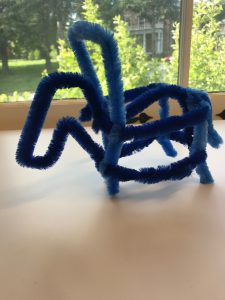
Audrey and I both modeled high chairs to draw attention to the person presenting, elevating them physically to indicate that their work should be the focus of attention. they did not turn out as beautifully as bobbies and I don’t have pictures.
Lisa made a kind of see-saw chair which spoke to the idea of destabilizing, recalibrating and balancing different voices and works in the crit room.
we decided to run a behavioral prototype in crit on Monday to get a sense of how a version of Lisa’s idea might work. Inspired by the victorian courting seat, we placed chairs in pairs facing opposite directions and arranged them in a circle with the fronts and backs facing inward/outward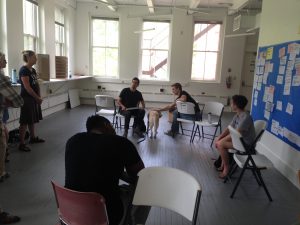
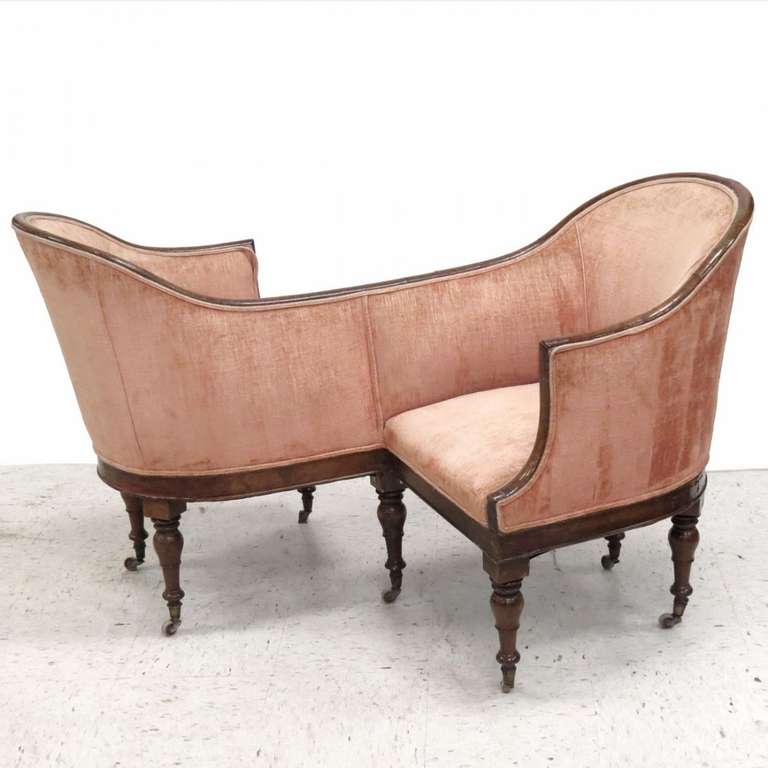
we asked people to sit with someone not in their project. we quickly realized that the seats were better off arranged in a sort of pinwheel formation with the sides facing inwards/outwards. we also asked people to speak (after) if and when their partner spoke to more evenly distribute conversation.
here is some new ‘data’ we gathered after running this prototype:
-difficult to see other people
-space is still centralized- there is an implicit center of attention
-noah described this formation as an anticircle
-better facilitates pair convo rather than facing each other directly
-WHAT IF we could add rotation so that the inner and outer positions could swivel and switch???
-tom expressed that he felt more likely to give credit to a partners idea in this intimate formation
Posted in Uncategorized
Comments closed
JULY 7, 2017- idea session w Lisa, Audrey, and Bobbie
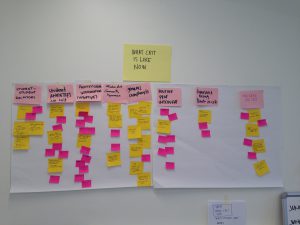
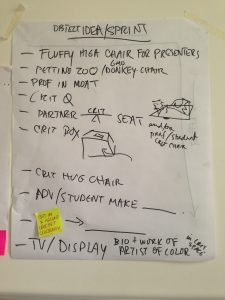
the ideas on the yellow and hot pink post its were generated during interviews with 2 students that participated regularly in crit in the last year. both students are in the class of 2018, and represent 2 of very few black students in the studio art department at Vassar
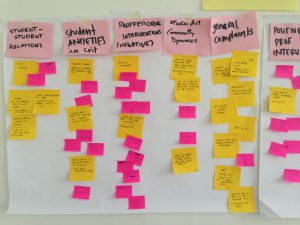
we clustered similar ideas in different categories (labeled by the pastel pink cards)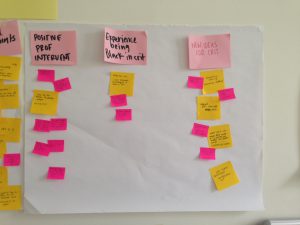
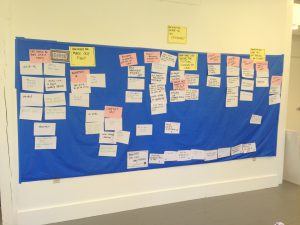
after generating how might we questions (yellow cards) we brainstormed more ideas on white cards, and then re-labeled them on pastel pink cards
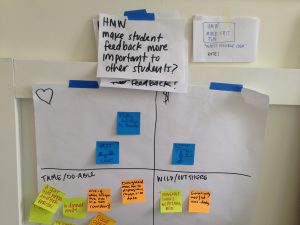
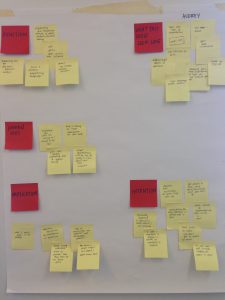
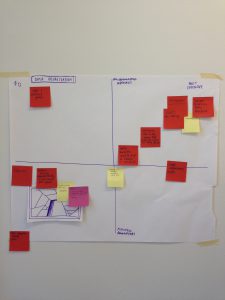
more note consolidation this time using 4 quadrants to organize our thoughts. from here we decided which ideas were most suitable to prototype with pipe cleaners
Posted in Uncategorized
Comments closed
July 5, 2017
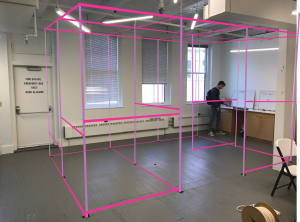
Adding on to the string prototype in a digital format showing the flexibility of the structure.
Posted in Uncategorized
Comments closed
July 5 cont.
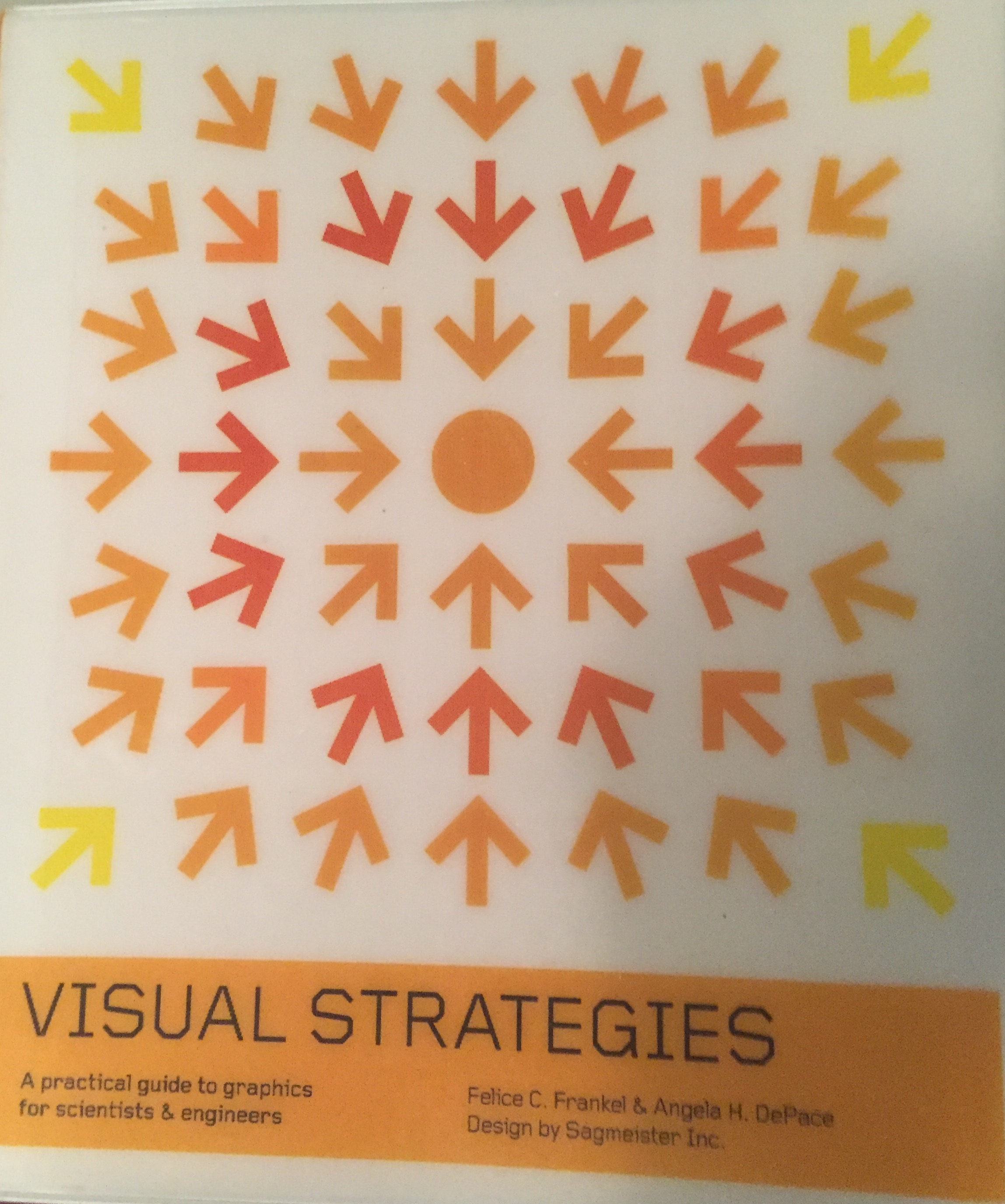
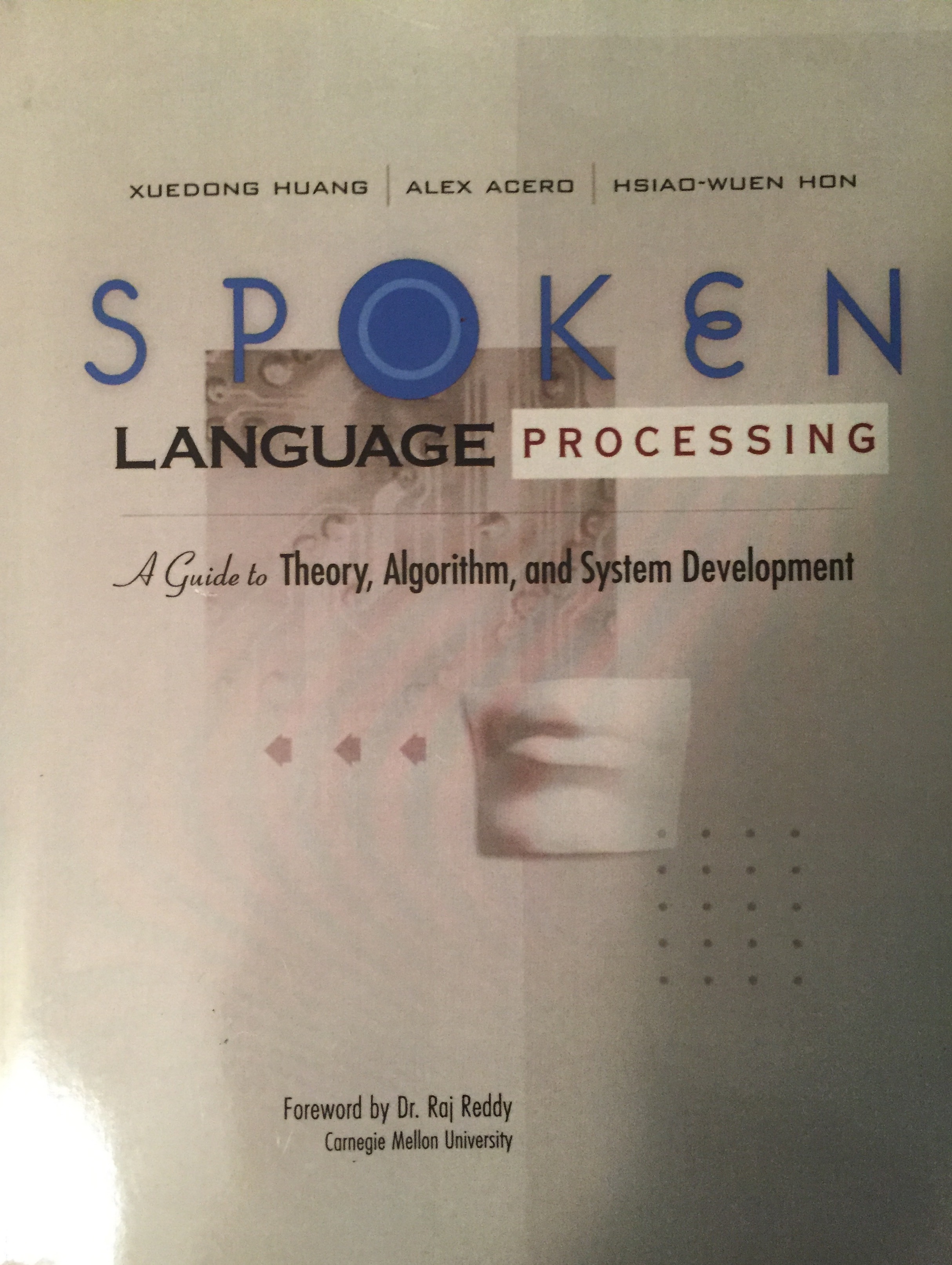
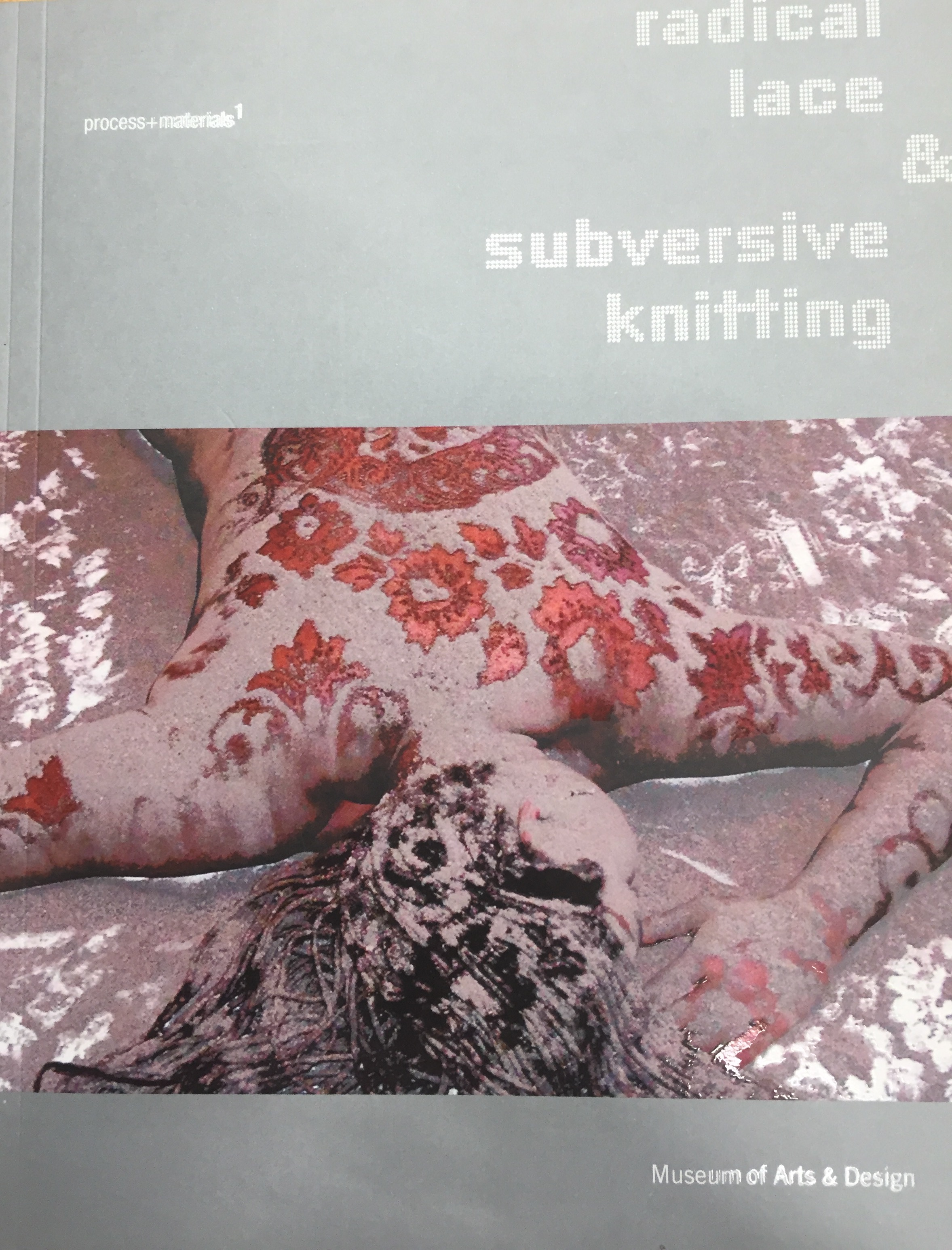
Here are some of the books I’ve been using to think about design for the “object” we’ll eventually produce out of our data, and also a very handy textbook on voice recognition.
And here’s a screenshot of some of the code I did today: learning about autotools and properly installing Alizé.
![[Screenshot of my terminal]](http://pages.vassar.edu/experimental-classroom/files/2017/07/Screen-Shot-2017-07-05-at-3.39.53-PM-1.png)
Posted in Uncategorized
Comments closed
July 5
So after thoroughly exploring Sphinx4, I discover it doesn’t actually support voice diarization, so I have switched to Alizé. Alizé is an open source software that uses the language C++, which I have not worked with before. I have, however, worked with C and C++ is a superset of C, meaning that any code that can run in C can technically run in C++, so I feel fine with this.
Posted in Uncategorized
Comments closed
July 3
Since I haven’t posted yet, I will cover where I’m at with the voice recognition software and where I’ve ‘been’, so to speak. Firstly, it’s already been stated that this part of the project is a research tool, that we’re going to use to create a physical tangible object. Because we are, after all, investigating how people interact with the physical aspects of the classroom.
But, part of the reason I liked the idea of using voice recognition software so much is that sound /is/ physical. Technically our voices are a physical part of the classroom, though they definitely aren’t architecture. If we manage to transform the data collected via the software into a physical object and place it in a classroom, then the voices are ‘echoed’ back.
Currently, I’ve been going through a ton of Sphinx4 tutorials and learning a bit about linguistics. I don’t want to spend too much time on basic research, but I think building a reasonable base of knowledge will prevent me from getting stuck down the road.
And aside from that I’ve been thinking about what we’re eventually going to render with our collected data.
I found some artists who have worked with transforming sound into objects (and objects into sound) and images. I’ll leave links at the bottom corresponding to the respective artists.
I don’t necessarily expect we’ll do anything similar to these works, but it’s good to know what’s out there while we’re thinking about what’s possible for our project.
Posted in Uncategorized
Comments closed
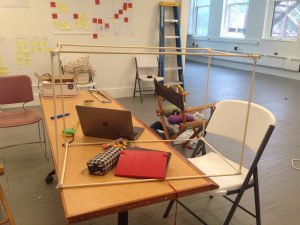
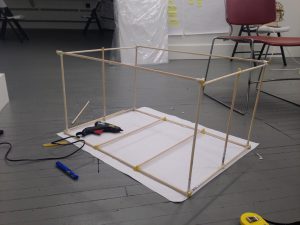
JUNE 28 model of crochet classroom scaffolding
string and tape made by bobbie. 10 ftx15ftx8ft
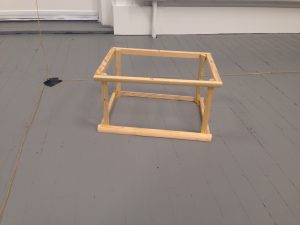
first wooden model made of molding. too thick.
Posted in Uncategorized
Comments closed
JUNE 28 studio pics!! progress from this week
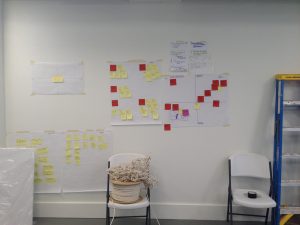
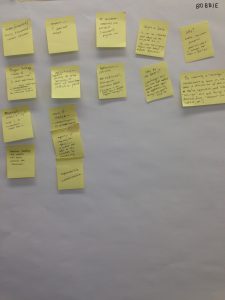
the notes we’ve taken re our projects so far
Posted in Uncategorized
Comments closed